Long Island, New York
Raccoon Removal in Nassau County.
A raccoon in your attic is a tenant, not a visitor. It tears apart your roofline and builds a latrine that soaks your insulation and carries real health risk. One crew gets them out, cleans what they left, re-insulates, and seals it shut so the next one cannot follow them in.
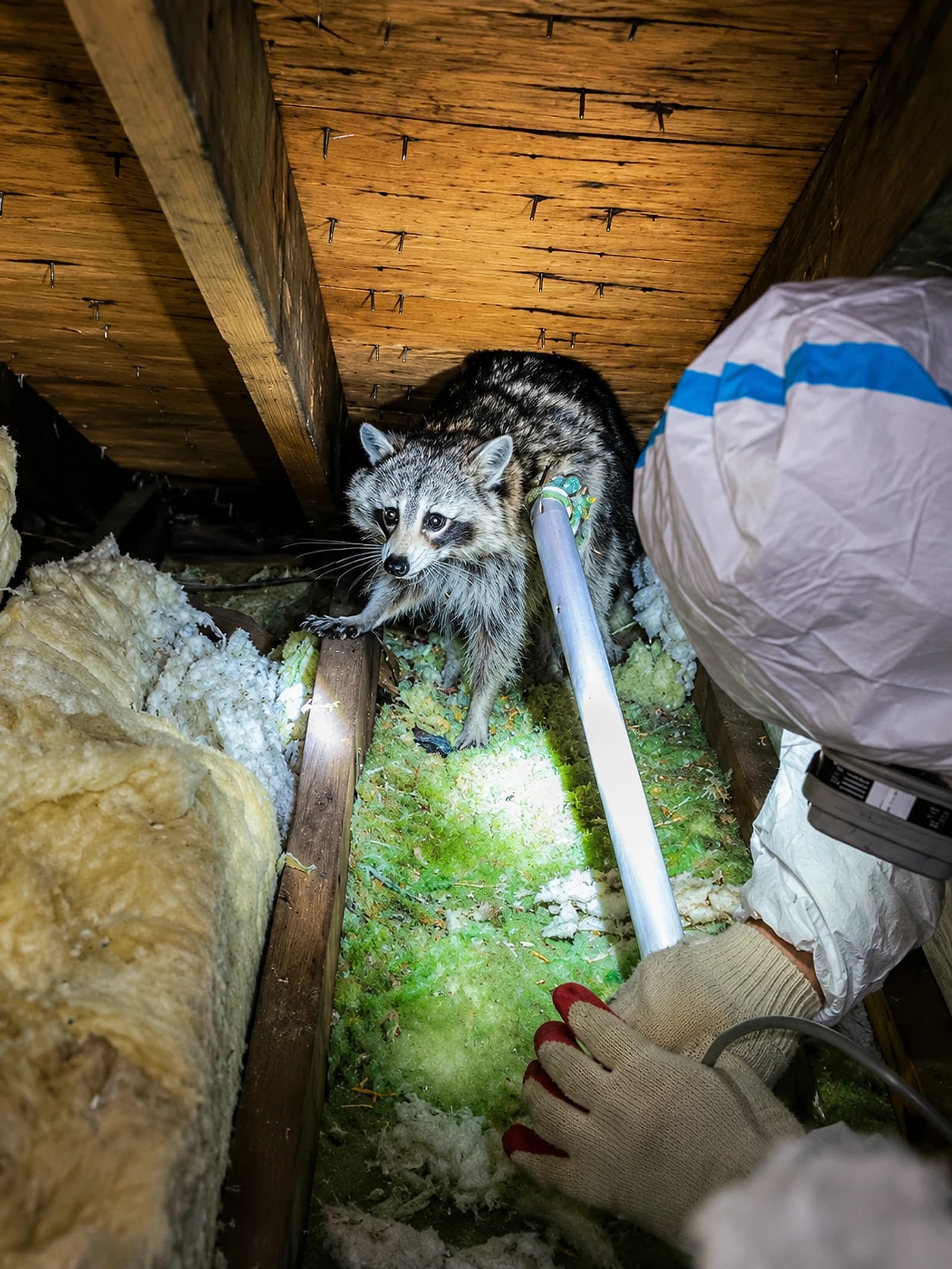
Raccoons don't visit. They tear in.
Most homeowners hear the thumping before they ever see the damage. By then the raccoon has pulled apart a soffit (the trim board that seals the underside of your roof edge), rolled back the insulation to nest, and set up a latrine in the corner of the attic. On the older Capes through Levittown and Hempstead, the walk-up attic over the stairs is exactly the warm, quiet space a mother raccoon wants.
The trap-and-go companies catch the animal and leave. The opening is still gaping, the contamination still soaking in, and the salt-air humidity off the water is already starting the mold. We do the whole job: get them out, clean what they left, put the attic back together, and seal it so the next one cannot follow the same hole in.
One crew, start to finish
What a real raccoon job looks like
Find every way in
We walk the roofline and the attic and photograph every opening: the torn soffit (the trim board that seals the underside of your roof edge), the lifted shingle, the gap behind the gutter. Raccoons rip in, they don't sneak, so we find all of it, not just the one hole you have already seen.
Get them out, humanely
One-way doors and hands-on removal. In baby season, mid-March through July, we check for kits before anything gets sealed. Sealing a mother out with her young trapped inside is the costliest mistake on Long Island, and it is the one trap-and-go crews make most.
Clean what they left
Raccoons build a latrine in the attic, and the droppings and urine soak the insulation and carry real health risk. On Long Island the coastal humidity turns that contamination into mold in a day or two, so we remove the soaked insulation, decontaminate the deck, and document every inch with photos.
Re-insulate and seal it shut
Fresh insulation goes back, and every opening is sealed with materials rated for animal pressure. They do not come back through our work. With PSEG Long Island electric among the highest rates in the country, the new insulation pays you back every month on the bill.
Why one crew beats a trapper plus three other contractors
Most Long Island raccoon calls end with a trapper who removes the animal and hands you a list. Call an insulation company for the soaked insulation, a cleaning company for the latrine, a handyman for the hole. Four trucks, four invoices, four people each blaming the last. We send one crew that does all of it in one job and photographs every step, so nothing falls through the gap between trades, and there is no gap for the next raccoon to use either.
See exactly how it's done.
The Attic Fanatics videos have pulled tens of millions of views by showing the real work: real attics, real raccoons, and the before-and-after most contractors will never put on camera. Watch what we actually do before you let anyone into your home.
Watch on InstagramRaccoon questions, answered
Will the raccoons come back after you remove them?
Not through the openings we seal. We close every entry point we find with materials rated for animal pressure, not the foam and hardware-cloth patch a trap-and-go crew staples on. If you ever hear something again, call the office and we will come look. We handle every situation directly with the homeowner rather than printing a promise on a web page.
What happens if there are babies in the attic?
During baby season, mid-March through July, we check for kits first. They are removed by hand and reunited with the mother outside. We never seal a mother out with her young trapped inside, which is the situation that does the most damage to your attic and the most harm to the animals.
Do I need new insulation after a raccoon?
Usually yes. A raccoon latrine soaks the insulation with urine and droppings, which destroys its R-value and carries health risk. On Long Island the salt air and humidity grow mold in that wet insulation within a day or two, faster than inland. We remove the contaminated insulation and replace it with fresh insulation, matched to your attic.
What does raccoon removal cost in Nassau County?
It depends on what the raccoon got into. A straightforward eviction and sealing is one number; a full job where contaminated insulation has to come out, the attic gets decontaminated, and fresh insulation goes back is a bigger one, because the soaked insulation is the largest part of the work. We price it after we see the attic, never over the phone. See our costs page for the honest factors that move the number up or down.
Does homeowners insurance cover raccoon damage on Long Island?
Usually not the removal itself, since most New York policies exclude wildlife. Resulting damage, such as a soaked-through ceiling, is sometimes covered. We do not file claims for you, but every phase is photographed and documented so you have what you need if you choose to.
Reserve an inspection
Tell us what you're hearing. We schedule a visit, walk the attic, photograph every opening, and write the plan. No phone guesses, and we will tell you straight what the attic actually needs.