Long Island, New York
Squirrel Removal in Nassau County.
A squirrel in your attic chews. Constantly. Its teeth never stop growing, so it gnaws on whatever is up there, including your wiring. That is a real fire risk. One crew gets them out, cleans what they wrecked, re-insulates, and seals it shut.
The scratching you hear is the small problem.
What you cannot hear is the chewing on the wires. A squirrel's teeth never stop growing, so it gnaws all day to keep them in check, and attic wiring is right in its path. Gnawed insulation off a live wire is one of the most common causes of attic fires, which is why this is the kind of noise you do not want to sit on. The older Capes through Levittown and Hempstead, with their walk-up attics over the stairs, are exactly the warm, quiet space a squirrel wants to nest in.
And one squirrel does not stay one. They have two litters a year, in late winter and again in late summer, so a single animal becomes a nesting family fast. The trap-and-go companies catch what they can and leave. The hole is still open, the chewed and fouled insulation is still up there, and the salt-air humidity off the water is already starting the mold. We do the whole job: get them out, clean what they wrecked, put the attic back together, and seal it so the next one cannot chew the same hole open again.
One crew, start to finish
What a real squirrel job looks like
Find every way in
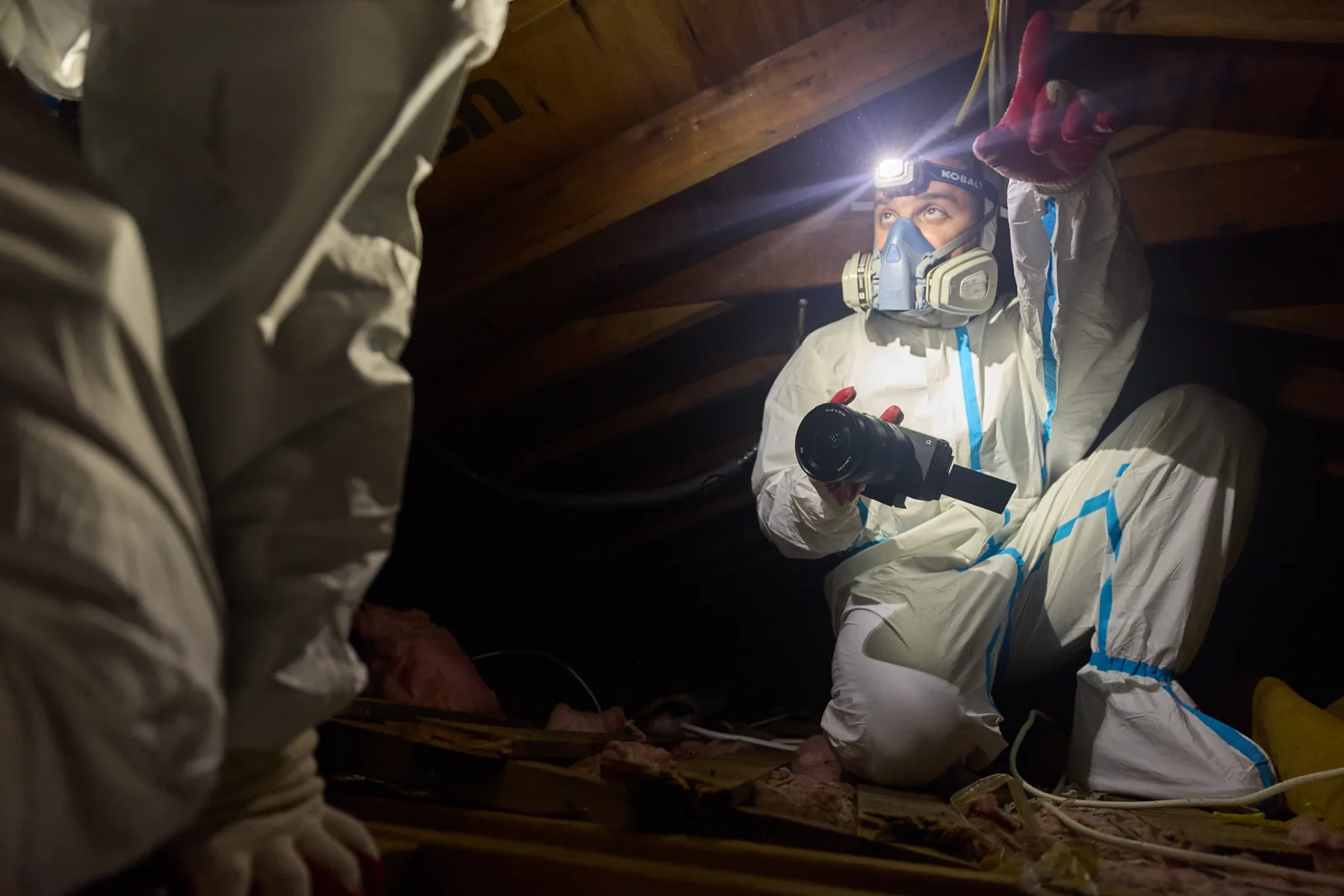
We walk the roofline and the attic and photograph every opening: the gnawed soffit (the trim board that seals the underside of your roof edge), the gap behind the gutter, the chewed corner where the fascia (the flat board your gutters hang on) meets the eaves (the lower edge of the roof that overhangs the wall). A squirrel needs a hole the size of a golf ball, and it will widen one with its teeth, so we look for all of them, not just the one you spotted.
Get them out the right way
One-way doors let the squirrels leave on their own and not get back in. When there is a litter, the young are removed by hand first, because squirrels nest twice a year, in late winter and again in late summer. A patch slapped over a hole with a mother still inside is the costliest mistake on Long Island, and it is the one the trap-and-go crews make most.
Clean what they chewed and fouled
Squirrels shred insulation into bedding and leave droppings and urine through it. On Long Island the coastal salt air and humidity grow mold in that fouled insulation in a day or two, faster than inland. We remove the chewed and soiled insulation, check the rafters (the angled beams that hold up your roof) and any chewed wiring runs, and document every inch with photos.
Re-insulate and seal it shut
Fresh insulation goes back, with baffles (the vent channels along the eaves that keep airflow open) kept clear, and every opening is sealed with materials rated for animal pressure, not the foam-and-hardware-cloth patch a trap-and-go crew staples on. Squirrels chew, so the seal has to outlast their teeth. With PSEG Long Island electric among the highest rates in the country, the new insulation pays you back every month on the bill.
Why one crew beats a trapper plus three other contractors
Most Long Island squirrel calls end with a trapper who removes the animal and hands you a list. Call an insulation company for the chewed and fouled insulation, a cleaning company for the droppings, a handyman for the hole. Four trucks, four invoices, four people each blaming the last, and a patch that a squirrel chews back through in a week. We send one crew that does all of it in one job and photographs every step, so nothing falls through the gap between trades, and there is no gap for the next squirrel to chew open either.
See exactly how it's done.
The Attic Fanatics videos have pulled tens of millions of views by showing the real work: real attics, real animals, and the before-and-after most contractors will never put on camera. Watch what we actually do before you let anyone into your home.
Watch on InstagramSquirrel questions, answered
Why are squirrels in my attic a fire risk?
Because their teeth never stop growing, so they chew constantly to wear them down, and attic wiring is right there. Gnawed insulation off a live wire is a real house-fire risk, which is why a squirrel in the attic is the kind of noise you do not want to wait on. When we open the attic we check the wiring runs for chew damage and photograph what we find.
Will the squirrels come back after you remove them?
Not through the openings we seal. Squirrels will re-enter the same hole within days if it is only patched, so we close every entry point we find with materials rated for animal pressure that stand up to chewing. If you ever hear something again, call the office and we will come look. We handle every situation directly with you, the homeowner, rather than printing a promise on a web page.
What happens if there are baby squirrels in the attic?
We check for a litter before anything gets sealed. Squirrels have two litters a year, in late winter and again in late summer, so this is common. The young are removed by hand and kept with the mother. We never seal a mother out with her young trapped inside, which is the situation that does the most damage to your attic.
Do I need new insulation after a squirrel?
Usually yes. Squirrels shred insulation into nesting and foul it with droppings and urine, which destroys its R-value and carries health risk. On Long Island the salt air and humidity grow mold in that fouled insulation within a day or two, faster than inland. We remove the damaged insulation and replace it with fresh insulation, matched to your attic.
What does squirrel removal cost in Nassau County?
It depends on what the squirrels got into. A straightforward eviction and sealing is one number; a full job where chewed and fouled insulation has to come out, the attic gets cleaned, and fresh insulation goes back is a bigger one, because the damaged insulation is the largest part of the work. We price it after we see the attic, never over the phone. See our costs page for the honest factors that move the number up or down.
Reserve an inspection
Tell us what you're hearing. We schedule a visit, walk the attic, photograph every opening, check the wiring for chew damage, and write the plan. No phone guesses, and we will tell you straight what the attic actually needs.