
Crawl Space Cleanout in NJ, NY & PA
Crawl Space Cleanout After Rodents, Moisture, or Damaged Insulation
We inspect the crawl space, document debris, droppings, odor, wet or falling insulation, and entry routes, then give you a written cleanout plan before work starts.
What we find down there
What gets found in crawl spaces
Most homeowners never look under the house until something smells wrong or the floors feel cold. Here is what we typically find when we do.
Rodent droppings and nesting debris
Mice and rats treat crawl spaces like hotel lobbies. Droppings, shredded insulation, chewed wiring, and nesting material pile up out of sight until the smell gives it away.
Damaged or falling insulation
Fiberglass batts that hang from floor joists are rodent favorites. They pull it apart for nesting, and gravity does the rest. What used to insulate the floor ends up on the ground.
Moisture and standing water
Poor drainage, leaking pipes, or missing vapor barriers turn a crawl space into a humidity chamber. Wet insulation stops insulating and starts growing mold.
Odor sources
Urine-saturated insulation, decomposing rodents, and mildew from standing moisture all contribute. The smell travels up through the floor into the living space.
Loose or missing vapor barrier
The vapor barrier keeps ground moisture from rising into the crawl space. When it is torn, displaced, or missing entirely, everything above it absorbs moisture.
Animal entry routes
Foundation vents with damaged screens, gaps at pipe penetrations, and cracks along the sill plate are common entry points. We document every one we find.
Why the inspection comes first
Crawl spaces are tight, dark, and full of surprises. Quoting without crawling in is guessing. We inspect first so the plan matches what is actually down there.
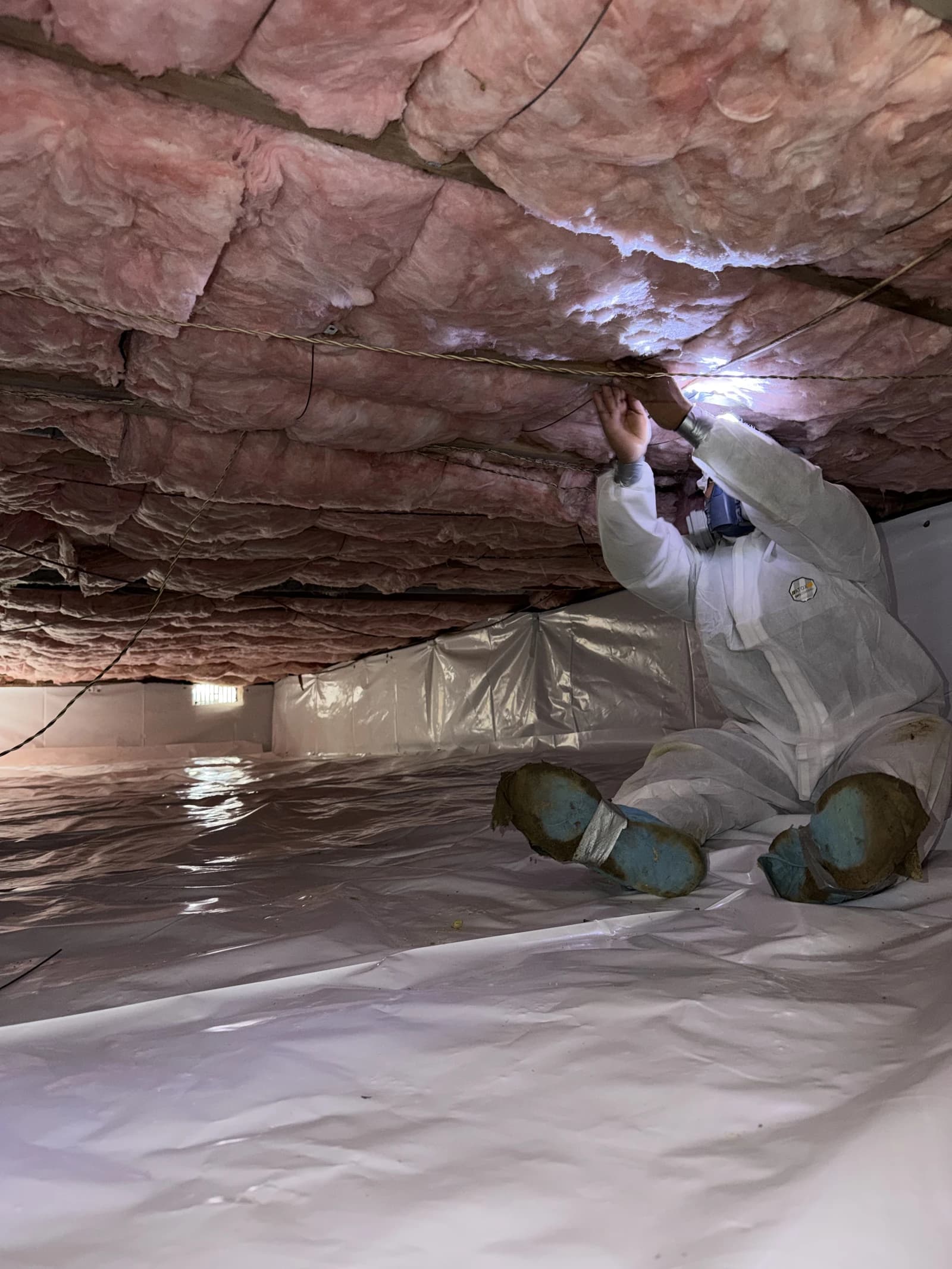
Every cleanout starts with a full inspection and photo documentation.
- Debris and droppings hidden behind pipes and ductwork do not show up in a phone consultation. A crawl space needs eyes on it.
- Insulation that looks intact from the access point can be shredded, soaked, or collapsed further in. Partial views lead to partial plans.
- Moisture damage progresses from the edges inward. What started as a small leak may have spread to the entire vapor barrier and subfloor framing.
- Odor sources are not always where you expect them. A dead rodent behind a duct run or urine-saturated soil under torn vapor barrier requires physical inspection.
- Entry points are often at the back of the crawl space, behind insulation, or at the sill plate. Quoting without documenting them means the cleanout becomes a repeat job.
Our inspection is free. You get the photos and the written plan before you decide.
Get My Free Crawl Space InspectionOur process
How a crawl space cleanout works
Inspect the crawl space
We check insulation condition, debris, droppings, moisture, vapor barrier integrity, and entry points. Everything gets photographed and documented before we plan anything.
Document findings and write the plan
You get photos of what we found and a written cleanout plan with line items. No vague estimates. You see exactly what needs to happen and what it costs before approving.
Remove debris and damaged material
Contaminated insulation, droppings, nesting debris, and any material that is no longer doing its job gets removed. We bag it, haul it, and leave a clean crawl space.
Sanitize and treat affected areas
After removal, we treat surfaces to address odor, bacteria, and residual contamination. The crawl space should not smell like the problem that was just removed from it.
Address entry routes and quote insulation if needed
Identified entry points get sealed with rodent-resistant materials. If insulation replacement is warranted, we quote it separately. Not every cleanout needs new insulation.
Documented work
What we photograph before pricing
You see photos of everything we find before we plan the work. Droppings, damaged insulation, entry points, moisture, and vapor barrier condition. No guessing, no surprises.
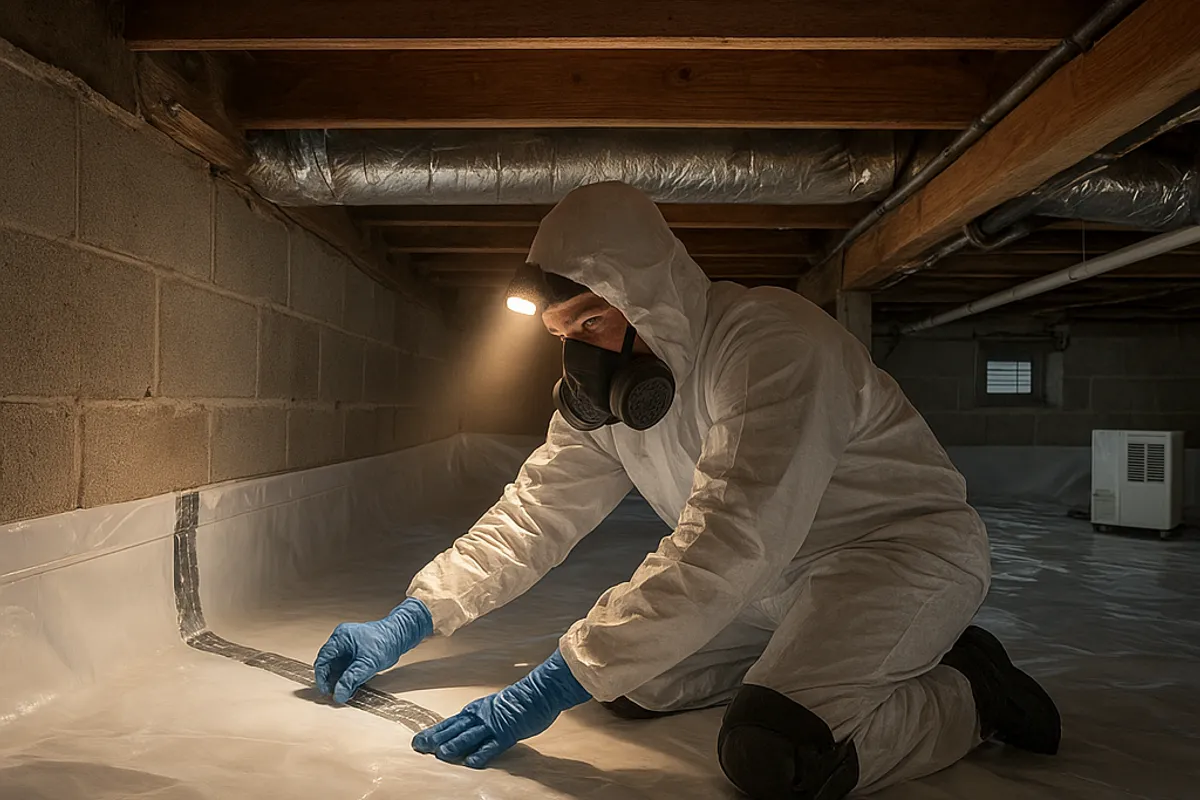 Crawl space
Crawl spaces need a physical inspection before the plan is priced.
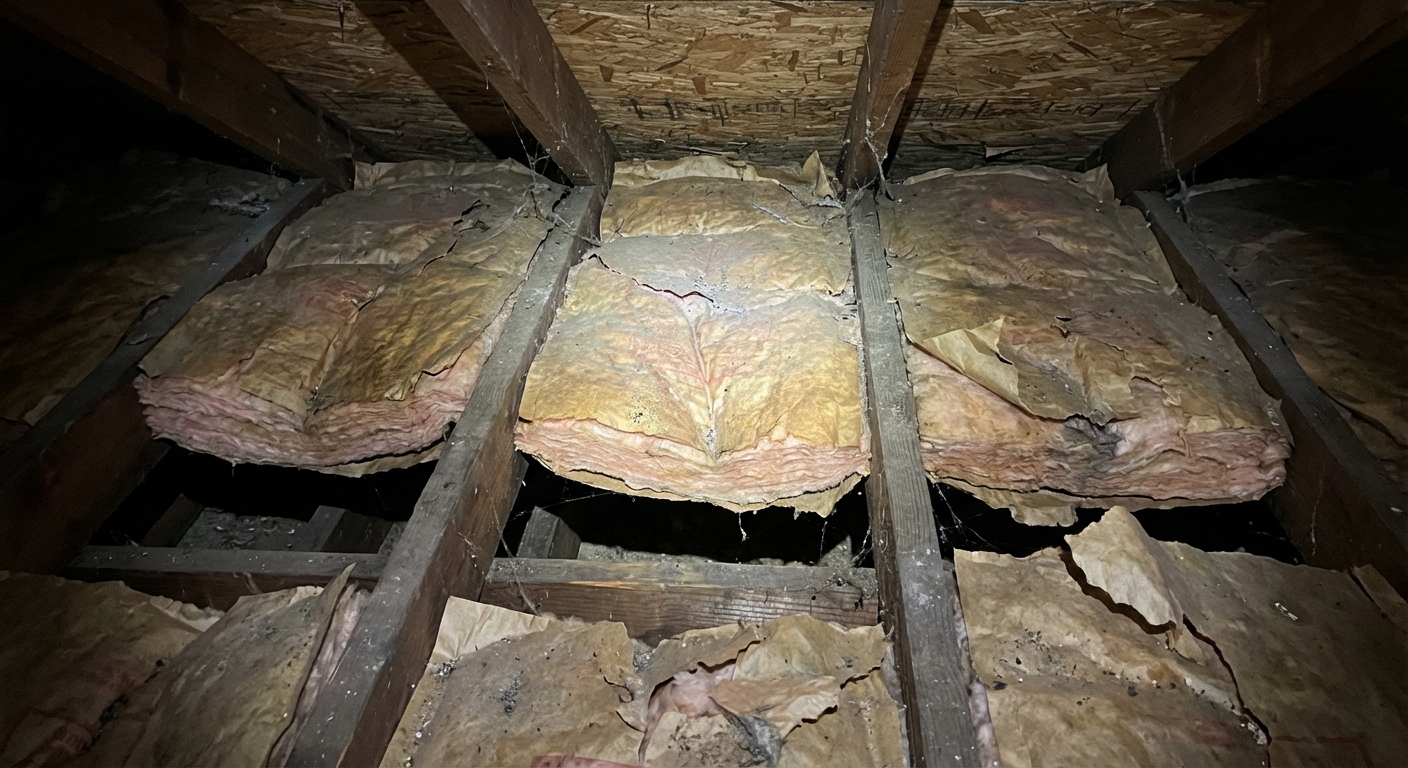 Damaged material
Damaged or fallen material is documented before it is removed.
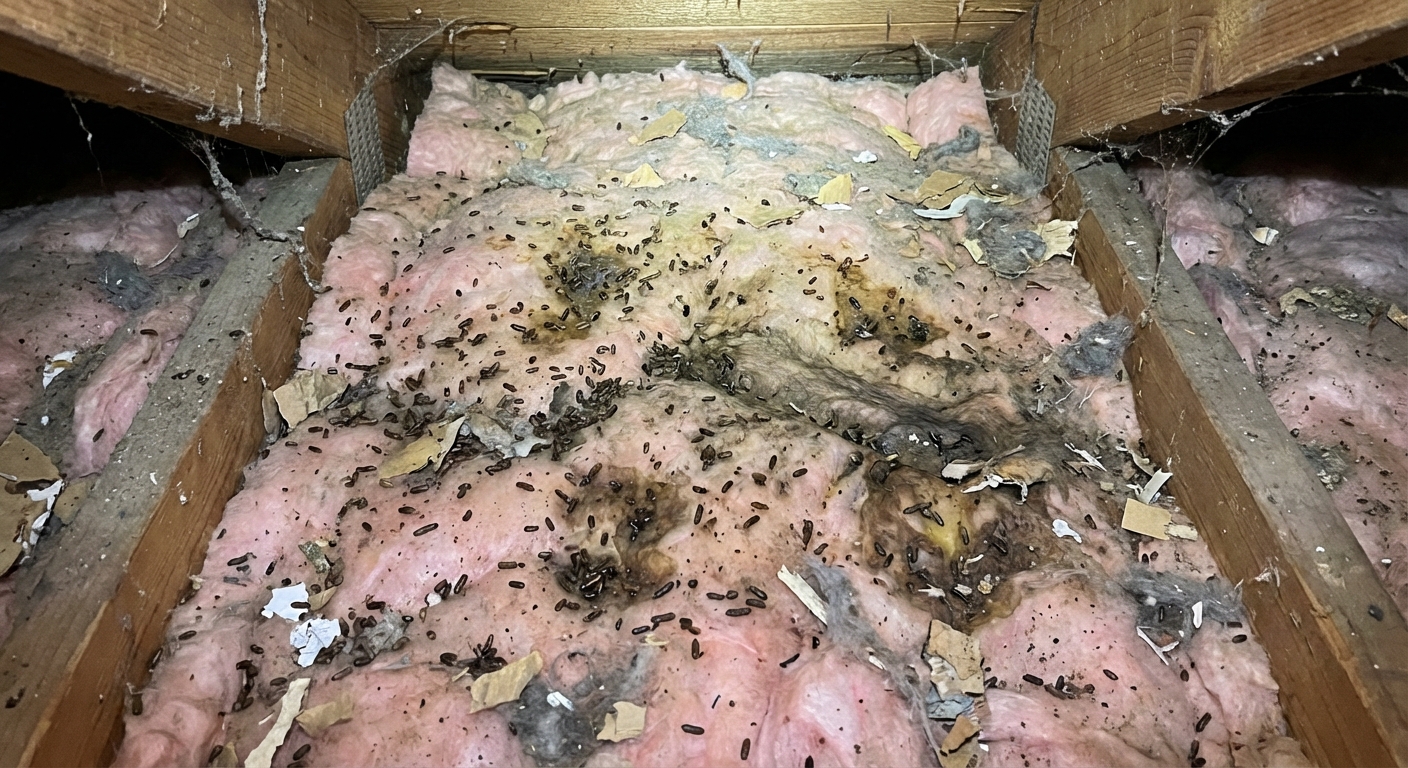 Contamination
Droppings, nesting material, and odor sources change the cleanup plan.
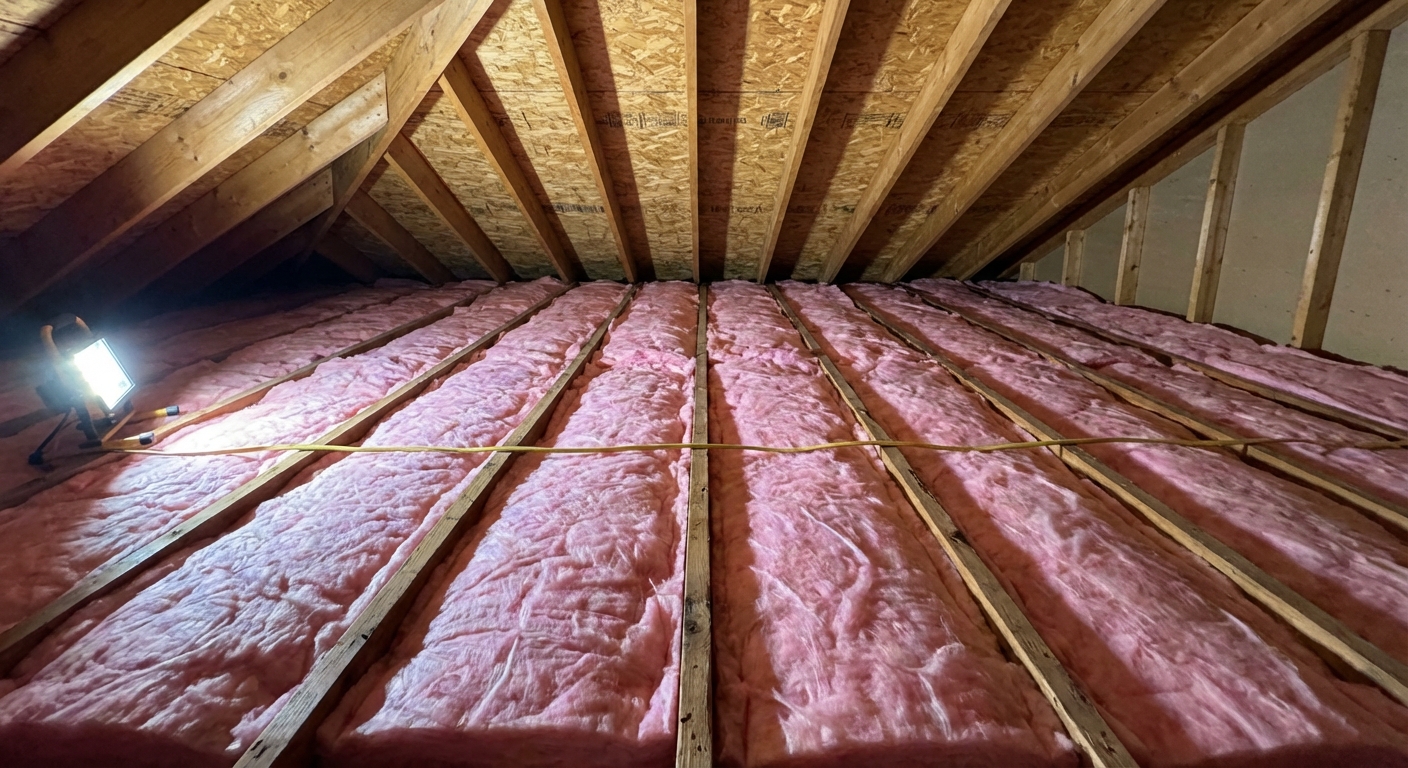 Restored area
Finished conditions are documented after the damaged material is addressed.
What we document during inspection
Every inspection includes photos of insulation condition, droppings and debris locations, moisture and standing water, vapor barrier integrity, entry points at foundation vents and pipe penetrations, and subfloor condition. You review the photos before we write a plan or quote a number.
Crawl space work needs crawl space documentation.
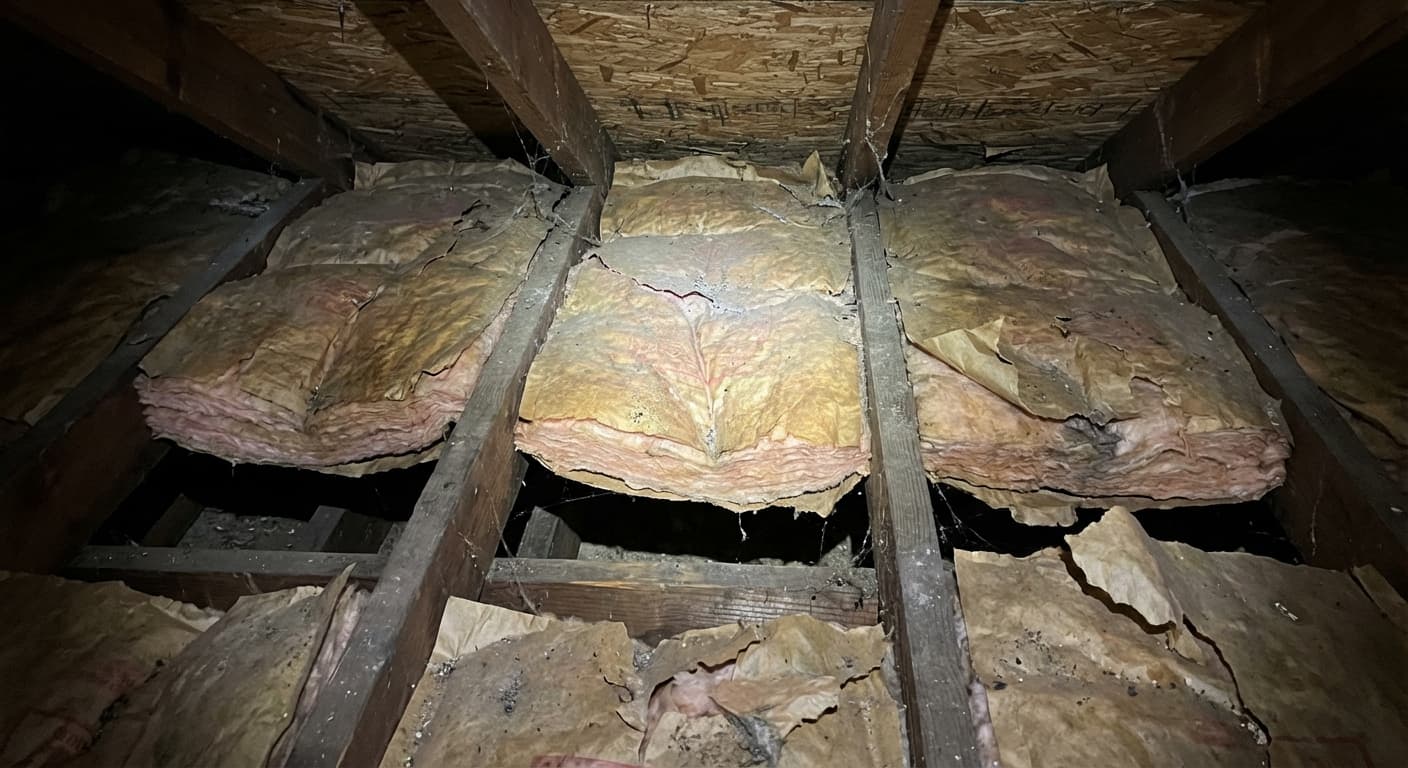
Damaged material changes the cleanup plan.
Honest assessment
When insulation should be replaced and when it can stay
Not every crawl space cleanout requires new insulation. We inspect the material, document its condition, and give you a straight answer about what needs replacing and what does not.
When insulation should be replaced
- Fiberglass batts that have fallen from the joists and are sitting on the ground
- Insulation saturated with urine, water, or mold that cannot be effectively treated
- Material that is compressed, torn apart by rodents, or missing entirely in sections
- Insulation covering active moisture problems that need to be resolved first
When insulation can stay
- Material that is still properly attached, dry, and at the correct depth
- Sections unaffected by rodent activity, moisture, or contamination
- Insulation that shows normal aging but still performs at a reasonable R-value
- Areas where spot treatment and cleaning is sufficient without full removal
We only replace what needs replacing
If the insulation is clean, dry, and still performing, we leave it alone. If it needs to come out, we show you the photos and explain why before quoting replacement. No upselling. Just the facts.
Get your free crawl space inspection
Free inspection. Full plan in writing. No obligation.
Call (732) 351-2005