Squirrel Removal in NJ, NY & PA
Get rid of squirrels. Permanently.
We trap, seal every entry point with steel, and guarantee they will not come back. One crew, one visit, done.
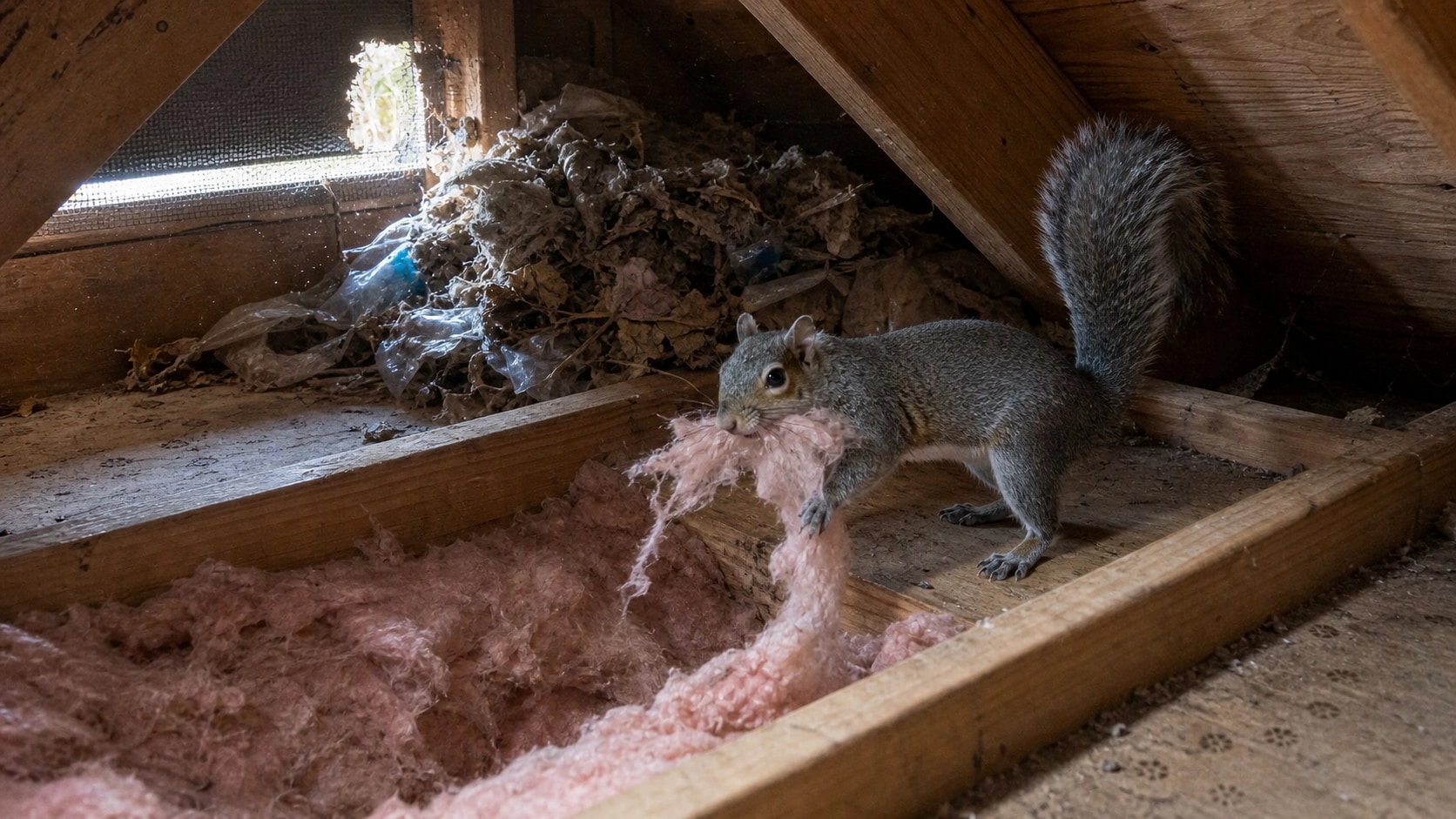
Squirrels do not leave on their own.
A squirrel chews through wiring, PVC pipes, wood framing, and insulation. The damage compounds every day they are in the attic. Most homeowners do not realize how bad it is until we show them the photos.
Most companies set traps and come back every month. We come in once. We seal every gap a squirrel could chew through with steel mesh and metal flashing, screwed into solid wood. We clean, vacuum, and sanitize. We replace the insulation if needed.
One crew walks in. When they walk out, the squirrels are gone, the entry points are sealed, the damage is cleaned up, and the insulation is replaced.
Family-owned. 5,000+ wildlife jobs.
Squirrels chew wires. That is a fire hazard.
Their teeth never stop growing, so they never stop gnawing. Chewed wiring against dry insulation is how attic fires start. This is one of the biggest reasons to handle a squirrel problem quickly.
Flying squirrels: the ones you do not see.
Flying squirrels are nocturnal and travel in colonies of up to 20. Most homeowners mistake them for mice because of the nighttime scratching. We handle both gray and flying squirrels.
We photograph everything.
Entry points, chewed wiring, damaged insulation, sealed gaps, finished cleanup. You see exactly what was in your attic and what it looks like when we leave.
 Before
 After
AfterRepresentative before and after from our attic restoration work. Contaminated insulation out, clean install in.
How we remove squirrels from your attic
One call, one crew, one visit. Here is the process from start to finish.
You call. We figure out what you are dealing with.
Scratching in the morning? Chew marks on wiring? Acorns in the attic? We know the signs. We ask a few questions, narrow down the animal, and get you on the schedule.
We inspect and show you everything.
Free inspection with photos. We find every entry point, check for colony activity, assess the damage, and walk you through the plan. You get the full cost before we touch anything.
We trap, seal, clean, and restore.
Trapping, exclusion with steel mesh and metal flashing, full cleanup, new insulation if needed. One crew handles the whole job, start to finish.
Squirrel exclusion guarantee.
If squirrels get back in through our work, we come back and fix it. Free.
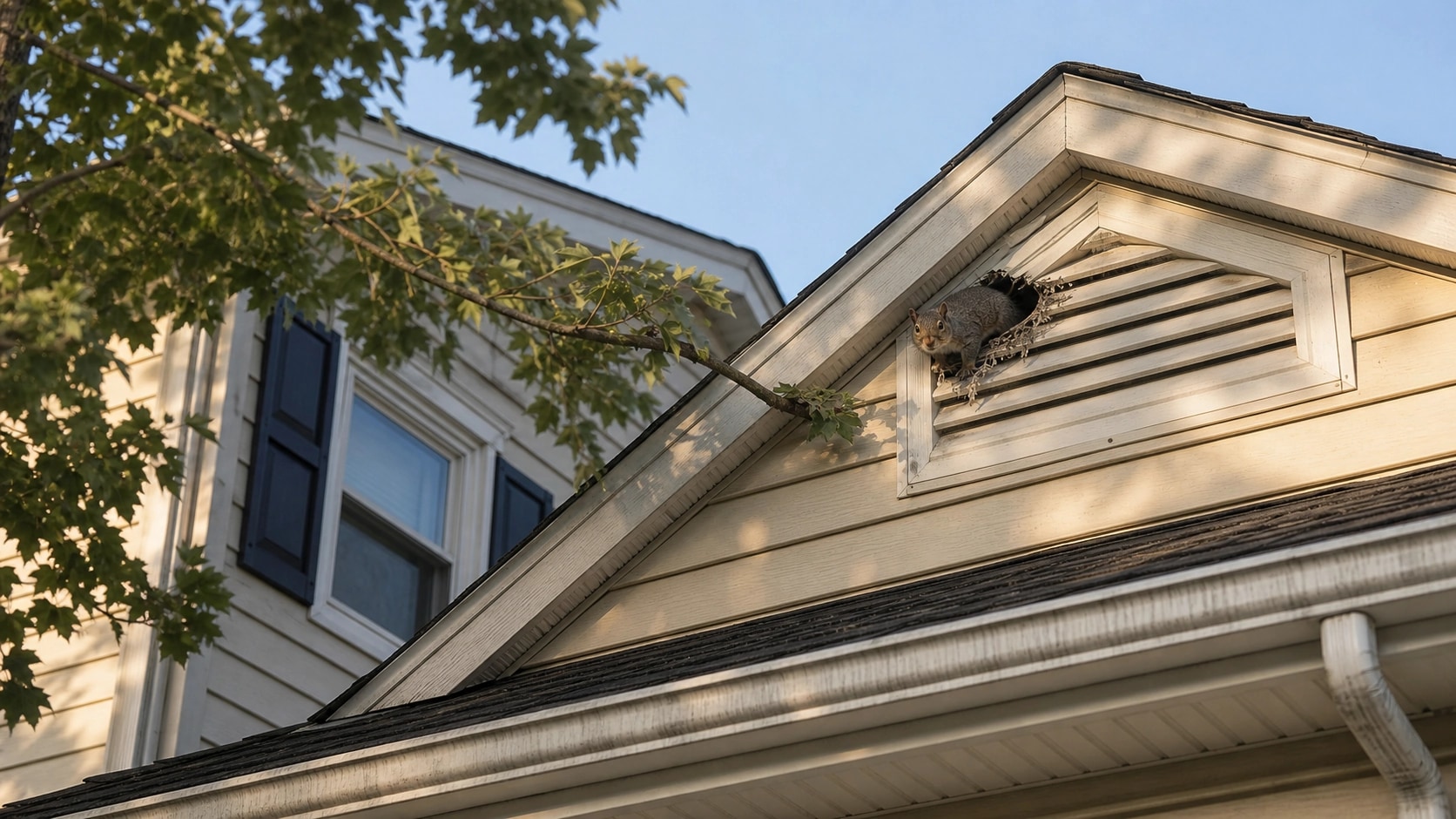
Squirrels chew through everything except galvanized steel.
Tell us what's going on.
Free inspection. Full cost up front. No obligation.
Big job? We offer financing through Wisetack. Checking your options takes about a minute and does not affect your credit score.