

Signs you have mice
Scratching or light movement in walls and ceilings at night. Small dark droppings near insulation, attic framing, or pantry areas. Musky odor or ammonia smell from nesting areas.
Call for mice removal now. Call now

Mice in your attic or walls? We handle all of it.
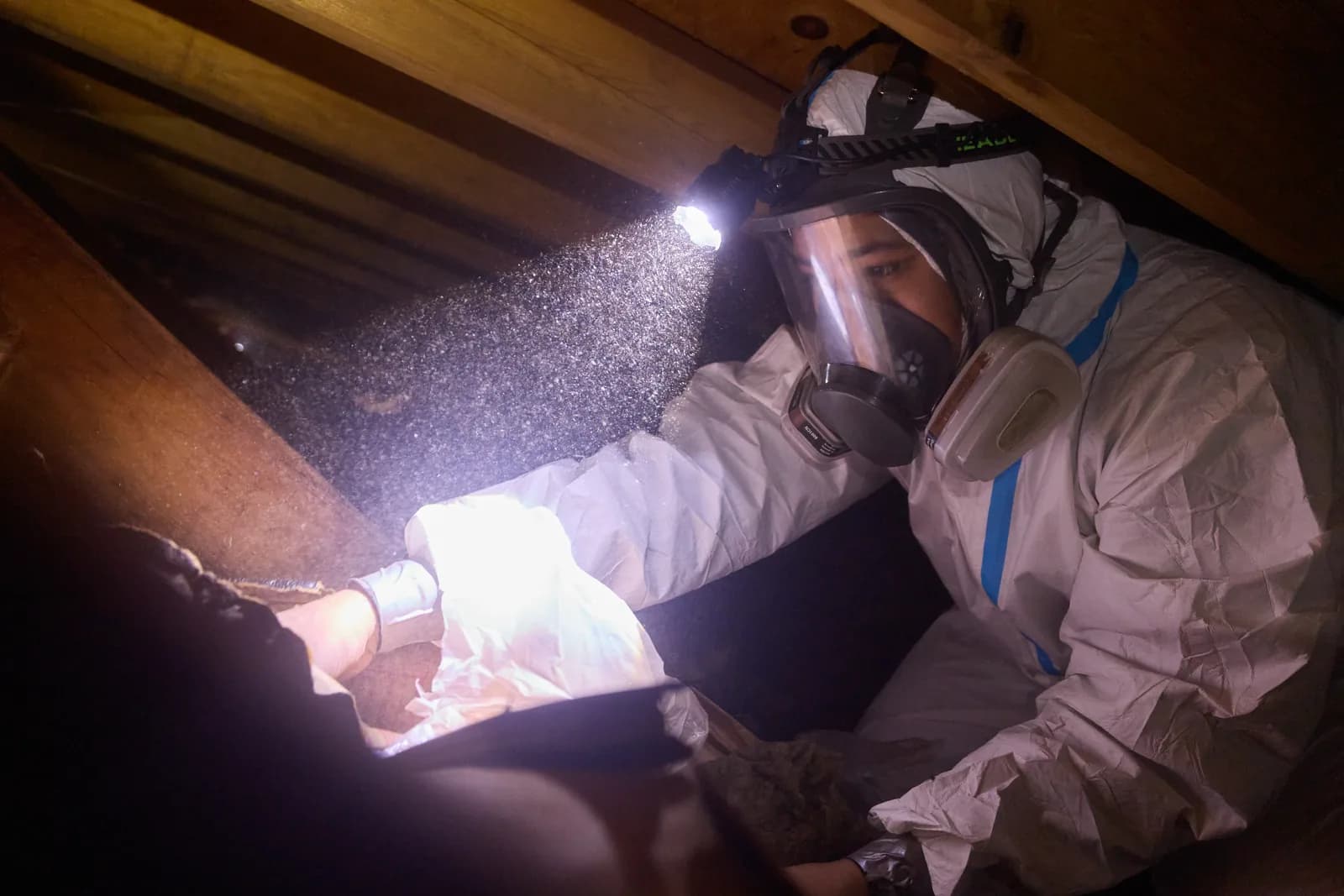
Mice in the attic or walls are not a small problem. They contaminate insulation, chew wiring, and keep breeding inside the structure until the entry points are sealed. Real mice removal means trapping, cleanup, and exclusion together.
What to look for
Mice pressure rises when temperatures swing and the attic becomes attractive shelter, but once they are inside, the problem can continue year-round.
Scratching or light movement in walls and ceilings at night. Small dark droppings near insulation, attic framing, or pantry areas. Musky odor or ammonia smell from nesting areas.
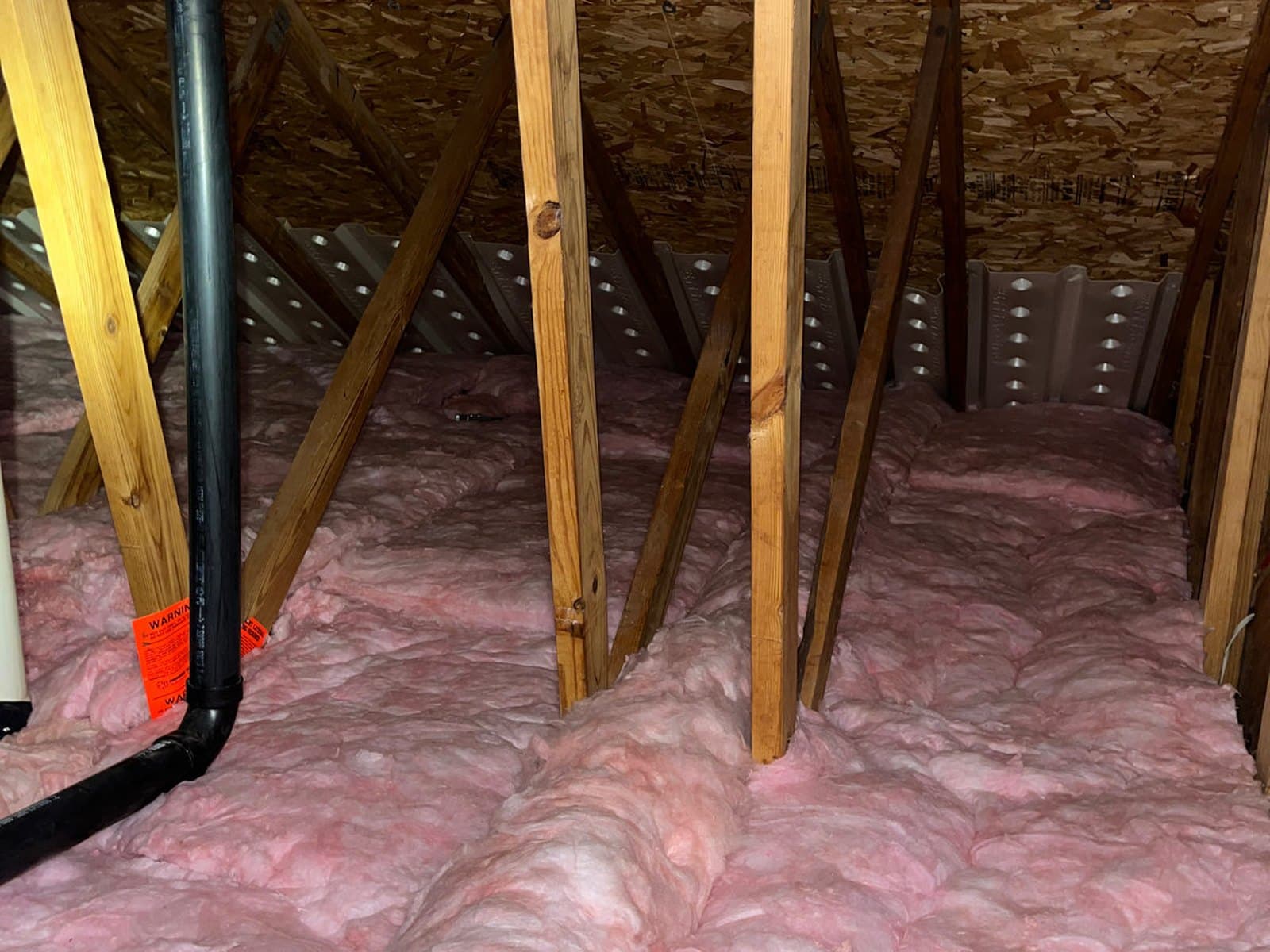
Contaminated attic insulation from droppings and urine. Chewed electrical wiring and fire risk. Odor that spreads through the house.
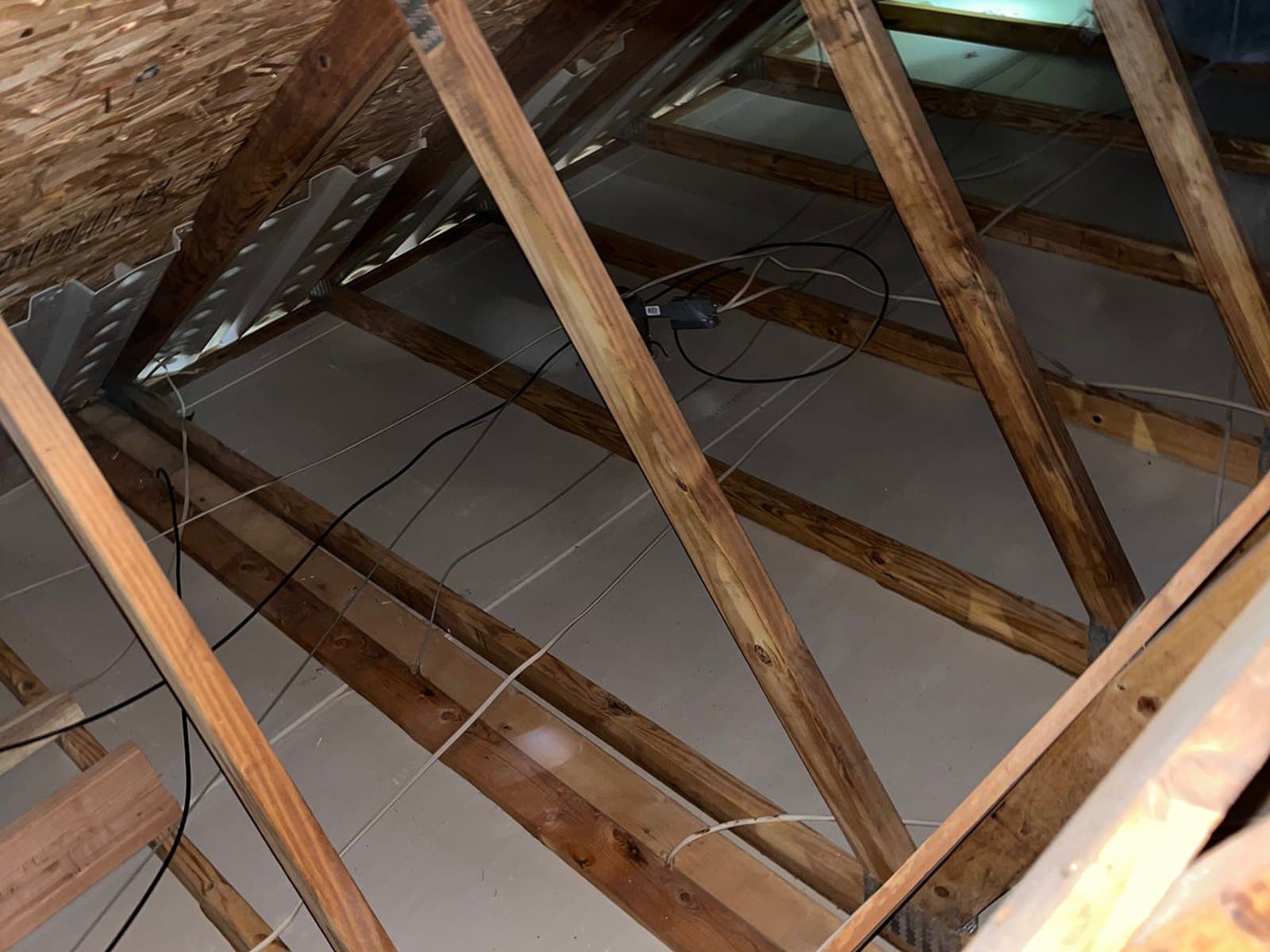
Mice fit through gaps smaller than a dime and often use the same hidden routes over and over. Once they find warmth, insulation, and cover in the attic, they keep nesting until the structure is sealed back up.
Warning signs
Scratching or light movement in walls and ceilings at night
Small dark droppings near insulation, attic framing, or pantry areas
Musky odor or ammonia smell from nesting areas
Chew marks on wires, cardboard, and stored items
Shredded insulation or soft nesting material in hidden spaces
Real damage
Contaminated attic insulation from droppings and urine
Chewed electrical wiring and fire risk
Odor that spreads through the house
Rapid population growth inside walls and attics
Repeated re-entry if the access points stay open
From the field


Our approach
Poison solves the problem badly. It leaves dead mice in walls and attics, creates odor issues, and still fails to address the entry points. Trapping and exclusion are the only clean long-term fix.
Our method:
We inspect the structure, trap the active mice, identify the access points, and complete the exclusion work that stops them from cycling back into the attic or walls.
How it works
We inspect the attic, walls, crawl space, roofline, and exterior envelope to identify where mice are entering, nesting, and traveling through the building.
We inspect the structure, trap the active mice, identify the access points, and complete the exclusion work that stops them from cycling back into the attic or walls.
We complete professional rodent proofing with exclusion materials designed to hold, closing every entry route so the house stops cycling through infestations.
What customers say
“They showed me photos of everything they found, sealed every entry point, and the house has been silent since.”
Sarah M.
Montclair, NJ
“They were the only company that actually got into the attic with me and showed me the problem instead of just pitching a price.”
Dave K.
Staten Island, NY
“They cleared the infestation, cleaned the contamination, and got the attic inspection-ready fast. It saved the sale.”
Maria L.
Bucks County, PA
Real attic mice removal means more than setting traps. You need to remove the active mice, identify how they are getting in, and seal those entry points so the attic does not keep repopulating.
Usually no. Once mice find warmth, cover, and nesting material in an attic, they keep using it until the access points are closed and the active population is removed.
Mice keep coming back when the structure still has open access points. Poison or traps might knock down the current activity, but if the gaps stay open, new mice can move right back in.
Mice are most active at night, which is why homeowners often hear scratching or light movement after the house quiets down. That nighttime pattern is one of the clearest clues.
Yes, mice can create fire risk when they chew wiring in attics and walls. It does not happen on every job, but it happens often enough that wiring damage should be taken seriously.
Poison often creates a worse cleanup problem because mice die in hidden voids and the entry points stay open. That is why trapping plus exclusion is the cleaner long-term approach.
A family in Toms River, NJ booked a free inspection
2 hours ago