
Crawl Space Insulation in NJ, NY & PA
Crawl Space Insulation Replacement and Installation
Cold floors, sagging insulation, moisture, odor, or animal activity usually need an inspection before new insulation goes in. We check the crawl space condition first, then give you a written insulation scope.
Why homeowners call
Common signs your crawl space insulation needs attention
Cold floors in winter
The floor above the crawl space feels cold because insulation is missing, fallen, or compressed. Heat escapes through the subfloor into an unconditioned space.
Falling or sagging batts
Gravity, moisture, and age cause crawl space insulation to detach from the joist bays and sag or fall to the ground. Once it is no longer in contact with the subfloor, it stops working.
Damp or waterlogged material
Crawl spaces are exposed to ground moisture, standing water, and condensation. Wet insulation loses thermal value, grows mold, and adds weight that pulls it down faster.
Rodent or pest damage
Mice, rats, and other pests nest in crawl space insulation, compressing it, contaminating it, and creating tunnels that break the thermal envelope.
Musty odor from below
Odors rising through the floor often trace back to mold, moisture, or decomposing material in the crawl space. The insulation itself can be the source or the transport layer.
High utility bills
If the crawl space insulation is missing or failing, your HVAC system works harder to maintain temperature. The floor system is a major thermal boundary in your home.
Crawl space insulation is not attic insulation
The crawl space has its own set of challenges. Gravity, moisture, access, and pest entry patterns are all different from attic work. The inspection scope is different. The installation method is different. The materials may be different.
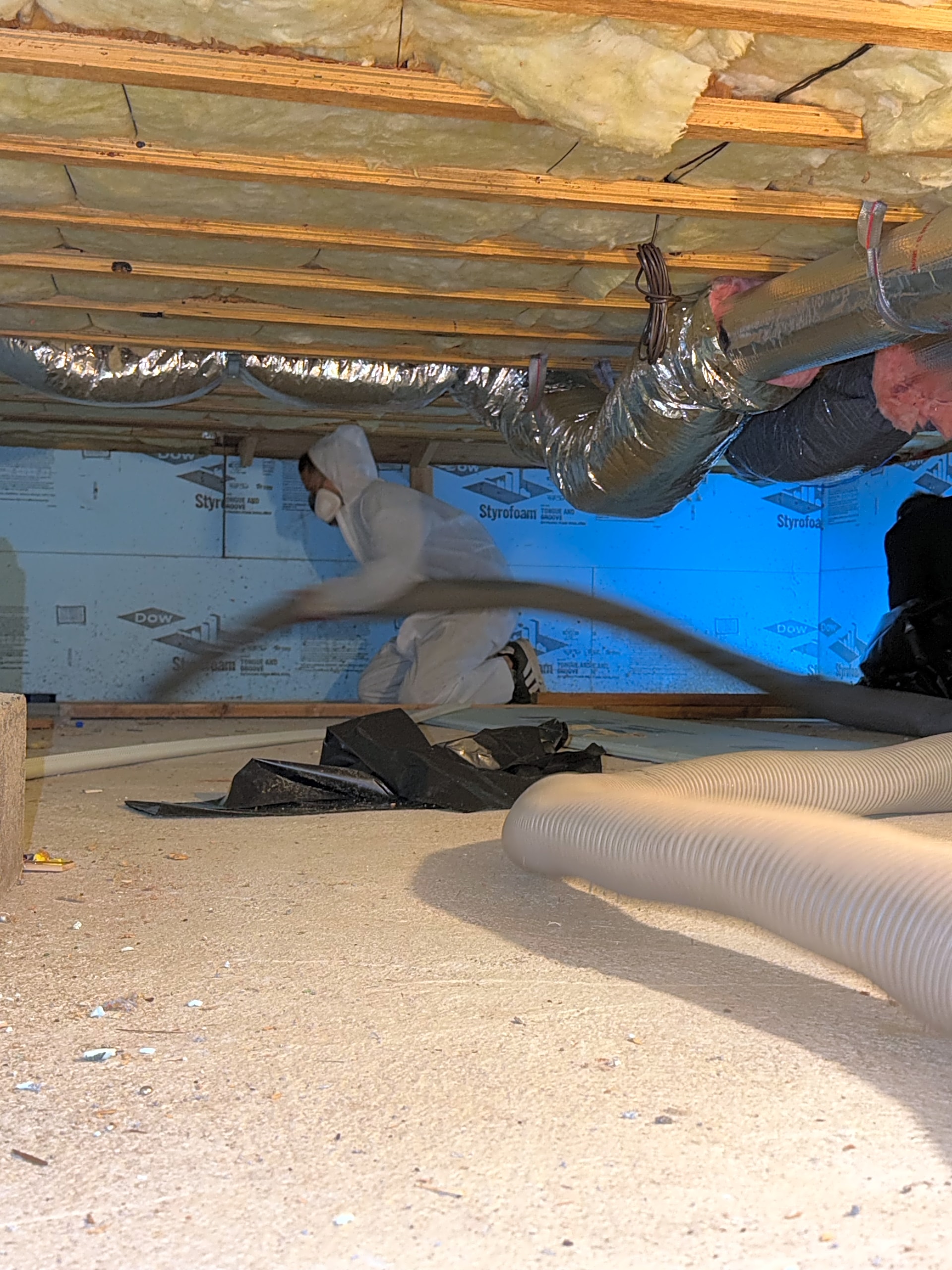
Crawl space insulation installs between floor joists, not on a flat attic floor.
- Crawl space insulation hangs between joist bays, fighting gravity. Attic insulation sits on a flat surface. The install method, fastening, and support requirements are fundamentally different.
- Moisture rises from the ground in a crawl space. Attics deal with warm air from below. Crawl space insulation must account for vapor barriers, drainage, and humidity levels that attic insulation never sees.
- Access in a crawl space is tighter, lower, and more physically demanding. Material handling, staging, and installation take longer per square foot than equivalent attic work.
- Pest activity in a crawl space often enters from the ground level or foundation vents. The inspection scope is different, and the exclusion plan is different.
- Vapor barrier condition, standing water, and foundation vent configuration all affect what insulation material is appropriate and how it should be installed. These variables do not exist in attic work.
Inspection first
What the crawl space inspection covers
We do not quote crawl space insulation over the phone. The inspection documents what is down there so the scope addresses the actual conditions, not assumptions.
Moisture and standing water
We check for standing water, saturated soil, condensation on surfaces, and any signs of active leaks. Moisture must be managed before insulation can perform.
Vapor barrier condition
We inspect the existing vapor barrier (or note its absence) for tears, displacement, and coverage gaps. A compromised vapor barrier defeats new insulation.
Access and clearance
We document access points, headroom, and obstructions. This determines what material can be staged and installed, and how long the work will take.
Joist bay condition
We check the floor joists for rot, damage, and existing insulation condition. If old material is falling, compressed, or contaminated, it shows up here.
Old insulation assessment
We document what is there, what condition it is in, and whether it can stay or needs to come out. Not every job requires full removal.
Pest signs and entry points
We look for droppings, nesting material, chew marks, and entry points along the foundation. Pest issues should be addressed before insulation covers them up.
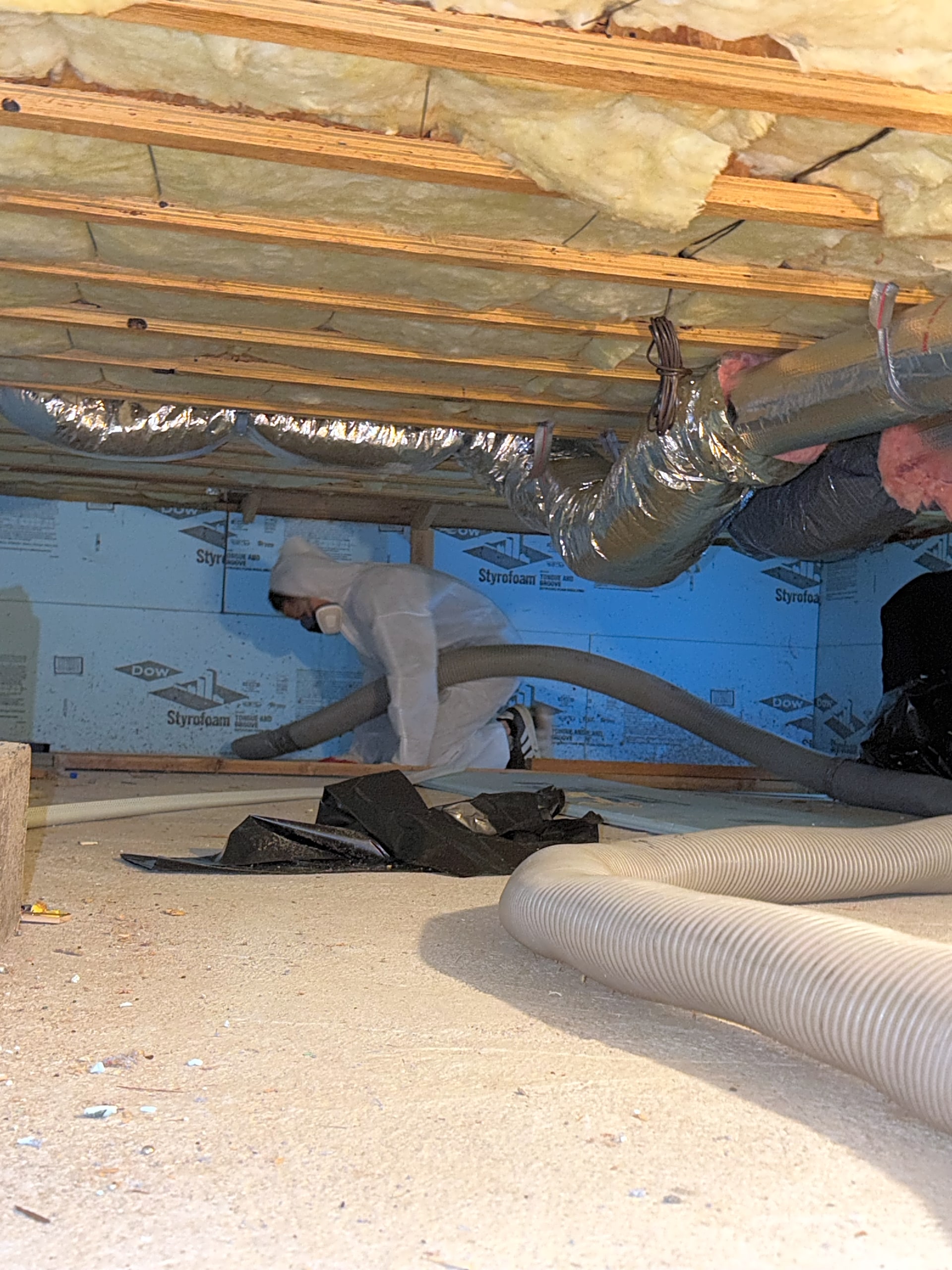
Inspect the crawl space. Then scope the work.
Written scope, no surprises
You get the full scope, material recommendation, and cost in writing after the inspection. The price on the estimate is the price you pay.
Our process
How crawl space insulation works
Inspect the crawl space
We check moisture, vapor barrier condition, joist bays, existing insulation, pest signs, and access. You get photos and a written assessment of what is down there.
Written scope and estimate
Material type, installation method, removal scope (if needed), moisture management recommendations, and total cost. Everything in writing before you approve.
Remove damaged material if needed
If old insulation is falling, soaked, contaminated, or compressed beyond use, it comes out first. We do not install new material on top of problems.
Seal, prep, and install insulation
We address moisture and vapor barrier issues as scoped, then install insulation in the joist bays. Properly fastened, full coverage, no gaps against the subfloor.
Photo closeout
Before and after photos of the crawl space. Insulation placement, joist bay coverage, vapor barrier condition, and any prep work documented.

Crawl space insulation work.

Existing conditions documented.
Material approach
The right insulation for your crawl space
We do not pick a material before the inspection. Crawl space conditions vary: some are dry with good clearance, others have moisture issues, tight access, or structural concerns. The material recommendation comes from what we find, not from a price sheet.
Batt insulation in joist bays
Fiberglass batts installed between floor joists, properly fastened and in full contact with the subfloor. This is common in crawl spaces with standard joist spacing and adequate clearance.
Moisture-appropriate materials
If the crawl space has moisture concerns, the material selection and vapor barrier recommendations change. We scope what is appropriate for the conditions, not what is cheapest or fastest.
Removal before installation when needed
If old material is falling, soaked, compressed, or contaminated, it comes out before new insulation goes in. We document the condition and include removal in the written scope when it is warranted.
What affects your estimate
What drives crawl space insulation cost
Every crawl space is different. We do not quote over the phone or use online calculators. Here is what actually affects the number on your estimate.
Crawl space size and access
Larger crawl spaces need more material and labor. Limited access points, low headroom, or multi-zone layouts add time for material staging and installation.
Material type and installation method
The right material depends on your crawl space conditions. Batt insulation between joist bays is common, but moisture levels and vapor barrier status may call for a different approach.
Moisture management scope
If the crawl space has moisture issues, vapor barrier damage, or drainage concerns, that prep work is part of the scope. Insulation installed over moisture problems fails early.
Removal of old material
If existing insulation is falling, waterlogged, pest-contaminated, or compressed flat, it needs to come out before new material goes in. Not every job requires full removal.
Pest remediation
If the inspection finds active pest issues or significant contamination, that work is scoped separately and addressed before insulation covers it up.
Written estimate, no surprises
You get the full scope, material spec, and cost in writing after the inspection. The price on the estimate is the price you pay. No change orders unless the scope changes and you approve it.
Get your crawl space insulation estimate
Free inspection. Full scope in writing. No obligation.
Call (732) 351-2005