Attic Rodent Cleanup in NJ, NY & PA
Attic Rodent Cleanup After Mice or Rats
We remove rodent droppings, urine-soaked insulation, nesting debris, and odor sources, then seal the entry points so the cleanup does not become a repeat job. Free inspection, photos, and a written plan before work starts.
What rodents leave behind
The problem is not just the rodents. It is what they leave.
Droppings
Mice and rats leave droppings throughout the attic. The volume accumulates fast, especially in insulation where it hides from view.
Urine saturation
Rodent urine soaks into fiberglass and cellulose insulation. Once saturated, the material loses R-value and holds odor indefinitely.
Nesting debris
Shredded insulation, paper, fabric, and plant material get packed into nests between joists and inside wall cavities.
Damaged insulation
Tunnels through batt insulation, compressed pathways, and contaminated cellulose reduce thermal performance across the attic.
Open entry routes
Gaps at soffits, utility penetrations, vent screens, and roof-wall intersections. Rodents follow these routes in and out.
Cleanup is only half the job.
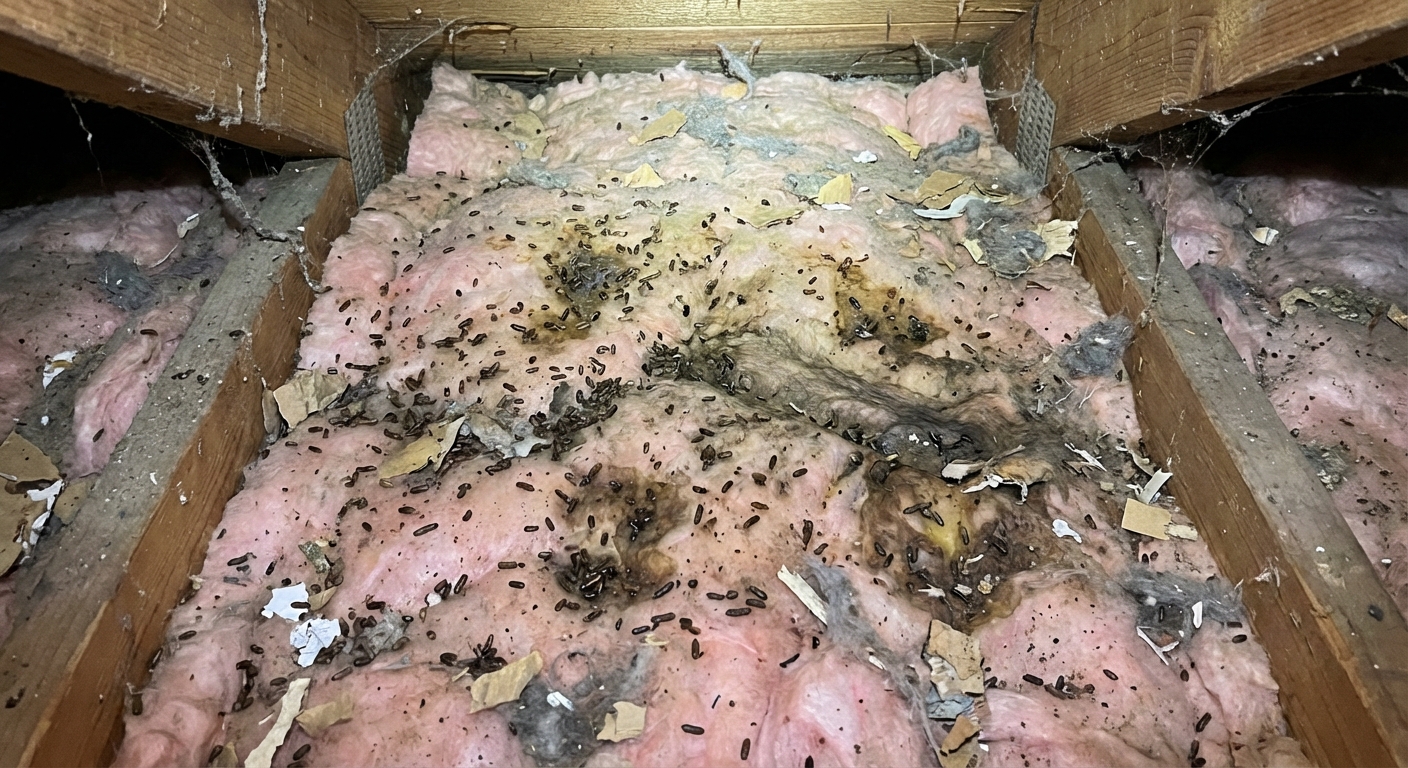
The rodents may be gone. The contamination is not.
Rodents do not just pass through an attic. They leave waste, nesting material, odor, damaged insulation, and open routes behind them. A real cleanup has to deal with what they left and how they got in.
Cleaning the attic without sealing the rodent routes is temporary. We inspect the attic, roofline, vents, soffits, utility penetrations, and other access points so the cleanup is paired with a plan to keep rodents out.
Our crew plans cleanup and exclusion together so you can approve one clear plan before work starts.
Get My Free InspectionOur process
How attic rodent cleanup actually works
Inspect and photograph
We inspect the full attic, photograph the contamination, identify every rodent entry point, and plan the cleanup before quoting anything. You see the photos before work starts.
Remove contaminated material
Industrial HEPA-filtered vacuum equipment removes affected insulation, droppings, nesting debris, and damaged material from the targeted cleanup areas.
HEPA vacuum and decontaminate
After bulk removal, we HEPA vacuum the attic deck and treat targeted surfaces with antimicrobial and deodorizing products when the inspection calls for it.
Seal rodent entry points
Identified gaps, vents, soffit penetrations, and utility access points are sealed with steel mesh and professional-grade exclusion materials.
Restore only what needs restoring
We replace insulation that was damaged or removed. If sections of the existing insulation are clean and performing, we leave them in place. You are not paying to replace what does not need replacing.
Common problems
Where rodent cleanup jobs can stay incomplete
Trapping only
The active rodents may be removed, but droppings, nesting debris, damaged insulation, and entry routes may still need a separate cleanup and seal-out plan.
Visible-debris cleanup only
Surface debris may be addressed while affected insulation, odor sources, or material packed inside joist bays still needs inspection and documentation.
Topping off over contamination
New insulation can hide existing attic conditions if the affected material is not inspected and planned before installation.
Documented work
What we photograph during your inspection
Every inspection includes photos of the contamination, the rodent entry points, and the condition of your insulation. After the work, you get photos of the sealed repairs and the clean attic. You see everything without climbing a single rung.
Rodent evidenceRodent activity and affected insulation documented before cleanup.
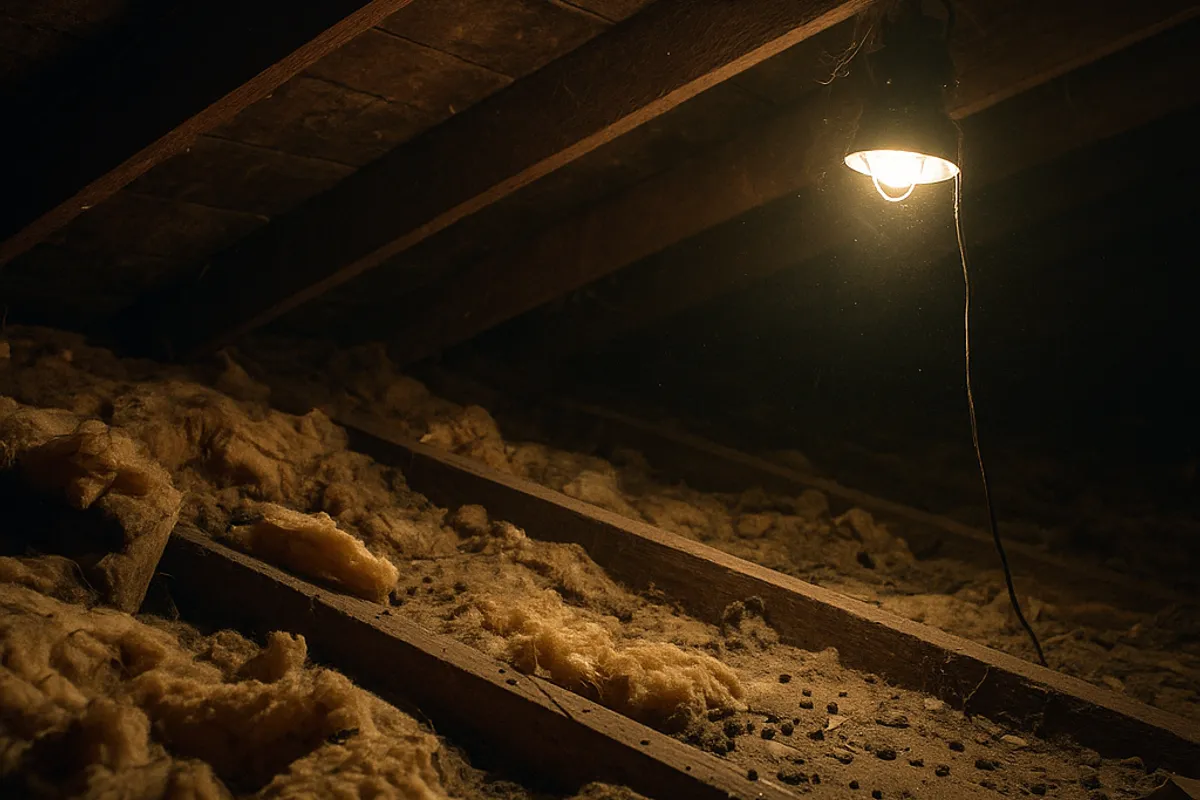 Removal
Affected attic material is removed from the targeted cleanup area.
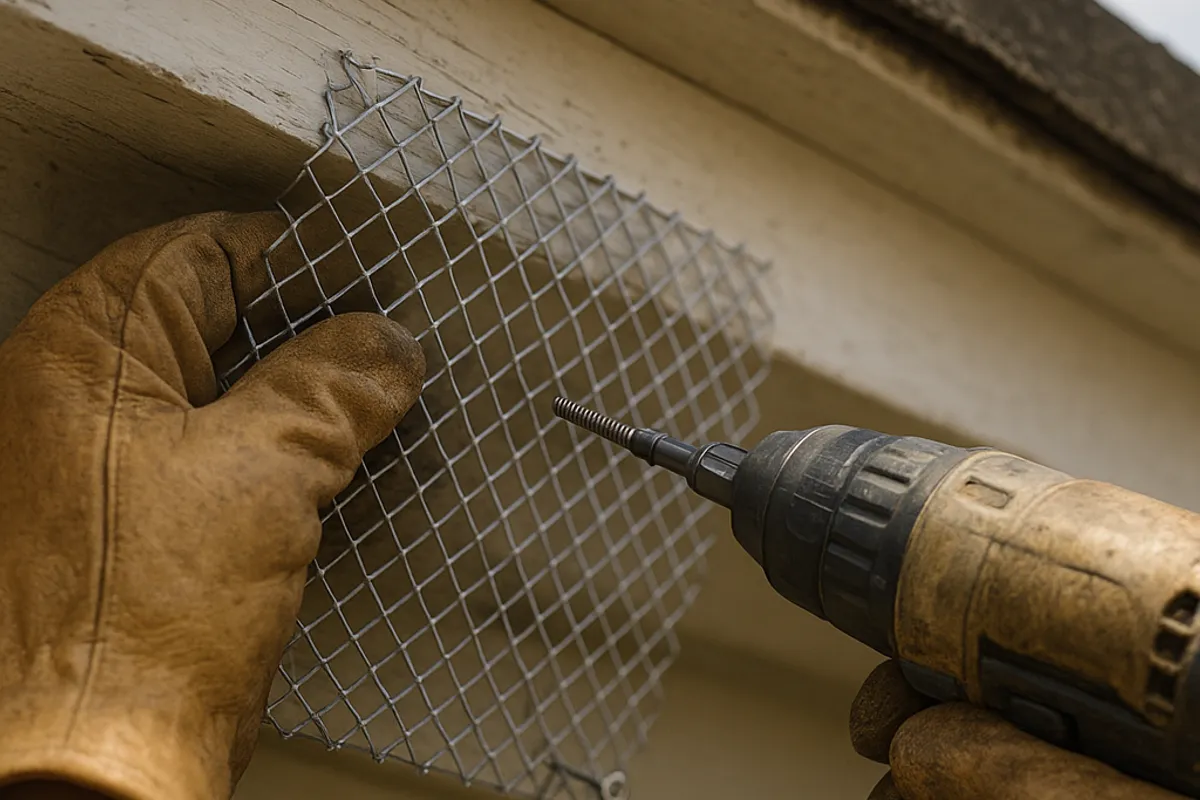 Entry point sealing
Rodent access points are sealed after the cleanup plan is confirmed.
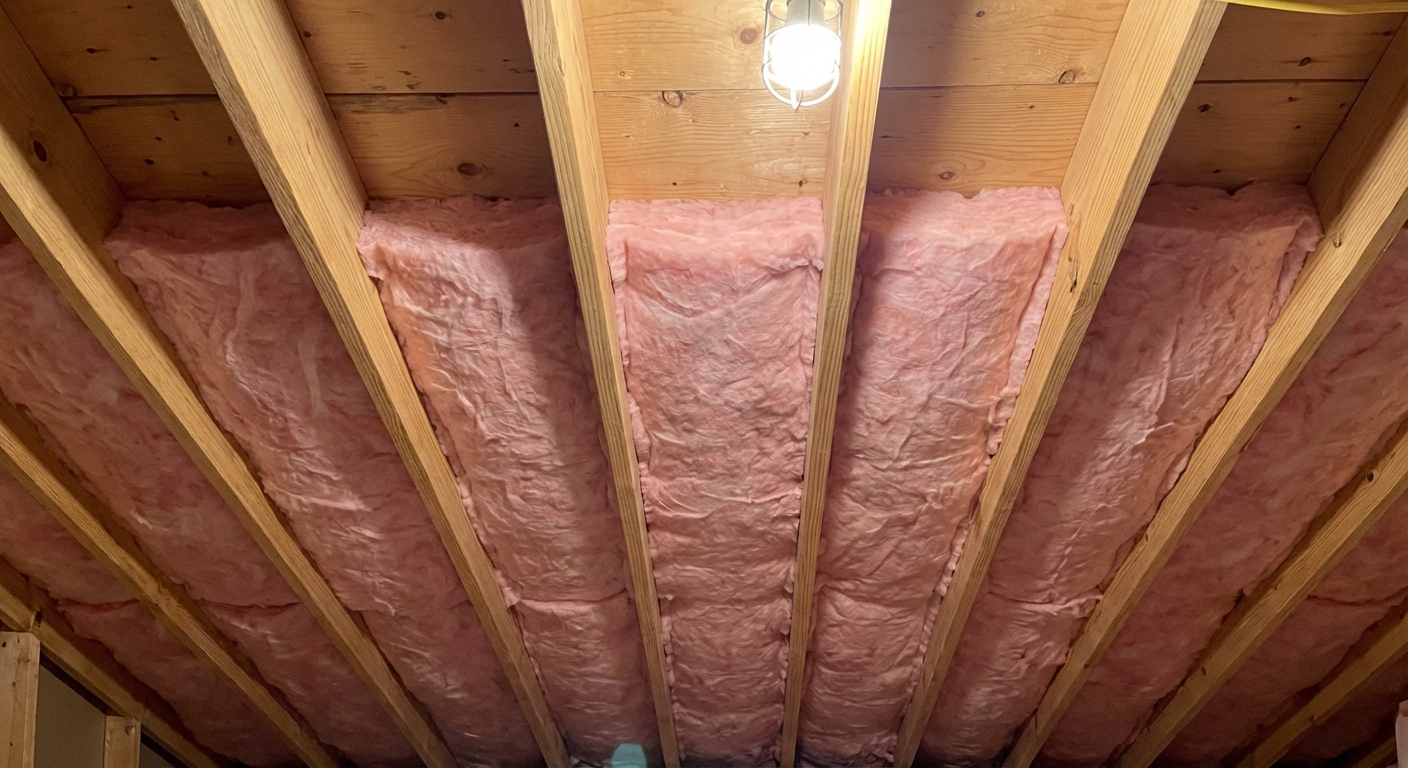 After cleanup
Finished attic condition documented after damaged material is addressed.
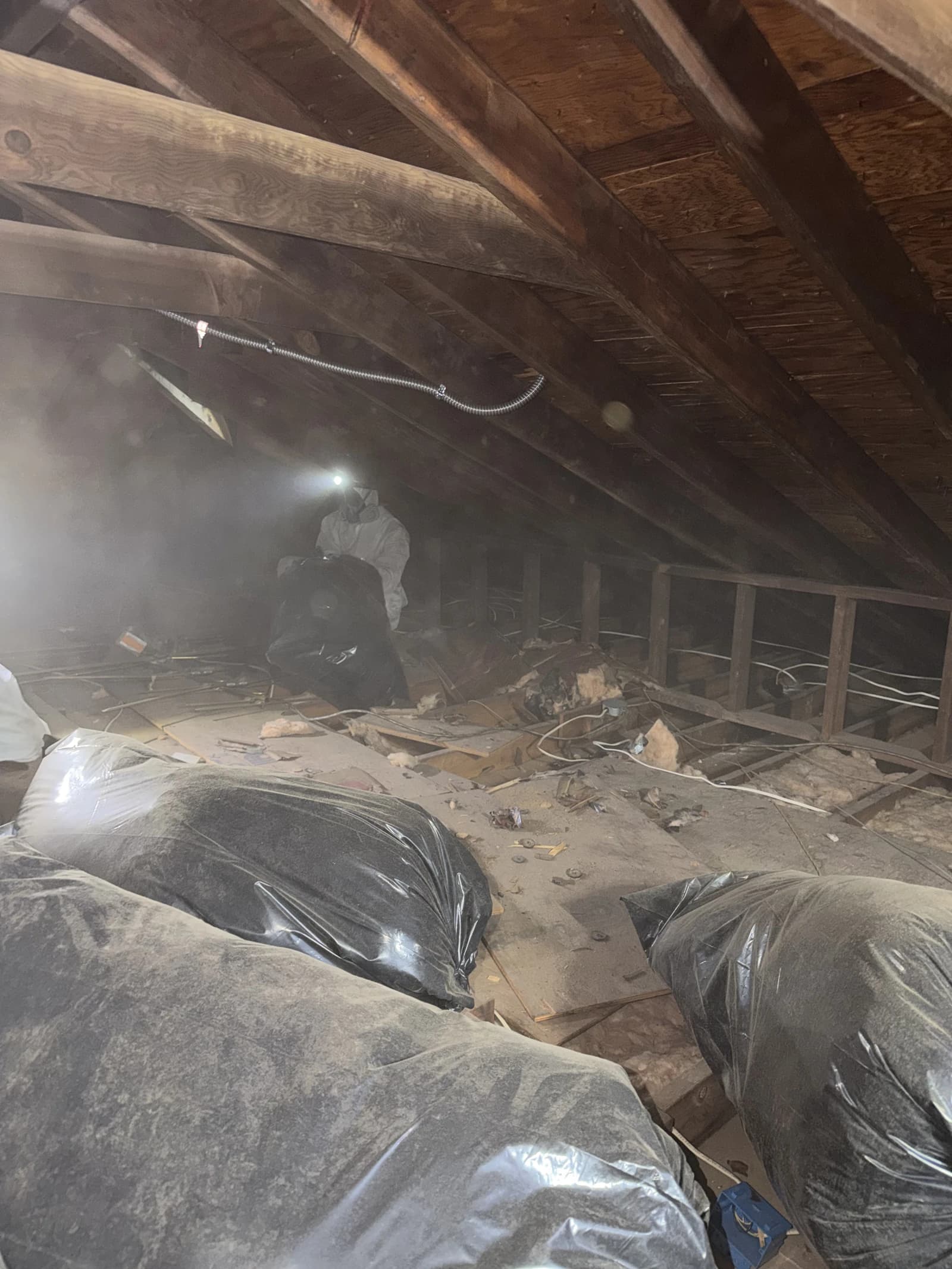
Crew removing damaged material.
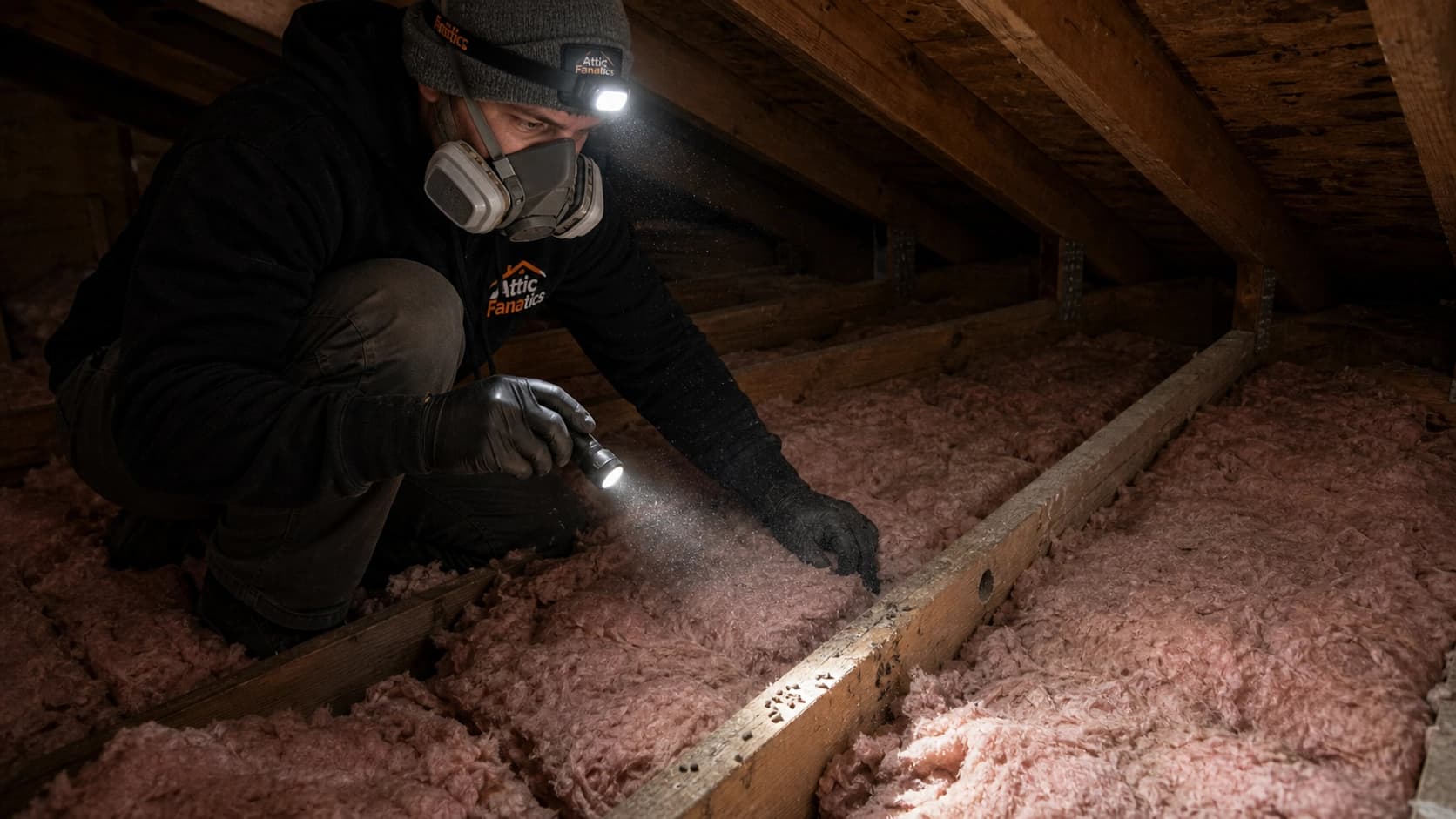
Two-person attic crew in PPE.
Honest assessment
Do I need new insulation?
Not always. If the rodent contamination is concentrated in one area and the surrounding insulation is clean, dry, and at the right depth, we leave it alone. You are not paying to replace material that is still doing its job.
Here is what we look for when deciding whether insulation needs to come out:
- Urine saturation visible on batt or cellulose surfaces
- Heavy droppings throughout the insulation, not just on top
- Nesting debris packed into joist bays
- Compressed tunnels that have destroyed R-value
- Odor that persists after surface cleanup
We show you the photos and explain what should stay and what should go. You make the call with full information.
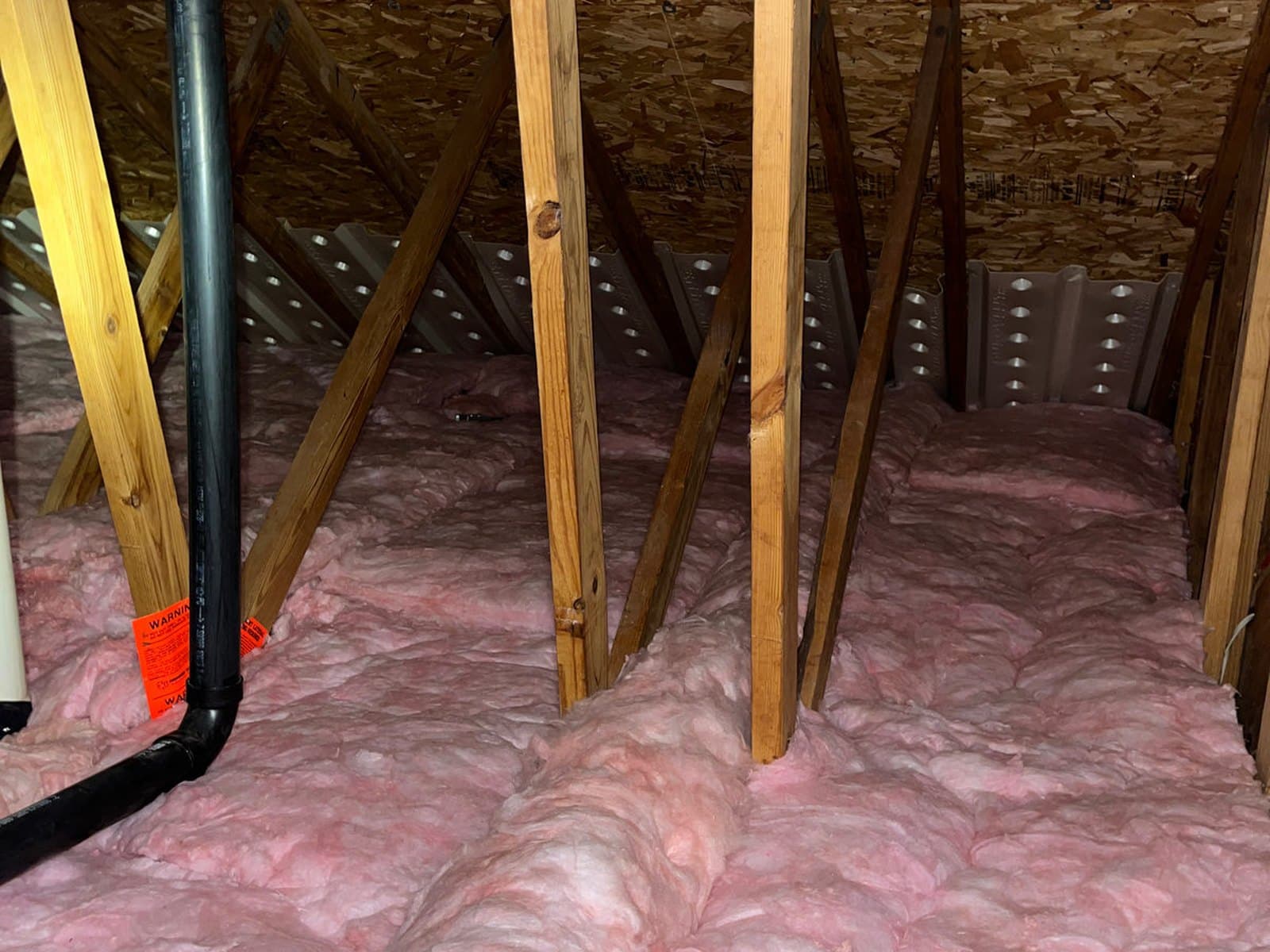
We tell you what needs replacing. Not everything.
Filing an insurance claim?
We photograph and document every phase of the work: contamination, removal, entry point sealing, and final condition. Many homeowner's insurance policies cover wildlife damage remediation. We provide the documentation your adjuster needs. We cannot guarantee what your policy covers, but we make sure the paperwork is thorough.
Get a written attic rodent cleanup plan
Free inspection. Full cost in writing. No obligation.