
Bats in Attic · Inspection First · NJ • NY • PA
Bats in your attic. Here's how we get them out.
We inspect first, find the active exit, exclude when the timing is right, and seal the gap after the bats are out, not before. Cleanup of guano or affected insulation only when the attic calls for it.
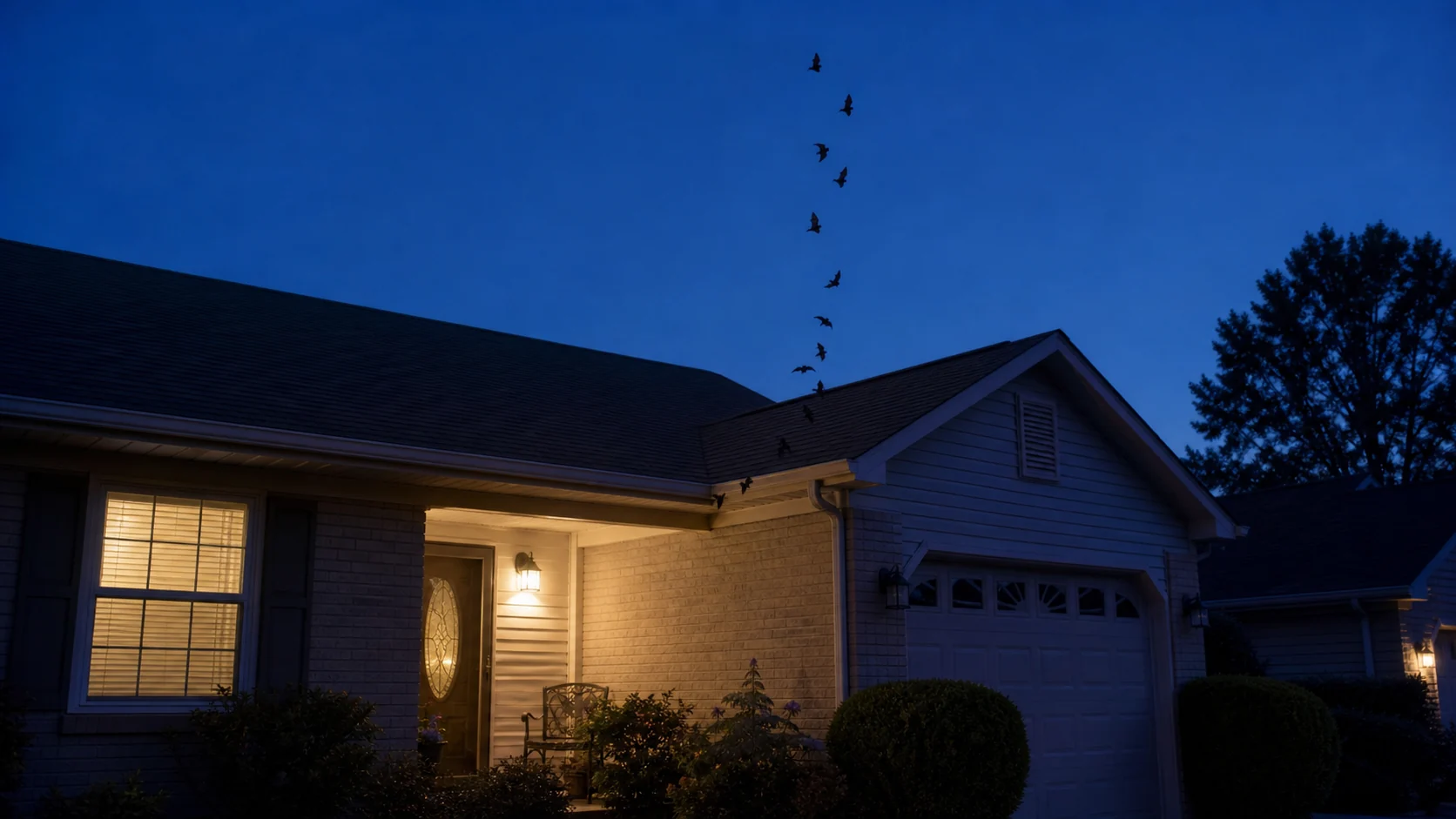
Find the active exit. It's rarely the only gap.
A bat colony usually has more than one way in and out of an attic. Sealing the wrong gap first traps the colony inside. The inspection is what tells us which gap is the active route, what other openings exist, and whether the work can happen now or has to wait for the right window.
Attic and roofline inspection
We check the attic and the exterior of the structure for the kind of evidence bats leave: staining, droppings, gnaw and grease marks, and openings small enough to be missed by a homeowner.
Active exit identified before any sealing
The opening that gets closed last is the one bats are using now. Other openings get noted in the plan, not assumed away.
Timed to when the colony can leave
May through July in New Jersey is bat maternity season. Pups can't fly yet. Sealing the exit during those weeks traps a colony of nursing bats in the roof. Inspections happen any time. Exclusion waits for when the colony can leave on its own.
One-way exclusion. The colony leaves on its own.
Bats are nocturnal. They leave the roost at dusk to feed and come back before sunrise. A one-way exclusion device sits over the active exit so bats can leave but can't return. The device stays in until the colony is out.
One-way exclusion device
Installed over the active exit. Bats can leave; the device prevents return. Sized to the gap and the structure.
Living-space pathways closed
Interior routes between the attic and the living areas get blocked while the exclusion is running, so a stray bat doesn't end up in a bedroom.
Confirmed out before the gap is closed
The exclusion device stays in place until the colony is confirmed out. The permanent seal happens after that, not before.
This is where most bat jobs go wrong.
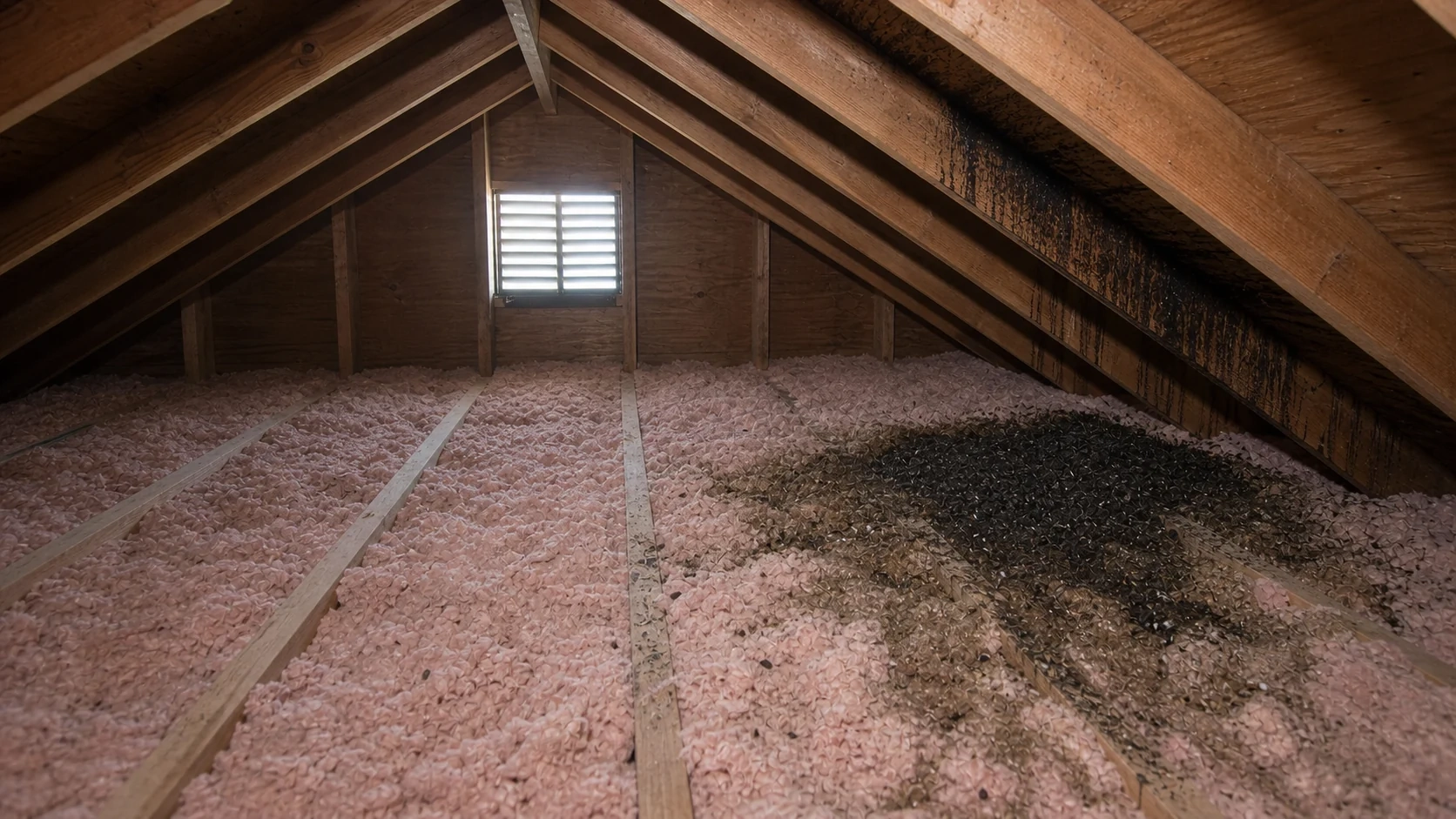
Sealed too early. The colony is now trapped in the roof.
What the shortcuts cost.
Sealed before they were out
Caulk on day one looks decisive. It traps the colony inside. The bats die in the rafters, the smell takes weeks, and stragglers find their way into bedrooms.
Wrong season, wrong move
Sealing during maternity season traps nursing pups. It creates the worst version of every other problem on this list, plus a months-long odor problem.
Patched, not sealed
Foam and caulk don't survive a winter. The closure has to be steel mesh, screwed not stapled. A handyman patch is a year-long fix on a thirty-year structure.
Some bat jobs end at the seal-up. Some need cleanup of guano and affected insulation. The inspection decides, and you see the photos before you approve anything.
See what cleanup includesPermanent closure. Then we walk the attic.
Once the colony is out, the active exit gets closed for good. Steel mesh, screwed, sealed for the exterior. Then the attic gets a walk-through. Whether cleanup or insulation work belongs in the scope is decided by what the attic actually shows, not by what sounds good on an estimate.
Steel-mesh closure
Quarter-inch hardware cloth, screwed not stapled, sealed for the exterior. Built to last past a winter, not survive the next storm.
Final walk-through with photos
You see the closed gap, the attic deck, and the existing insulation condition before anything else gets recommended. Light, dry guano in trace amounts can stay. Heavy or saturated material should come out. The photos show which.
Cleanup only when the attic calls for it
If guano is heavy or insulation is affected, cleanup gets its own scope, in writing, with photos. If the attic doesn't need it, we say that. Clean dry insulation is not automatically treated like trash.
What homeowners say
“They showed me photos of everything they found, sealed every entry point, and the house has been silent since.”
Sarah M., Montclair, NJ
“They were the only company that actually got into the attic with me and showed me the problem instead of just pitching a price.”
Dave K., Staten Island, NY
“They cleared the infestation, cleaned the contamination, and got the attic inspection-ready fast. It saved the sale.”
Maria L., Bucks County, PA
273+
5-Star Reviews
HIC #785800
Licensed & Insured
Full cost in writing
Before any work starts. No surprises.
Get your free bat inspection
Free inspection. Written recommendation. No obligation.
What does this cost?
Can you start today?
Why not just seal the hole?
Should I worry about the guano?
Is this an exterminator job?
Are you licensed and insured?
While we're up there
Same crew, same number, same standard. We do the whole attic.
Attic rodent cleanup
Affected insulation, droppings, nesting. Removed and sealed.
Attic restoration
The full reset: cleanup, sanitize, re-insulate, photographed throughout.
Attic insulation
Removal, replacement, air sealing. Lower bills, even temps.
Rodent proofing
Quarter-inch steel mesh on every gap. Built to outlast the roof.
Ask about any of it on the call.
Call (732) 351-2005