
On this page
On this page
- What Is Wildlife Exclusion?
- The Inspection Process
- Common Entry Points on NJ Homes
- Soffit Gaps
- Ridge Vent Gaps
- Gable Vent Screens
- Pipe and Wire Penetrations
- Foundation Gaps and Cracks
- Chimney Gaps
- Roof-to-Fascia Junctions
- Materials That Work (And Why They Matter)
- Galvanized Steel Mesh (1/4-Inch)
- Steel Wool Combined with Caulk
- Aluminum Flashing
- Hardware Cloth
- Expanding Foam (Never Alone)
- Concrete and Morite Patches
- The Sealing Process, Step by Step
- Why DIY Exclusion Usually Fails
- People Miss Entry Points
- Wrong Materials
- Sealing from the Wrong Side
- Sealing Animals Inside
- How Coverage Should Be Handled
Here is a principle worth repeating: trapping animals without sealing your home is like mopping the floor with the faucet still running. You can trap every squirrel in the neighborhood, but if the gap in your soffit is still wide open, new ones will move in before the week is out. That is why exclusion work is the single most important part of any animal removal job. It is the only thing that actually solves the problem for good.
Most homeowners have never heard the term "exclusion" before dealing with a wildlife problem. That is completely normal. It is a trade term, and unless you have dealt with a wildlife problem before, there is no reason you would know it. But once you understand what it is and how it works, you will never look at your roofline the same way again.
What Is Wildlife Exclusion?
Wildlife exclusion is the process of sealing every potential entry point on a structure so that animals cannot get inside. It is not about repellents, poisons, or scare tactics. It is about physically preventing access using materials that animals cannot chew, claw, or push through.
Think of it this way: your house is a box. If that box has holes, things will get in. Exclusion work closes those holes permanently. It is mechanical, it is measurable, and when done correctly, it is the only permanent solution to wildlife intrusion.
Trapping animals without sealing your home is like mopping the floor with the faucet still running.
The key word there is "permanently." Trapping removes the animal that is already inside. Exclusion prevents the next one from finding its way in. Without both, you are on a treadmill. Some homeowners have been trapping raccoons out of the same attic for three years because nobody ever sealed the entry point. That is not a solution. That is a subscription service for raccoon relocation.
The Inspection Process
Every exclusion job starts with an inspection, and a good inspection takes time. A thorough job is not a five-minute walkaround followed by a quote. A thorough wildlife inspection of an average New Jersey home takes 45 minutes to over an hour, sometimes longer for larger properties or homes with complex rooflines.
Here is what a thorough inspection covers during that time:
- Walking the full perimeter of the home at ground level, checking foundation vents, basement windows, utility penetrations, and any gaps where siding meets the foundation.
- Inspecting the roofline from a ladder, looking at every soffit joint, fascia board, ridge vent, gable vent, and chimney flashing. This is where most entry points are, and you simply cannot see them from the ground.
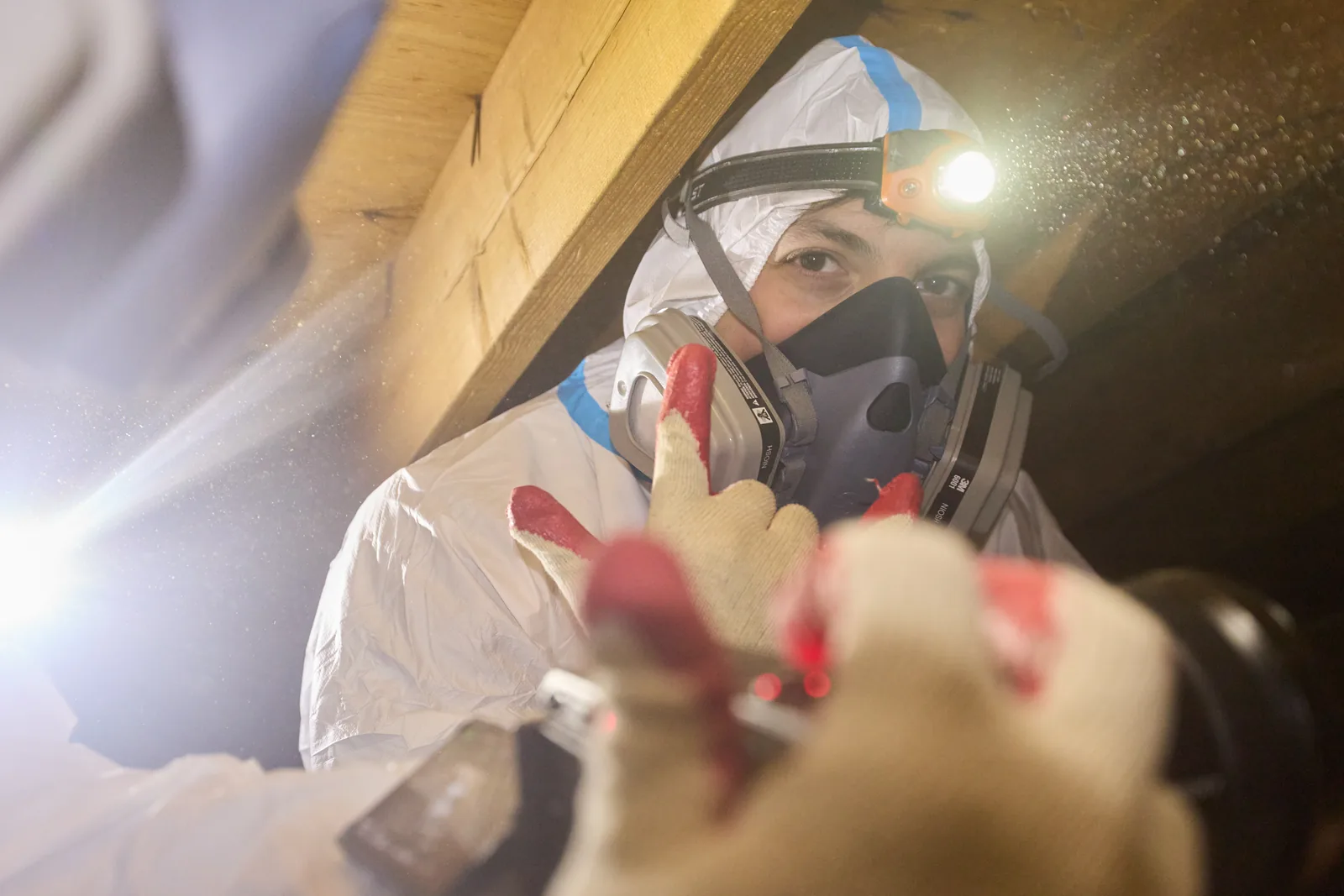
- Going into the attic to look for signs of current or past activity. Droppings, urine stains, disturbed insulation, nesting material, chew marks on wiring, and daylight coming through gaps all reveal exactly what species are involved and where they are getting in.
- Checking secondary entry points that animals might not be using yet but could exploit in the future. A gap that is too small for a raccoon today might be perfect for mice tomorrow.
- Documenting everything with photos so there is a clear record of what was found, where, and what needs to happen.
The inspection is not just about finding where animals are getting in right now. It is about identifying every vulnerability on the structure. A good exclusion job addresses all of them, not just the obvious ones.
Common Entry Points on NJ Homes
Across thousands of jobs in New Jersey, animals exploit just about every weak point a house can have. But certain entry points come up over and over again. For a homeowner in NJ, these are the spots worth paying attention to.
Soffit Gaps
This is the number one entry point. The soffit is the underside of your roof overhang, and it meets the fascia board at a joint that frequently develops gaps over time. Vinyl soffits are especially problematic because they expand and contract with temperature changes. A gap that did not exist in summer can open up to two inches wide in a cold January. Squirrels and raccoons both exploit soffit gaps regularly.
Ridge Vent Gaps
Ridge vents run along the peak of your roof and allow hot air to escape from the attic. They are covered by a cap that sits over the vent opening. Over time, that cap can lift, shift, or deteriorate, creating gaps that are invisible from the ground but perfectly obvious to a squirrel sitting on your roof. Ridge vent issues show up on roughly 40% of inspected homes.
Gable Vent Screens
Gable vents are the louvered vents you see on the triangular end walls of your attic. They almost always have a screen behind the louvers, and that screen is usually lightweight aluminum or fiberglass. Raccoons tear through fiberglass screens like tissue paper. Even aluminum screens can be peeled back or chewed through by determined squirrels.
Pipe and Wire Penetrations
Every pipe, wire, cable, and conduit that enters your home creates a hole. Those holes are supposed to be sealed, and they usually are when the house is built. But sealants deteriorate, contractors cut oversized holes, and additions or renovations create new penetrations that nobody bothers to seal properly. Mice love these because they are often hidden behind utility boxes or landscaping.
Foundation Gaps and Cracks
Homes in New Jersey deal with freeze-thaw cycles every winter, and those cycles create cracks in concrete foundations. A crack that is a quarter inch wide is a mouse highway. Gaps also frequently appear where the sill plate sits on top of the foundation wall, especially in older homes where the wood has dried and shrunk over the decades.
Chimney Gaps
The flashing where your chimney meets the roof is a classic entry point. Chimneys are masonry and your roof is wood. They move at different rates, and the seal between them fails over time. Uncapped chimneys are also common, which are basically an open invitation for raccoons to climb right down into your home.
Roof-to-Fascia Junctions
Wherever your roof changes direction, such as at dormers, valleys, or bump-outs, there is a junction between the roof deck and the fascia board. These junctions are notoriously difficult to seal during construction, and even small gaps can be widened by animals. Raccoons in particular are strong enough to peel back aluminum drip edge to widen a gap that started at half an inch.
Materials That Work (And Why They Matter)
Not all sealing materials are created equal. This is one of the biggest reasons DIY exclusion fails. People use the wrong materials, and animals chew, scratch, or push right through them. Here is what professionals actually use on these jobs and why.
Galvanized Steel Mesh (1/4-Inch)
This is the workhorse of exclusion work. Quarter-inch galvanized steel mesh stops everything from mice on up. The quarter-inch specification matters because mice can squeeze through any opening larger than that. If you use half-inch mesh, you have excluded raccoons and squirrels but left the door open for mice. Galvanized steel is the right choice because it resists corrosion. Standard steel mesh rusts out in a few years, and then you are right back where you started.
Steel Wool Combined with Caulk
For smaller gaps and cracks, steel wool is packed into the opening and then sealed over with commercial-grade caulk. The steel wool provides a chew-resistant barrier while the caulk holds everything in place and makes it weatherproof. Neither material works well alone. Steel wool by itself can be pulled out, and caulk by itself can be gnawed through. Together, they are extremely effective.
Aluminum Flashing
Aluminum flashing works for larger areas where mesh is not practical, particularly around roof-to-fascia junctions and soffit repairs. It is durable, weather-resistant, and when installed correctly, blends in with the existing roofline. The key is proper fastening. Flashing that is caulked but not screwed down can be peeled back by raccoons.
Hardware Cloth
Hardware cloth is a heavier-gauge wire mesh used over gable vents, foundation vents, and other larger openings. It provides excellent airflow while preventing animal entry. It should always be secured with screws, not staples. Staples pull out. Screws do not.
Expanding Foam (Never Alone)
Here is something important: expanding foam by itself is not an exclusion material. Mice and other rodents chew through spray foam like it is not even there. Homeowners have filled an entire gap with expanding foam and had mice break through it overnight. Foam has a role, but only as a supplement to steel mesh or steel wool. It fills irregular voids and adds insulation value, but it is never the primary barrier.
Concrete and Morite Patches
For foundation cracks and masonry gaps, hydraulic cement or concrete patching compound is the standard. These are harder than the surrounding material when cured, so animals cannot dig them out. For larger foundation repairs, concrete patches are sometimes combined with embedded steel mesh for extra protection.
The Sealing Process, Step by Step
Here is what a typical exclusion job looks like from start to finish. Every job is different, but the general process follows this sequence.
- Step 1: Confirm animal activity and species. Before anything is sealed, it is essential to know exactly what species is involved and whether the animals are still inside. Sealing an animal inside your home creates a much worse problem than the one you started with.
- Step 2: Set up trapping or one-way doors. The animals currently inside are either trapped or removed via one-way exclusion doors that allow them to leave but prevent re-entry. The approach depends on the species and the situation.
- Step 3: Seal all secondary entry points. While the one-way door or trap is handling the primary entry point, every other vulnerability on the structure is sealed. This is critical. Leaving secondary points open lets the animals simply find an alternative way in.
- Step 4: Monitor the primary entry point. The one-way door or traps are checked on a regular schedule. Once all animals have exited, the job moves to the next step.
- Step 5: Seal the primary entry point. The last opening gets closed with the appropriate materials. At this point, the structure is fully secured.
- Step 6: Photo documentation and close-out. A final inspection of all sealed areas documents everything with photos, producing a full before-and-after set. The homeowner gets a clear record of the work without climbing into the attic.
Why DIY Exclusion Usually Fails
The DIY spirit is admirable. But exclusion work is one of those jobs where doing it yourself usually means doing it twice, and the second time you end up calling a professional anyway. Here is why.
| Material | Effective? | Notes |
|---|---|---|
| Galvanized steel mesh (1/4") | Yes | The workhorse. Stops everything from mice up |
| Steel wool + caulk | Yes | Great for small gaps. Neither works well alone |
| Aluminum flashing | Yes | For larger areas, must be screwed (not just caulked) |
| Hardware cloth | Yes | Heavy gauge for vents and larger openings |
| Expanding foam alone | No | Rodents chew through it in minutes |
| Chicken wire | No | Gauge is too light |
| Duct tape | No | Not a real answer to anything |
People Miss Entry Points
This is the most common issue. A homeowner finds the obvious hole where the raccoon is getting in, seals it up, and considers the problem solved. But there were three other gaps they never noticed because they did not get on a ladder, did not go into the attic, or simply did not know what to look for. A mouse needs a gap of just one-quarter inch. Larger rodents need only half an inch. Those are not gaps you notice casually. They require a trained eye and a systematic inspection.
Wrong Materials
Countless homes have someone's expanding foam stuffed into a gap and called done. Rodents chew through spray foam in minutes. Other common DIY attempts include steel wool alone (it rusts and falls out), chicken wire (the gauge is too light), and even duct tape. None of these are exclusion-grade materials.
Sealing from the Wrong Side
Certain entry points need to be sealed from outside. Others need to be sealed from the attic side. Some need both. The direction matters because of how water flows, how materials need to be anchored, and how animals apply pressure. Sealing a soffit gap from the inside of the attic, for example, often fails because the mesh cannot be properly secured to the soffit material from that angle.
Sealing Animals Inside
This is the biggest risk. If you seal your home without confirming that all animals are out, you have trapped them inside. A trapped raccoon will tear through drywall to get out. Trapped mice will die in the walls, and the smell is something you will not forget. In dozens of cases, a homeowner sealed their home themselves and then called a professional a week later because something died in the wall or an animal was scratching through the ceiling trying to escape.
A proper exclusion job is not just about plugging holes. It is about understanding animal behavior, material science, building construction, and the right sequence of operations. That is what separates a permanent fix from a temporary patch.
How Coverage Should Be Handled
Exclusion work should be documented clearly, and any service-specific coverage should be confirmed in writing with the approved plan. That way the homeowner knows exactly what was sealed and what follow-up is tied to that job.
The point is not to throw around a badge. The point is to address every vulnerability, use professional-grade materials, and put the actual plan in writing so there is no confusion later.
Exclusion work is an investment in your home. When it is done correctly, it protects your attic, your insulation, your wiring, and your peace of mind for years to come. The animals that were living in your attic? They will move on to a house that is easier to get into. And once your home is sealed, that will not be yours.
Hearing sounds in the attic, finding droppings, or simply wanting to know whether a home is vulnerable are all reasons to schedule a professional exclusion inspection that identifies every entry point and documents what is found.
On this page
On this page
- What Is Wildlife Exclusion?
- The Inspection Process
- Common Entry Points on NJ Homes
- Soffit Gaps
- Ridge Vent Gaps
- Gable Vent Screens
- Pipe and Wire Penetrations
- Foundation Gaps and Cracks
- Chimney Gaps
- Roof-to-Fascia Junctions
- Materials That Work (And Why They Matter)
- Galvanized Steel Mesh (1/4-Inch)
- Steel Wool Combined with Caulk
- Aluminum Flashing
- Hardware Cloth
- Expanding Foam (Never Alone)
- Concrete and Morite Patches
- The Sealing Process, Step by Step
- Why DIY Exclusion Usually Fails
- People Miss Entry Points
- Wrong Materials
- Sealing from the Wrong Side
- Sealing Animals Inside
- How Coverage Should Be Handled
