
On this page
Homeowners usually ask the same six questions once they realize the noise in the attic is probably a raccoon. They want to know when raccoons leave, whether repellents work, whether the animal will leave on its own, and why the problem keeps coming back. Those are the right questions. The mistake is assuming one cheap trick solves an attic raccoon problem permanently.
If a raccoon has chosen your attic, the real solution is usually a combination of inspection, safe removal, baby-checking when needed, and exclusion work that closes the access point for good. That is the line between a short-term scare and a permanent fix.
How do I get raccoons out of my attic?
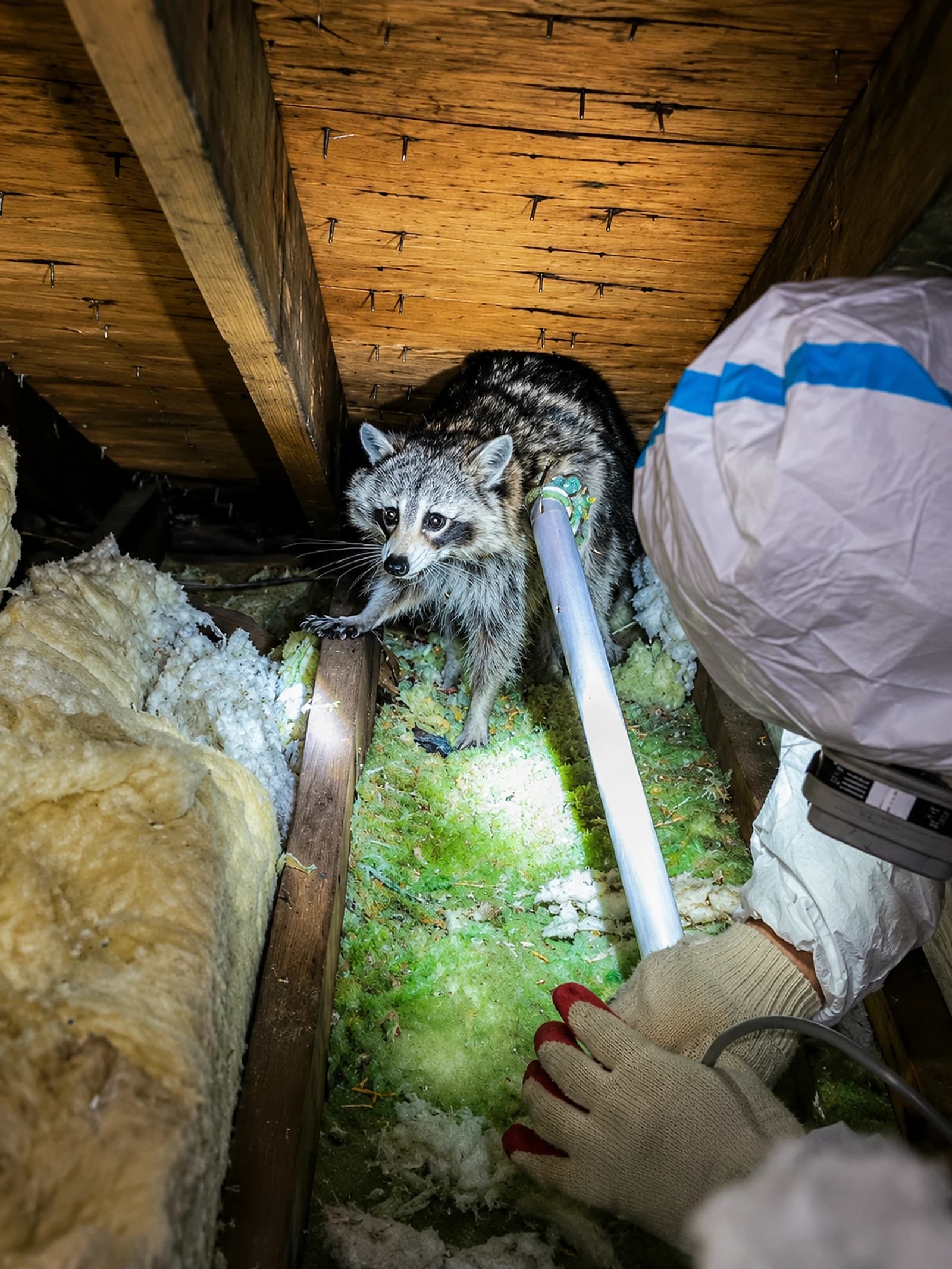
Start with the structure, not the repellent aisle. A proper attic raccoon job means identifying how the raccoon got in, checking whether a mother and kits are involved, removing the active animal safely, and then sealing the opening with materials the animal cannot tear back open.
DIY attempts usually fail for one of two reasons: the homeowner never finds the real entry point, or they trap the visible raccoon but leave the structure open. That turns the job into a revolving door.
What time do raccoons leave the attic?
Raccoons are usually most active from dusk through overnight. Many leave after dark to forage, then return before sunrise. That pattern is one reason raccoon attic problems often sound heavy and noisy at night but go quiet during the day.
But you should not treat "it got quiet" as proof the problem solved itself. A mother raccoon with babies may stay close to the den for long stretches, and even a single adult can return to the same attic night after night if the entry point stays open.
What do raccoons hate the most?
Homeowners want a smell or gadget answer here. In real attic jobs, that answer is disappointing: no scent, sound machine, or store-bought repellent reliably clears an attic once a raccoon has chosen it as a den. You might create temporary disturbance, but disturbance is not the same thing as removal.
The more useful question is not what raccoons hate. It is what actually makes the house stop working for them. That answer is removal plus exclusion. If the access point is gone, the attic stops being an easy den site.
No scent, sound machine, or store-bought repellent reliably clears an attic once a raccoon has chosen it as a den.
Why do raccoons keep coming back to my attic?
Raccoons come back because the structure still works. The opening is still there, the weak spot was patched with something they can tear apart, or the previous job removed the animal without fixing the route it used to enter.
This is why homeowners often feel like they are paying for the same problem twice. Trapping without full exclusion creates a vacancy, not a permanent solution. If the attic was a proven den once, it stays attractive until the entry point is truly closed.
Will raccoons eventually leave my attic?
A raccoon may leave temporarily to forage, but that does not mean the attic is abandoned. If babies are present or the entry point remains open, the same raccoon or another one can come right back. Waiting usually adds contamination, damaged insulation, and more repair cost.
Homeowners often misread silence as success. In practice, silence usually means the animal is resting, out foraging, or moving differently. It does not mean the structure has stopped being vulnerable.
What time of year are raccoons most active?
In New Jersey, attic raccoon calls usually spike from late winter through spring when females look for protected nesting areas. That is the season when homeowners start hearing heavy movement, vocal kits, and more obvious attic disruption.
That said, raccoons can still invade in fall and winter if shelter pressure or food pressure is high. The season changes the pattern. It does not remove the risk.
The Mistake Most Homeowners Make
The most common mistake is chasing a quick answer that does not match the actual problem. Repellents, random DIY traps, or waiting for the animal to get bored all assume the attic is not a real den. But once a raccoon has settled in, the house is already telling that animal "this works."
The better approach is simple: inspect the structure, remove the active raccoon problem safely, and do the exclusion work that stops the re-entry cycle. That is what turns a scary attic situation into a finished job.
If you hear heavy nighttime thumping, see roofline damage, or smell strong ammonia from above the ceiling, do not assume it will sort itself out. Attic raccoon jobs usually get more expensive the longer they sit.
When To Call
Call when you hear heavy night movement, see torn soffits or roof-edge damage, notice strong attic odors, or suspect babies are present. Those are all signs the problem has already moved past the "wait and see" stage.
A site inspection is the step that produces a real answer for a specific house: inspect, remove, and seal the entry points so the problem does not repeat.
