
Blown-In Insulation for NJ Attics
When batts do not fit the space, blown-in fills every gap. Financing available.
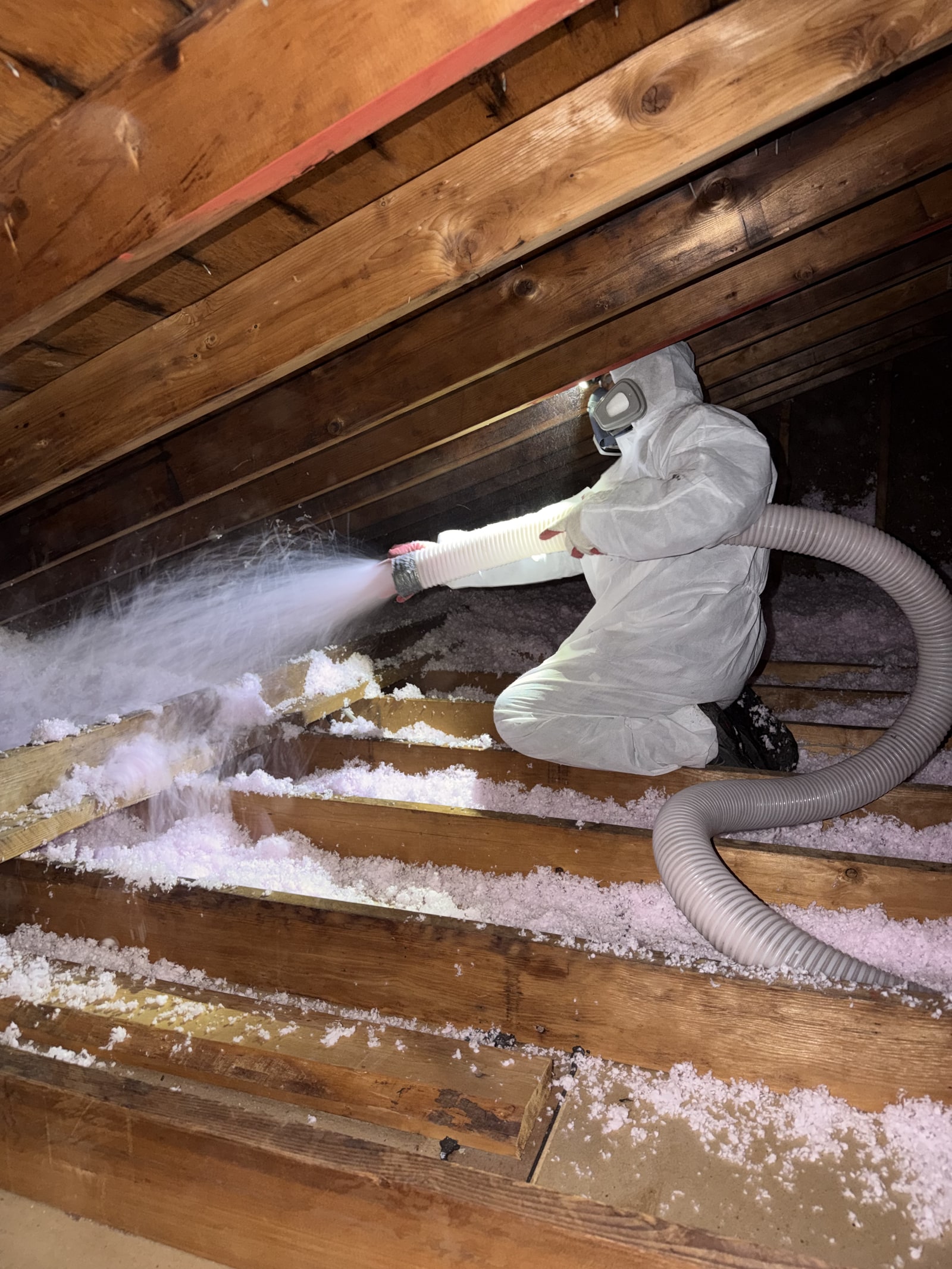
When blown-in is the right call
Fiberglass batts are our go-to for most full replacements. But some attics need a different approach.
Irregular joist spacing
Older NJ homes often have non-standard joist widths. Batts need cutting and fitting. Blown-in fills every gap without leaving exposed strips.
Obstructions and tight spots
Pipes, wiring, junction boxes, HVAC runs. Blown-in flows around them. Batts get compressed against them, which kills R-value.
Top-ups over existing insulation
Your current insulation is clean but thin. Instead of ripping it out, we blow fresh material on top to hit the R-value your attic needs.
Hard-to-reach areas
Low eaves, cathedral sections, spots where a person can not crawl. A 3-inch hose can reach where hands can not.
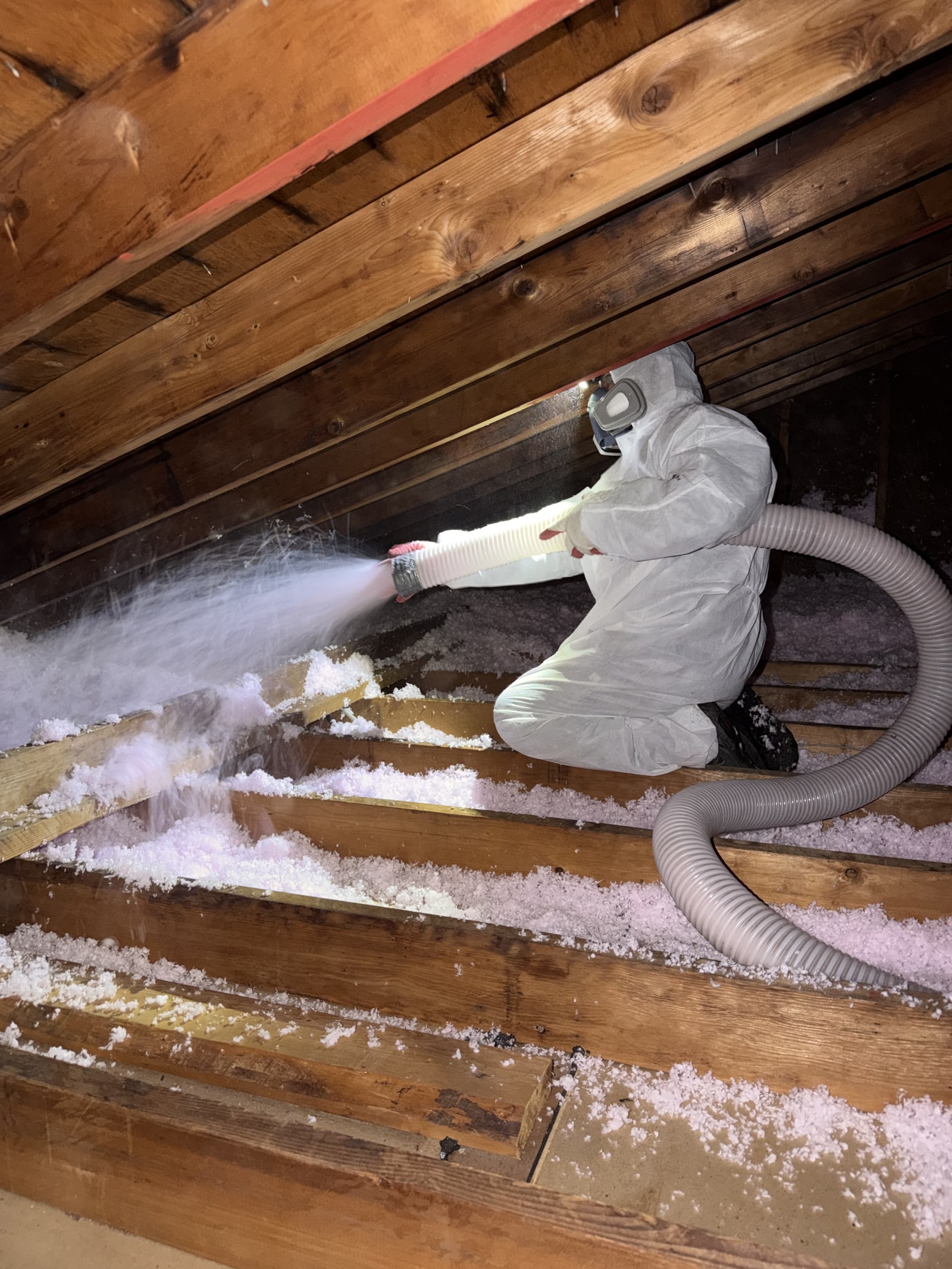
How we install blown-in insulation
Assess the attic and calculate depth.
We measure square footage, check existing insulation condition, and calculate the blown-in depth needed to hit your target R-value. Everything goes in the written plan.
Prep baffles and seal air leaks.
Baffles keep soffit vents clear so your attic breathes properly. We seal gaps around pipes, wires, and can lights before insulating. Air sealing is where most of your comfort comes from.
Blow to a consistent, verified depth.
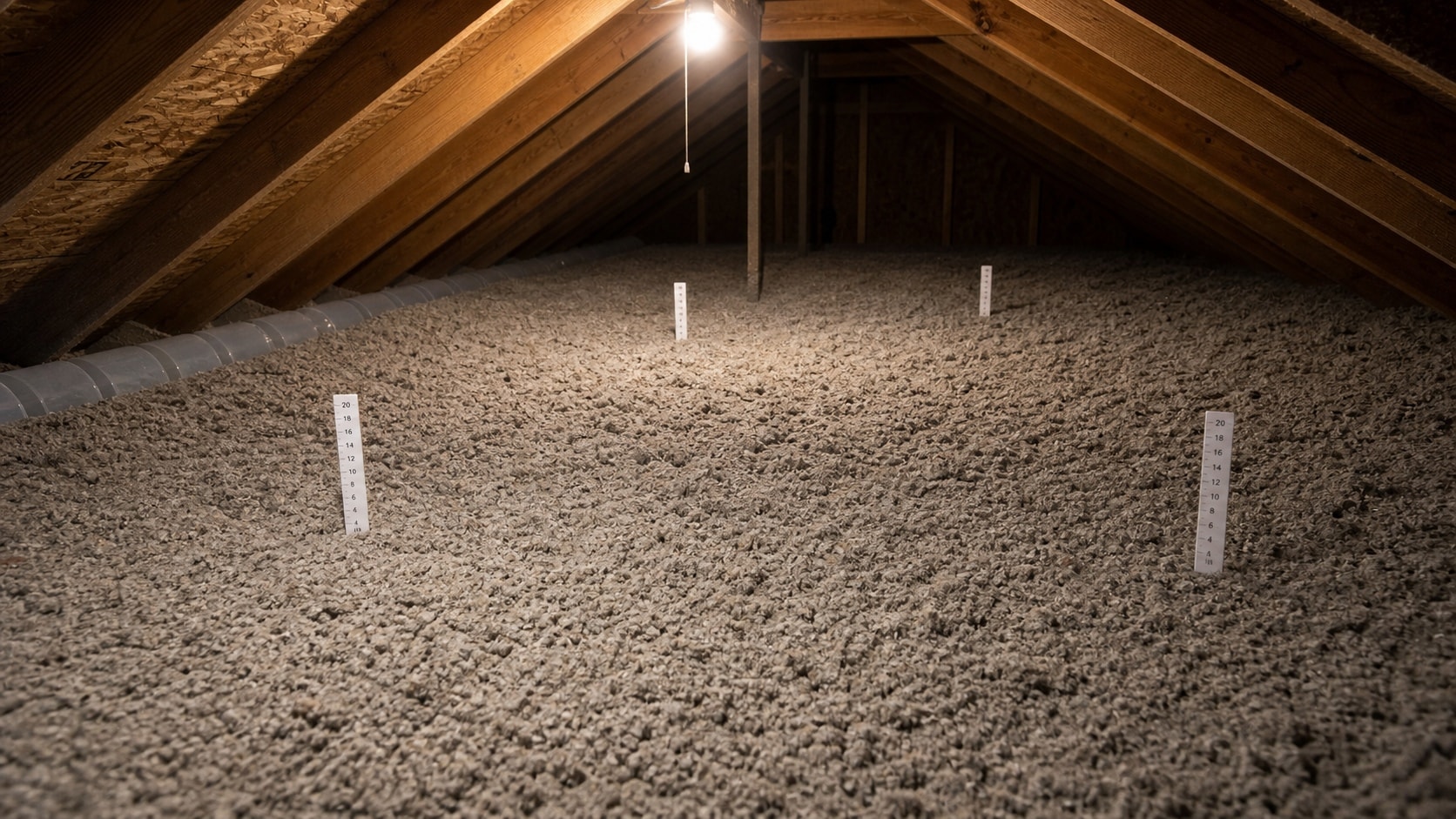
Fiberglass or cellulose, depending on your attic. We blow to an even depth across the entire floor, not just the easy-to-reach center. Depth rulers go in so you can see the coverage.
Final check and cleanup.
We verify depth at multiple points, confirm baffles are clear, and clean up. You get a record showing what was installed and where.
Full cost in writing before we start.
Material type, depth target, square footage, total price. You see the plan before we bring the machine.
Blown-in vs. batt insulation
We use both. The attic decides which one.
Looking for batt insulation details? Read our fiberglass batt page
Common questions about blown-in insulation
What's better, blown-in or batts?
How deep should blown-in insulation be?
Does blown-in settle over time?
Do you use fiberglass or cellulose?
Not sure which type you need?
That is what the inspection is for. Free, no obligation.