
Mice in the Attic · NJ, NY, PA
Mice in the attic? Traps alone never end it.
Light, fast scratching after dark is the giveaway. Traps catch a few. Sealing the entries is what ends it.
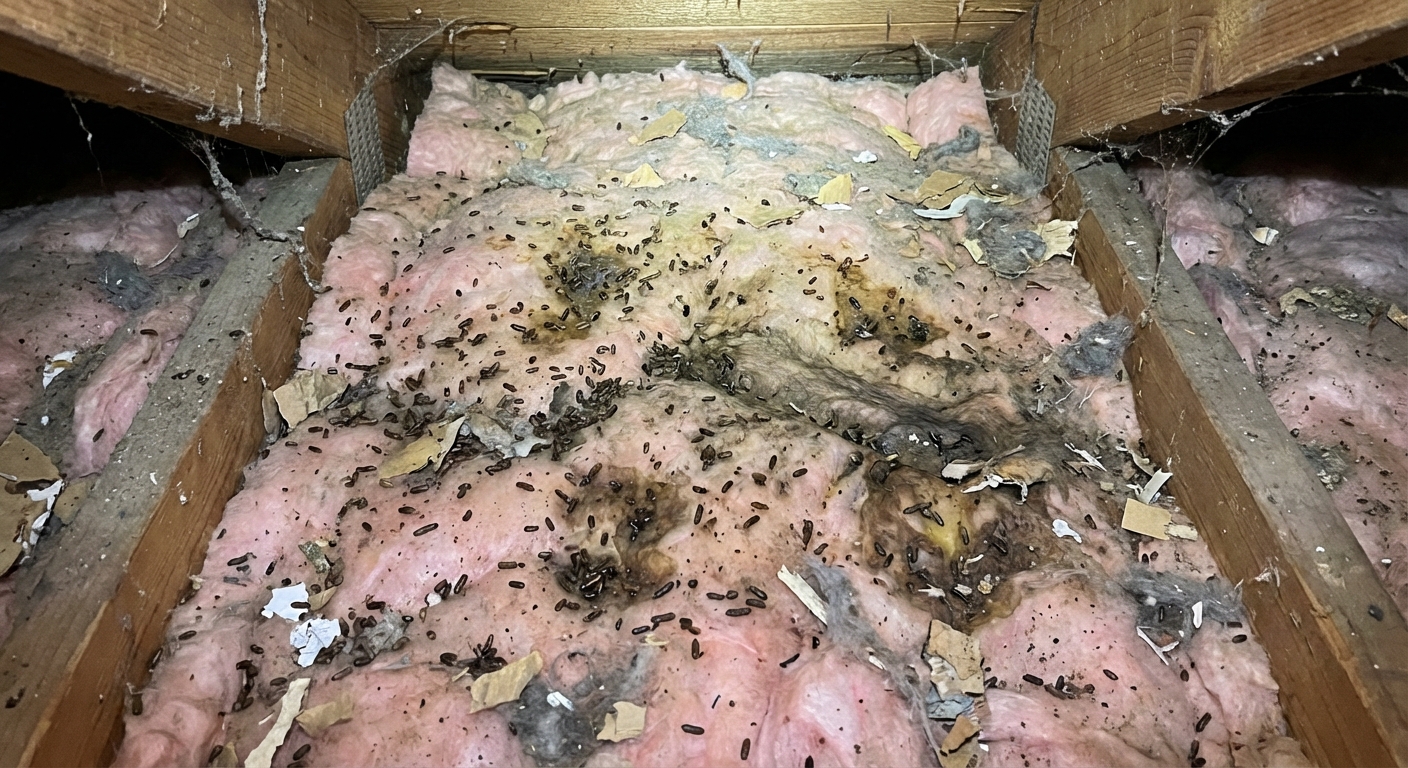
Does seeing two mice mean an infestation?
Seeing two mice confirms active mouse activity, but the count alone does not tell us how established it is. In the attics our techs inspect, we judge that by droppings density and spread, nesting sites or packed runways in the insulation, and how many entry points are still open. A few fresh droppings in one area can be recent; evidence across beams and several dime-size gaps points to an established infestation.
What to know
- Scratching that starts after dark and sounds light and fast is usually mice. Daytime noise points to squirrels.
- Droppings about the size of rice grains near the attic hatch or along beams confirm it.
- Traps alone never end it. Mice breed faster than traps catch them, and open entries keep new ones coming.
- The fix runs in order: seal every entry, remove what they ruined, bring the insulation back to full depth.
What the sounds upstairs are telling you.
Most people hear mice long before they see any other sign. The pattern of the noise narrows it down fast, and the attic itself usually settles the question.
Scratching after dark
Mice are most active at night. Light, fast scratching or skittering above the ceiling after the house quiets down is the classic sign. Squirrels make heavier noise around dawn and dusk.
Droppings the size of rice grains
Dark droppings about the size of a grain of rice collect near the hatch, along beams, and beside wiring runs. The more spots you find, the longer they have been up there.
Tunnels and trails in the insulation
Mice burrow through attic insulation and leave packed-down runways and small tunnel openings. From the hatch, the surface looks trailed instead of fluffy.
Why traps alone never end it.
Traps are part of the job, but on their own they treat the symptom. Two things keep the problem alive no matter how many traps go up, and the usual shortcut makes it worse.
They breed faster than you trap
A female mouse can raise a new litter about every month. Catching three this week does not move the math while a nest in the insulation keeps producing more.
A dime-sized gap is an open door
A mouse fits through a hole the width of a dime. Gaps at the roofline, soffit returns, and utility lines stay open year after year, letting new mice in every fall.
Poison trades one problem for another
Poisoned mice die inside walls and ceilings, where the odor lingers for weeks. We trap and remove instead, so nothing is left behind to find by smell.
Every month they stay, the attic pays for it.
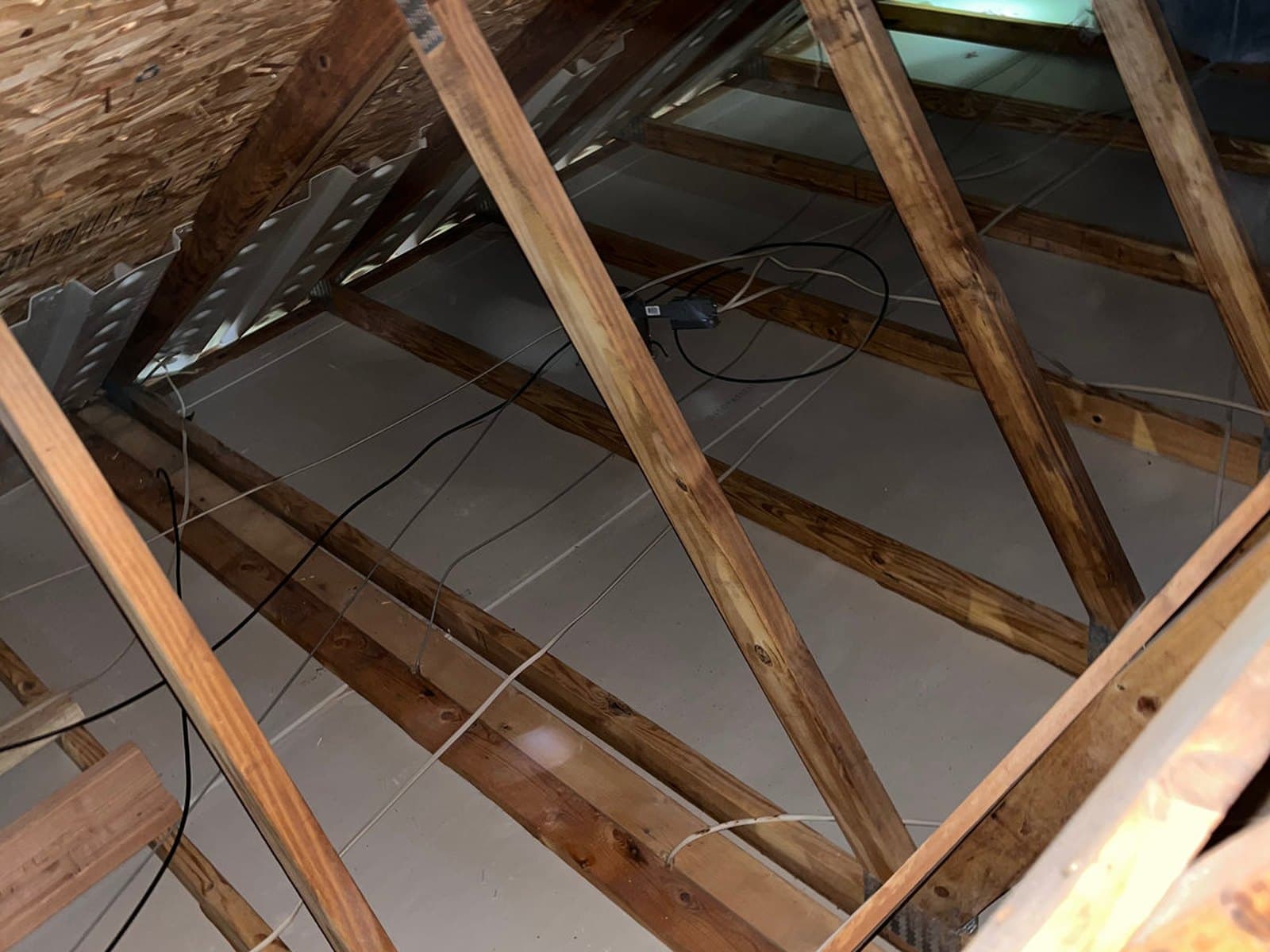
Insulation this far gone gets removed, not topped over.
What builds up while the traps keep catching a few.
Droppings and urine accumulate
Mice mark their runways constantly. Over months the mess settles through the insulation, and the smell can start drifting into the rooms below.
Gnawed wiring
Mice keep their teeth short by gnawing, and wire coatings are a favorite target. It is the quietest risk in the attic and the best reason not to wait.
Flattened insulation stops working
Tunneled, matted insulation loses the trapped air that makes it work. Heating and cooling costs creep up while the material quietly fails.
Not sure what you are hearing? Send the form and describe the noise. We will tell you what it sounds like to us.
Call (732) 351-2005Seal, clean, re-insulate. In that order.
Ending a mouse problem is a sequence, not a product. Each step closes the door behind the one before it, and photos document the whole run.
Every entry sealed
We trace the roofline, soffits, vents, and utility penetrations, then close every gap down to dime size with metal mesh and sealant mice cannot chew through.
Ruined material removed
Insulation the mice tunneled and soiled comes out with sealed equipment. Material in good shape stays. The inspection photos make the call.
Insulation back to full depth
New insulation goes in at R-38, the depth we recommend for attics in this climate, so the attic comes back better than it was before the mice.
What homeowners say
“They cleaned, vacuumed, disinfected, sealed holes, and completely replaced/added new insulation. They even inspected the exterior of the house and blocked some holes where squirrels could get in (and were, as it turned out).”
Jamey L., NJ
“I needed my attic and crawl space insulation removed due to a large infestation. Mike was by far the best guy for the project. I would call him a rodent detective.”
Marc Z., NJ
“They relocated a mother raccoon and 2 babies that had been living in my attic for quite some time.”
Beth B., NJ
291+
Google reviews
NJ HIC #13VH12119000
Licensed & Insured
Full cost in writing
Before any work starts. No surprises.
Get your free mice inspection
We'll call you to go over what's going on and set up the visit. Free inspection, written recommendation, no obligation.
Common questions
How do I know it is mice and not squirrels?
Will traps alone get rid of mice in the attic?
Do you use poison?
What about the droppings in my insulation?
How fast can you get here?
What does mice removal cost?
While we're up there
Same crew, same number, same standard. We do the whole attic.
Rodent proofing
Quarter-inch steel mesh on every gap. Built to outlast the roof.
Attic rodent cleanup
Affected insulation, droppings, nesting. Removed and sealed.
Attic restoration
The full reset: cleanup, sanitize, re-insulate, photographed throughout.
Attic insulation
Removal, replacement, air sealing. Lower bills, even temps.
Ask about any of it on the call.
Call (732) 351-2005