On this page
On this page
- What does animal-damaged insulation actually look like?
- Raccoons
- Mice
- Squirrels
- Bats
- Why can't you just clean contaminated insulation?
- What happens if you leave it?
- Ongoing health risk
- Degraded R-value
- Persistent odor
- Scent attracts new animals
- The full attic restoration process
- Step 1: Containment
- Step 2: Industrial vacuum removal
- Step 3: Decontamination
- Step 4: Air sealing
- Step 5: Fresh insulation
- How much insulation damage do different animals cause?
- Raccoons: extensive, beyond what you can see
- Mice: widespread but less visible
- Squirrels: localized but total
- Bats: the work depends on where activity is found
- Does insurance cover attic restoration after animals?
- How to prevent animals from damaging insulation again
- Exclusion: sealing every entry point
- Rodent proofing with galvanized hardware cloth
- Ridge vent protection
- Soffit screening
- Frequently Asked Questions
- Your Attic After Animals: The Path Forward
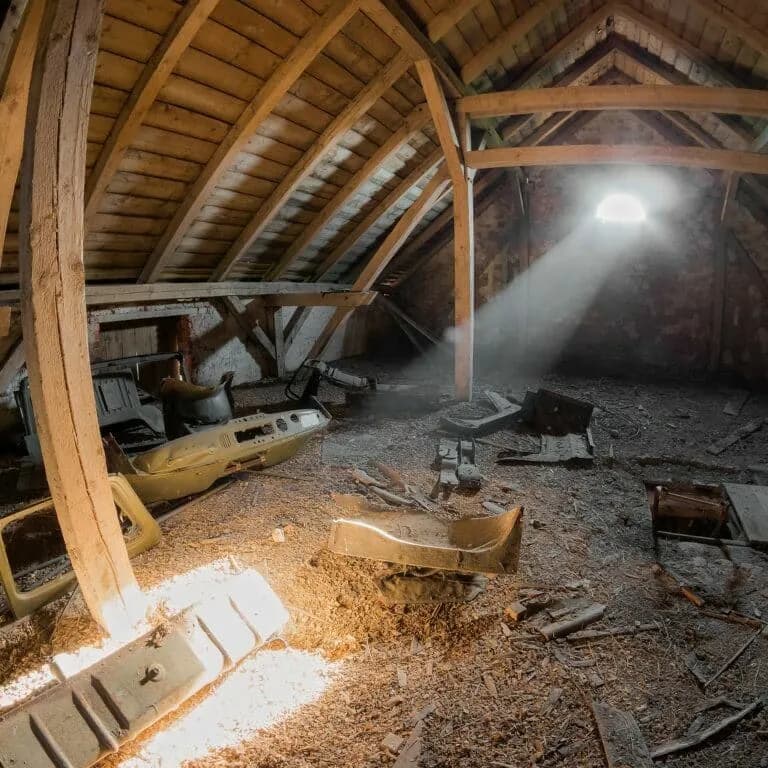
When raccoons, mice, squirrels, or bats get into an attic, the insulation is almost always the first casualty. They nest in it, compress it, tear it apart, urinate on it, and leave droppings throughout. Once porous insulation is affected by animal waste, the practical fix is removal and replacement, not surface cleaning. What comes next is a full attic restoration: removal, decontamination, air sealing, and fresh insulation.
This is not a niche problem. If you have had wildlife in your attic for any length of time, the insulation is compromised. The visible damage is always a fraction of the actual damage. And the longer it stays, the worse it gets.
This comes up constantly. A homeowner calls because they heard scratching, or they noticed a smell, or their energy bills crept up for no apparent reason. The animals get out, and then comes the question: what about the insulation? The answer is almost always the same. It has to go.
Here is what that looks like, why it matters, and what the full restoration process involves.
What does animal-damaged insulation actually look like?
Every species leaves a different calling card in your insulation. After a few hundred attic inspections, the animal can often be identified before it is even seen, just from the damage pattern.
Raccoons
Raccoons are the demolition crew of the wildlife world. They do not quietly coexist with your insulation. They rip it apart, compress it flat in their travel paths, and pile it up into massive nesting mounds. A raccoon will clear an area the size of a dining room table down to bare joists to build a single nest, then drag insulation from ten feet away to pad it.
They also create latrine sites, dedicated areas where they repeatedly defecate. These sites are concentrated, but the contamination extends far beyond them because raccoons track fecal material on their paws throughout the attic. The actual affected area is typically three to four times larger than what you can see from the hatch.
A mother raccoon nesting in an attic for six to eight weeks will destroy more insulation than most homeowners think their attic even contains.
Mice
Mice are the opposite of raccoons. Where raccoons announce their presence with large-scale destruction, mice work quietly and spread everywhere. A mouse weighs less than an ounce, so you will not find large compressed paths. What you will find is tunneling.
Mice burrow through blown-in cellulose and fiberglass, creating tunnel networks that run along joists and between batts. They nest in the folds of batt insulation, pulling apart the fibers to create small, warm pockets. And they deposit urine and droppings continuously as they travel, which means the contamination is not concentrated in one area. It is everywhere the mice have been, which is usually the entire attic.
A single pair of mice can produce 60 or more offspring in a year. By the time you find droppings in the attic, the mice have been there for months, and the insulation has been serving as their highway system the entire time.
Squirrels
Squirrels are shredders. They chew insulation apart to create nesting material, pulling fiberglass into long strips and wadding it into balls. They also cache food in insulation, tucking nuts and seeds into the material for later retrieval. This is not harmless behavior. The food caches attract secondary pests, and the shredded insulation loses its R-value entirely in the damaged zones.
Squirrel damage tends to be more localized than raccoon or mouse damage. It concentrates near their entry point (usually a ridge vent, gable vent, or soffit gap) and extends along the ridge line where they prefer to nest. But in that concentrated area, the damage is total. The insulation is not just contaminated. It is physically destroyed.
Bats
Bat-related attic work starts with inspection, not assumptions. Bats may leave signs near ridge boards, rafters, gable walls, and the insulation below active areas. The important thing for a homeowner is simple: do not guess from the hatch. Document the area, identify affected material, and plan cleanup if needed.
Some bat-related jobs involve attic insulation only. Others involve adjacent wall, soffit, or roofline areas. A professional inspection determines the real work area before anyone quotes a cleanup, an attic cleanout, or restoration.
Why can't you just clean contaminated insulation?
This is the most common question about contaminated insulation. It makes sense. If a raccoon made a mess on your kitchen floor, you would clean it. If a mouse left droppings on your countertop, you would disinfect it. Why can't you just spray some disinfectant on the insulation and call it done?
The answer is material science. A kitchen floor is a hard, nonporous surface. Contaminants sit on top of it. You wipe them off, the surface is clean. Insulation is the opposite. Fiberglass and cellulose are porous materials designed to trap air in their fibers. That same structure that makes them effective insulators also makes them effective at trapping contaminants.
When a mouse urinates on fiberglass insulation, the urine does not pool on the surface. It wicks into the fibers and saturates the material. When raccoon feces breaks down on top of blown-in cellulose, the particulates work their way into the cellulose fibers. When animal waste dries and breaks apart on batt insulation, the debris embeds in the fiberglass matrix.
No amount of spraying, fogging, or treating reverses this. You cannot extract urine from fiberglass any more than you can extract red wine from a carpet pad. The contamination is not on the insulation. It is in it.
This is not a matter of opinion. The CDC recommends professional removal of insulation contaminated with rodent droppings, and the EPA takes the same position for raccoon-contaminated material. The guidance exists because cleaning porous materials contaminated with biological hazards does not work. The only effective remediation is removal.
Insulation is designed to trap air in its fibers. That same structure traps urine, fecal particulates, and fungal spores. You cannot clean what is embedded in the material itself.
What happens if you leave it?
Some homeowners get the animals out and decide to leave the insulation alone. Maybe it does not look that bad from the hatch. Maybe they figure out of sight, out of mind. Here is what actually happens.
Ongoing health risk
Contaminated insulation does not become clean again over time. Biological contaminants can remain in porous material long after the animal activity stops, especially when droppings, urine, and nesting debris have been sitting in insulation for weeks or months.
Your attic is not sealed off from your living space. Every recessed light, every plumbing vent, every electrical penetration in the attic floor is a pathway for contaminated air to reach the rooms where your family lives and sleeps. The stack effect, warm air rising through these gaps in winter and conditioned air pulling attic air down in summer, means your HVAC system is circulating whatever is in your attic through your home. For a deeper look at the specific diseases and exposure pathways, see the guide to contaminated attic insulation.
Degraded R-value
Insulation works by trapping still air in its fibers. When animals compress it, tear it apart, tunnel through it, or pile it into nests, the fiber structure that creates those air pockets is destroyed. Compressed fiberglass loses R-value proportionally to its compression. Tunneled blown-in has gaps where there is no insulation at all. Shredded batts are just loose fiber with no thermal performance.
The practical result is higher energy bills. Your heating system runs longer in winter because heat escapes through the damaged insulation. Your AC runs longer in summer for the same reason. The insulation is still technically present, but it is not doing its job.
Persistent odor
Animal urine in insulation produces ammonia. In the winter, when attic temperatures hover around 30 to 50 degrees, the smell is faint. In July, when attic temperatures reach 130 to 150 degrees, that contaminated insulation is essentially baking. The ammonia off-gassing intensifies dramatically, and the smell migrates down into the living space.
Calls spike every June and July from homeowners who say their house suddenly smells terrible. The animals may have been gone since January. The insulation has been sitting there the entire time, waiting for summer to announce what is inside it.
Scent attracts new animals
This is the one that really gets people's attention. Contaminated insulation holds the scent of previous occupants. To a raccoon, mouse, or squirrel, that scent says: something lived here safely and found food. It is a biological welcome sign.
Homeowners who remove the animals but leave the insulation frequently end up with a new infestation within a year. The entry points may be sealed, but if there is any vulnerability at all, the scent trail gives the next animal extra motivation to find it. Removing the contaminated insulation removes the invitation.
The full attic restoration process
This process is refined over thousands of attics. Every step exists for a reason, and skipping any of them compromises the result.
Step 1: Containment
Before any contaminated material is disturbed, the work area is sealed off from the living space below. The attic access point is contained, open penetrations near the work zone are covered, and protective barriers prevent debris from reaching the rooms beneath. Workers wear full PPE including respiratory protection rated for biological hazards.
The goal is simple: nothing from the attic enters your home during the process.
Step 2: Industrial vacuum removal
All contaminated insulation is removed using industrial HEPA-filtered vacuum equipment. HEPA filters capture 99.97% of particles down to 0.3 microns, which includes the bacterial, fungal, and viral contaminants present in wildlife-damaged insulation. The material goes directly from the attic into sealed containment bags via hose, never passing through the living space.
Standard shop vacuums and household vacuums blow contaminants straight through their filters and into the air. That is why this step requires commercial equipment. Scooping insulation into garbage bags by hand creates the same problem. The only safe method is HEPA vacuum extraction.
Step 3: Decontamination
With the insulation removed and the attic floor fully exposed, every surface (joists, sheathing, structural members) is treated with antimicrobial agents. This neutralizes bacteria and pathogens that transferred from the contaminated insulation to the wood and other surfaces during the infestation.
This step is not optional. The insulation was in direct contact with contaminated surfaces for weeks or months. The wood absorbed contaminants too. Installing new insulation over untreated surfaces defeats the purpose of removing the old material.
Step 4: Air sealing
This is where a remediation project becomes an upgrade. With the attic floor completely exposed, no insulation blocking access, every penetration in the attic floor is visible and reachable. Pipe chases, wire holes, recessed light housings, top plates of interior walls, HVAC boots, and the attic hatch perimeter are all sealed.
This is the single most impactful energy efficiency improvement you can make to a home. The Department of Energy identifies attic floor air sealing as one of the highest-value weatherization measures because the attic floor has more penetrations per square foot than any other building envelope surface, and heat rises, making those leaks especially costly.
Sealing these penetrations also eliminates the pathways that allowed contaminated attic air to reach your living space. Air sealing during an insulation replacement, when the surfaces are fully accessible, is dramatically more effective and less labor-intensive than trying to seal around existing insulation. This is the ideal time to do it.
Step 5: Fresh insulation
New insulation is installed to the depth and coverage the existing home actually needs. The clean, sealed, decontaminated attic floor is the ideal substrate for new insulation to perform at its rated R-value. The insulation your home had before was not performing anywhere near its rating, not after animals compressed, shredded, tunneled, and contaminated it.
Removal, decontamination, air sealing, and new insulation are coordinated under one written plan. No juggling multiple contractors and no guessing about what is included.
How much insulation damage do different animals cause?
Not all infestations are created equal. The extent of restoration depends heavily on which animal was in the attic and how long they were there.
Raccoons: extensive, beyond what you can see
Raccoons cause the most concentrated destruction of any attic wildlife. A single raccoon can destroy an area of insulation the size of a bedroom in a matter of weeks. A mother with kits will clear an area three to four times larger than her nesting site.
But the real issue is the hidden contamination. Raccoon latrines are the visible problem. The fecal material tracked on their paws across the entire attic is the invisible problem. What you can see from the attic hatch is a fraction of the actual damage. Full restoration after a raccoon infestation almost always involves removing all of the insulation, not just the obviously damaged sections.
Mice: widespread but less visible
Mouse damage is deceptive. You may look into the attic and see insulation that appears largely intact. But pull back a batt or dig into the blown-in and you will find tunnels, droppings, urine staining, and nesting material throughout. Mice travel the entire attic. Their contamination footprint matches their travel pattern, which is everywhere.
The tunneling also creates thermal gaps. Where the mice have burrowed, there is no insulation, just an air channel. These gaps reduce the effective R-value of the entire attic even if the rest of the insulation looks fine from above.
Squirrels: localized but total
Squirrel damage concentrates near the entry point and along the ridge line where they nest. You will often find the worst damage within 10 to 15 feet of a compromised ridge vent or soffit gap. Within that zone, the insulation is destroyed. Shredded, piled, contaminated with cached food and droppings.
Outside the primary damage zone, the insulation may be relatively intact. This can sometimes allow for partial removal and replacement rather than full attic restoration, though the contaminated zones still require the full five-step process.
Bats: the work depends on where activity is found
Bat-related attic work can be minor or extensive. A thorough inspection documents the affected areas, insulation condition, odor, staining, and nearby wall or soffit spaces. The work area is not assumed from one visible spot.
Does insurance cover attic restoration after animals?
This is one of the first questions homeowners ask, and the answer is: it depends on your policy, but many do cover it.
A lot of homeowners assume wildlife damage is excluded from their homeowner's insurance. Some policies do exclude it. But many policies cover the resulting damage from wildlife intrusion, which includes insulation contamination and the restoration required to address it. The key word in most policies is "resulting damage." The animal getting in may not be covered. The damage they left behind often is.
Here is what supports the claims process. Thorough documentation with detailed photos: the entry points, the damage patterns, the extent of contamination, the affected areas measured and mapped. A written plan that describes exactly what needs to be removed and why. Insurance adjusters need documentation to approve claims, and thorough documentation is what moves the process forward.
Plenty of claims get approved for full attic restoration after wildlife damage. Others get denied. The outcome depends on the specific policy language and the quality of the documentation. The documentation is the controllable part, and it should be thorough.
Coverage is not guaranteed by any contractor. The practical takeaway: do not assume your policy excludes it without checking. File the claim with good documentation and let the adjuster make the call.
How to prevent animals from damaging insulation again
Getting the insulation restored is only half the job if the animals can get back in. Prevention is part of the restoration, not an afterthought.
Exclusion: sealing every entry point
Every gap, crack, hole, and vulnerability in the building envelope gets sealed. This is not caulk around a window. This is a systematic inspection of the entire roofline, soffit, fascia, foundation, and utility penetrations, followed by repairs using materials appropriate to each location.
A mouse enters through a gap the width of a dime. A squirrel needs about an inch and a half. A raccoon can force open gaps that look solid to the untrained eye. Exclusion means finding and sealing every one of these vulnerabilities.
Rodent proofing with galvanized hardware cloth
Soft materials do not stop rodents. Expanding foam, steel wool, and plastic vent covers are temporary measures at best. Proper rodent proofing uses galvanized hardware cloth, a welded wire mesh that rodents cannot chew through, installed over vulnerable openings.
This includes foundation vents, gable vents, soffit gaps, and any other opening that could serve as an entry point. The mesh is secured mechanically, not glued or friction-fit. It needs to outlast the animal's determination to get in, which is considerable.
Ridge vent protection
Ridge vents are one of the most common entry points for squirrels and raccoons. Standard ridge vent material is plastic or thin aluminum that a determined animal can push through, peel back, or chew through entirely.
Ridge vent protection involves reinforcing the vent with hardware cloth or replacing it with a more robust design that maintains airflow while preventing animal entry. This is one of those details that separates a proper restoration from one that is just going to result in another infestation.
Soffit screening
Soffits are the underside of the roof overhang, and they are full of potential entry points. Gaps where soffit panels meet the fascia, damaged soffit panels, and missing soffit vent covers are all invitations for wildlife. Screening these openings with appropriate material is part of the exclusion work.
Prevention is not a separate service bolted onto the restoration. It is integrated into the process. There is no point in restoring an attic to perfect condition if the animals can get back in six months later.
Frequently Asked Questions
Can I just remove the damaged insulation and leave the rest?
How do I know if my insulation is contaminated if I cannot see obvious damage?
Is it safe to go into my attic if I think animals have been there?
How soon after removing the animals should the insulation be replaced?
Your Attic After Animals: The Path Forward
If animals have been in your attic, the insulation question is not whether it is damaged. It is how much of it is damaged and what it takes to make the attic right again.
The process is straightforward even if the problem is not. Remove the contaminated material safely. Decontaminate the surfaces underneath. Seal the attic floor so contaminated air is not pulled into the living space. Install fresh insulation that actually performs at its rated R-value. Then address the access points documented during inspection.
That is what attic restoration is. Not a patch job. Not a spray-and-pray. A full reset of the attic to clean, sealed, properly insulated condition, handled under one documented plan.
Last Updated: April 2026
On this page
On this page
- What does animal-damaged insulation actually look like?
- Raccoons
- Mice
- Squirrels
- Bats
- Why can't you just clean contaminated insulation?
- What happens if you leave it?
- Ongoing health risk
- Degraded R-value
- Persistent odor
- Scent attracts new animals
- The full attic restoration process
- Step 1: Containment
- Step 2: Industrial vacuum removal
- Step 3: Decontamination
- Step 4: Air sealing
- Step 5: Fresh insulation
- How much insulation damage do different animals cause?
- Raccoons: extensive, beyond what you can see
- Mice: widespread but less visible
- Squirrels: localized but total
- Bats: the work depends on where activity is found
- Does insurance cover attic restoration after animals?
- How to prevent animals from damaging insulation again
- Exclusion: sealing every entry point
- Rodent proofing with galvanized hardware cloth
- Ridge vent protection
- Soffit screening
- Frequently Asked Questions
- Your Attic After Animals: The Path Forward
