On this page
On this page
- What Drives Attic Cleanout Cost
- What's Actually Up There
- Attic Size
- Insulation Depth and Type
- Accessibility
- Disposal Rules
- What's Included in a Real Attic Cleanout
- Cleanout vs Cleanup vs Restoration: What Each One Means
- DIY vs Professional: An Honest Comparison
- When DIY Might Work
- When DIY Won't Work
- Red Flags in Attic Cleanout Pricing
- The Real Cost of Waiting
- Common Questions
- How long does an attic cleanout take?
- Do I need to be home during the cleanout?
- Will the smell go away after the cleanout?
- Can I just put new insulation on top of the old contaminated insulation?
- Do you handle the disposal or do I need a dumpster?
- Is rodent attic cleanup covered by homeowners insurance?
- How do I know if I need a cleanout, a cleanup, or a full restoration?
- What about old vermiculite insulation?
- Get a Straight Answer
The short answer
Attic cleanout cost in New Jersey runs from $1.20 to $2.40 per square foot for clean junk-removal cleanouts, $1.20 to $2.16 per square foot for light contaminated cleanup, $1.80 to $3.00 per square foot for moderate rodent contamination, and $3.00 to $5.40 per square foot for heavy biohazard cleanup (raccoon latrine, bat guano, dead-animal residue). For a typical 1,000-square-foot NJ attic, that's roughly $1,200-$5,400 depending on contamination class. The terminology matters: cleanout means removing junk/debris, cleanup adds sanitization for biohazard contamination, restoration adds full insulation removal and replacement. The first 30% of any quote should clarify which one the contractor is proposing.
What matters most
- "Cleanout" vs "cleanup" vs "restoration" mean different things, the inspection determines which one applies
- Light contamination contained to a small area can sometimes leave most insulation in place
- Heavy contamination (raccoon latrine, bat guano, dead-animal residue) requires biohazard PPE and licensed disposal
- Older NJ attics with vermiculite stop the job, that's a licensed asbestos abatement job, not a regular cleanout
- The entry point that let the wildlife in has to be sealed before new insulation goes back
What a real job includes
- Inspection findings with photos of contamination type, density, and spread
- Identification of the entry point that allowed the wildlife in
- PPE specification for the crew (Tyvek suits, P100 respirators where biohazard)
- HEPA-vacuum equipment for biohazard cleanup
- Sealed disposal at the appropriate waste-class facility (regular construction debris vs biohazard)
- Sanitization of the attic deck after bulk removal
- Insulation removal where contamination is heavy
- Permanent sealing of the entry point before new insulation
- Written warranty
What not to do
- Don't pay for "cleanout" without confirming whether it includes biohazard sanitization
- Don't blow new insulation on top of contaminated old, the smell and bacteria stay
- Don't accept regular shop-vac equipment for biohazard cleanup, it spreads spores
- Don't try to remove vermiculite as part of a regular cleanout, that's licensed asbestos abatement work
- Don't skip the entry-point sealing, new wildlife rotates through the same hole
If you opened the attic hatch and had to step back from the smell, or you finally pulled the stairs after ten years and saw the disaster up there, you already know a cleanout is happening. The question is what kind, and what it should cost.
The honest answer is that attic cleanout pricing depends on what's actually in the attic, and that can only be assessed by someone walking it. Here's what drives the price and what a real cleanout should include.
What Drives Attic Cleanout Cost
Every attic is different. A clean attic full of old boxes and cobwebs is a very different job from an attic with two inches of mouse droppings across 1,500 square feet of insulation. Here are the main factors that move the price.
What's Actually Up There
This is the biggest single driver. The same attic can be a routine cleanout or a biohazard remediation depending on what's coating the insulation.
Clean junk removal (old boxes, broken Christmas decorations, that exercise bike from 2009) is the lower end. Two people, a few hours, contractor bags, done.
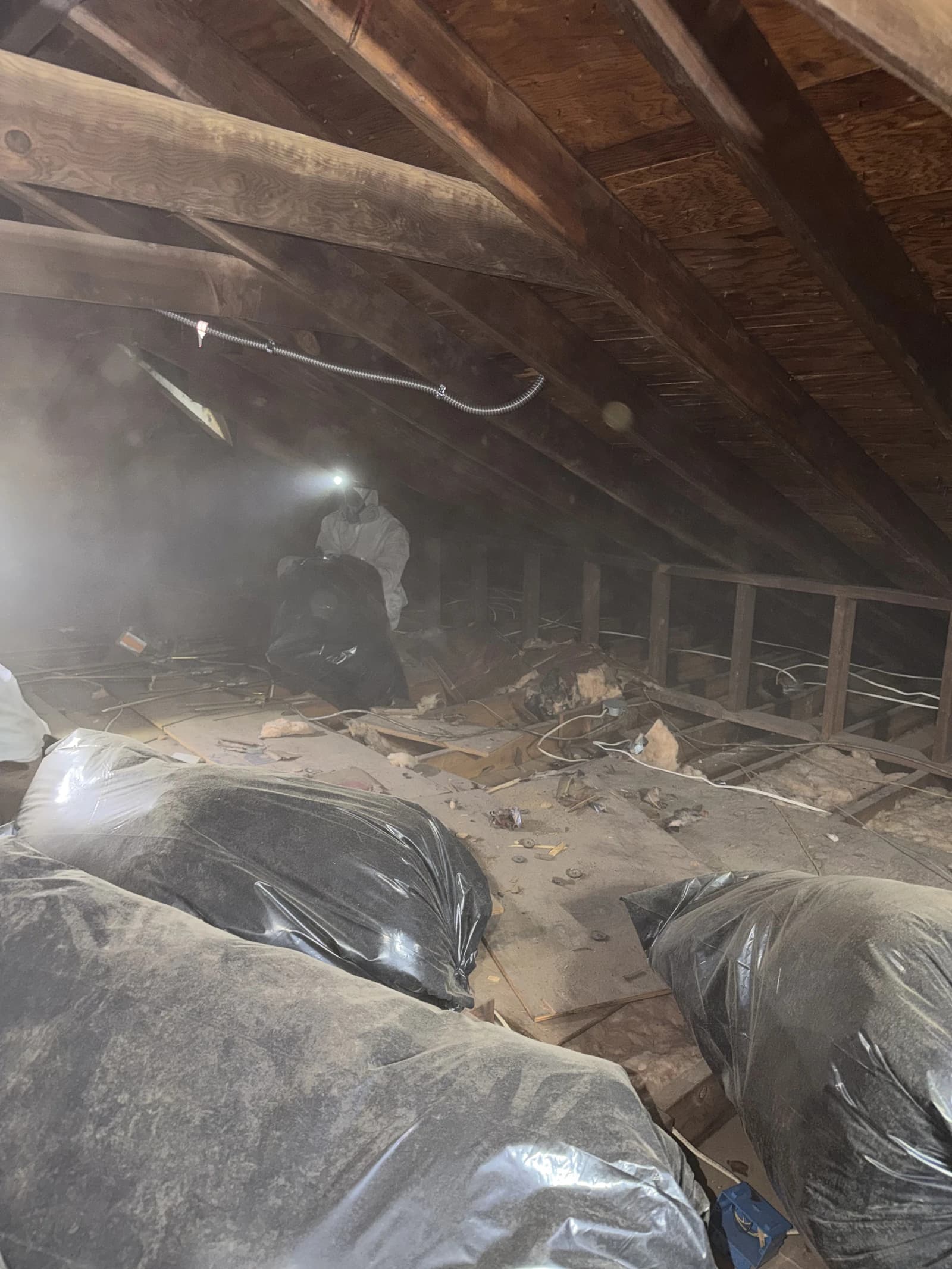
Rodent contamination is a different category. Droppings, urine-soaked insulation, and nesting material carry hantavirus and salmonella risk. The crew works in respirators and Tyvek suits, and the material is bagged, sealed, and disposed of as biohazard waste under NJ rules. That's not a markup, that's the actual cost of handling the material correctly.
Bat guano is its own problem. Long-term colonies leave heavy accumulations carrying histoplasmosis spores. Squirrel nests bring tree debris and chewed wiring. Dead-animal cleanup adds odor remediation on top of the removal.
National guides like HomeGuide, Angi, and HomeAdvisor put a basic clean attic cleanout at roughly $1 to $2 per square foot. Rodent or guano contamination runs higher across those same guides because the disposal rules and PPE add real cost. In NJ, the disposal piece matters more than people think.
Attic Size
Square footage matters, but less than you'd think. A small Cape Cod attic in Bergen County with heavy contamination is a bigger job than a large unfinished attic in Monmouth County that's just dusty. Size scales the work, but contamination scales it harder.
Attics under 800 square feet are on the lower end. Mid-size attics from 800 to 1,500 square feet are the most common job in NJ. Larger attics in older Colonials across Somerset County, or sprawling homes in Ocean County, push higher. Crew time, bag count, and disposal trips all scale with the footprint.
Insulation Depth and Type
If the cleanout includes removing insulation, the type matters. Loose-fill cellulose and fiberglass blow out fast with industrial vacuum equipment. Batts (the rolled fiberglass blankets) come out by hand, which takes longer. Spray foam doesn't really come out at all, which changes the conversation if it's involved.
Depth matters too. Code-compliant insulation in NJ runs around R-38 (or R-49 if the home calls for it). Most older homes have less than that, often 6 to 9 inches. The deeper the insulation, the more cubic feet to remove and the more time.
Accessibility
Pull-down stairs in a center hallway are the easy version. Walk-up attics with a real staircase are even better. The bad versions are scuttle holes in closets, accesses through bedroom ceilings, and crawl-space-style attics where the crew is on hands and knees the whole time.
Older homes in Mercer and Middlesex counties often have access situations that genuinely affect the price. A 1920s Victorian with a 22-inch hatch three flights up is more work than a 2005 Colonial with a wide pull-down in the garage. Same square footage, very different day.
Disposal Rules
This is the NJ-specific factor most homeowners don't realize is a cost driver. Clean attic debris goes to a transfer station like normal trash. Contaminated insulation does not.
Insulation exposed to rodent urine, droppings, or bat guano is handled as biohazard waste under NJ DEP guidance. It has to be double-bagged in heavy-mil contractor bags, sealed, labeled, and taken to a facility that accepts contaminated construction waste. The disposal costs more per ton than regular construction debris, and the manifesting paperwork takes time. Anyone telling you they'll just put it in the regular dumpster is either uninformed or planning to stiff your municipality with a problem they didn't sign up for.
This is part of why NJ rodent-contamination cleanouts run higher than the basic $1 to $2 per square foot national average.
What's Included in a Real Attic Cleanout
A legitimate attic cleanout in NJ is not just one guy with a shop vac. A thorough quote should cover all of the following before any work starts:
- Inspection. Someone walks the attic, takes photos, identifies the contamination type, and measures the footprint.
- Containment. Plastic sheeting on the access route, drop cloths in the room below the hatch, HEPA filtration on the vacuum. Contamination stays in the bags, not tracked through the house.
- Removal. Boxes, debris, old insulation, nesting material, and any animal remains. Hauled out in sealed bags.
- Sanitization. EPA-registered antimicrobial treatment on the deck and joists where the contamination was. This kills the surface pathogens after the bulk is gone.
- Disposal that matches the material. Biohazard waste goes to the right facility with the right paperwork. Clean debris goes to the transfer station.
- Entry-point assessment. The reason animals were in the attic is the gap they used to get there. Cleanout without sealing means the work gets re-contaminated. A real cleanout either seals those entry points as part of the job or pairs with rodent removal.
- Walk-through with photos. You see the cleared deck and treated areas before any insulation goes back in.
If a quote covers "vacuum the attic" without sanitization, disposal manifesting, or entry-point sealing, that's not a cleanout. That's housekeeping, and the contamination is back by spring.
Cleanout vs Cleanup vs Restoration: What Each One Means
These three words get used interchangeably in quotes, and they are not the same thing.
Attic cleanout is the broad term. Removing whatever is in the attic that shouldn't be there: old junk, contaminated insulation, animal debris.
Attic cleanup is the contamination-specific version. Rodent attic cleanup, bat guano cleanup, dead animal cleanup, with sanitization as the centerpiece.
Attic restoration is the full rebuild. Cleanout plus new insulation plus any deck repair. After a long-term infestation, the insulation is destroyed and the R-value is gone. Restoration puts the attic back to better than before.
Most homeowners who Google "attic cleanout cost" actually need a cleanup or a restoration. That's part of why quotes vary so much. Different companies mean different things by the word.
DIY vs Professional: An Honest Comparison
When DIY Might Work
If your attic is just full of old boxes and dust, no animal contamination, you can absolutely handle it yourself. Hire a junk-removal service or rent a dumpster, wear a dust mask and gloves, take a Saturday. There's no specialized work involved in moving boxes out of a clean attic.
Removing a small section of clean insulation to access wiring or HVAC is also DIY-able with the right precautions. Old fiberglass is itchy and dusty, but it's not hazardous the way contaminated insulation is.
When DIY Won't Work
For anything involving rodent droppings, bat guano, or animal contamination, DIY is a worse outcome. The reasons are technical.
You probably don't have a HEPA-filtered industrial vacuum. A regular shop vac aerosolizes the dried droppings and blows the pathogens through the exhaust into the attic air, which drifts into the living space through can lights and bathroom vents. The cleanup makes the contamination worse.
You probably don't have proper PPE. Hantavirus and histoplasmosis exposure happens when dried particles get airborne and inhaled. A surgical mask doesn't filter that. You need a fitted N95 or P100, eye protection, gloves, and ideally a Tyvek suit. Most homeowners don't want to spend $200 on gear for one job.
You can't legally dispose of contaminated material in regular trash. NJ municipalities are strict. If your hauler catches it, you're getting it back on the curb.
And the biggest one: cleanout without sealing the entry points is pointless. The mice walk back in through the gap you didn't see, and six months later the attic is contaminated again. Cheaper to call first and have it done once.
Red Flags in Attic Cleanout Pricing
Warning signs that a quote is the wrong shape, regardless of the number on it:
- No inspection included. A quote given over the phone without seeing the attic is a guess. Insist on the walk-through.
- No mention of disposal method. If the quote doesn't say where the material is going, especially contaminated material, ask. "We'll handle disposal" is a non-answer.
- No sanitization step. Removing the bulk material without treating the deck leaves the surface pathogens in place. The smell stays.
- No entry-point conversation. If the company isn't asking how the animals got in, they're cleaning up the symptom, not solving the problem.
- Unusually low pricing. When one quote is dramatically below the others, it's almost always missing something. Read what's included before comparing numbers.
- Pressure to sign on the spot. Real attic problems are not so urgent that you can't sleep on a written proposal.
- Spray foam suggested for sealing entry points. Foam fails outdoors. Mice chew right through it. Galvanized steel hardware cloth, screwed and sealed, is what holds.
The Real Cost of Waiting
Here's the part most cost articles skip. Attic contamination is not static. It gets worse, and the cleanup work grows with it.
Insulation is absorbent. Mouse urine soaks in. After a season or two of an active rodent population, the insulation is no longer holding R-value because it's saturated. Saturated insulation is a write-off. It doesn't get cleaned, it gets removed and replaced.
A mouse problem caught in fall, when the homeowner first hears scratching, is a routine cleanup with most of the insulation salvageable. The same problem ignored two years later is a full restoration.
Bats are even worse. A two-bat colony that arrives in May 2024 is a thirty-bat colony by 2026 if it's not addressed. The guano accumulation goes from a manageable mess to a heavy multi-inch deposit soaked through to the rafters (the wood frame holding up your roof).
There's also the heating-and-cooling angle. A contaminated, partially destroyed insulation layer is barely insulating anything. The contamination shows up on the utility bill before it shows up anywhere else.
Small problem caught early is a routine job. Same problem ignored for a few years is a much larger conversation. The work approach is identical. The size of the job is what changes.
Common Questions
How long does an attic cleanout take?
A clean junk-removal cleanout is half a day to a full day. A rodent-contamination cleanup with insulation removal and sanitization runs one to two full days for a typical NJ home. A full attic restoration with new insulation install can stretch to two or three days depending on the footprint.
Do I need to be home during the cleanout?
Yes for the inspection and the final walk-through. During the actual work, you don't have to stay. The access route is sealed off and the equipment is loud, so most homeowners prefer not to be there. Access and lock-up are coordinated in advance.
Will the smell go away after the cleanout?
Yes, once the contaminated material is out and the deck is sanitized. Lingering smells after a proper cleanout usually mean something is still up there (a sealed-in dead animal, untreated guano in a void, contaminated insulation that wasn't fully removed). If the smell isn't gone within a few days, a return visit is needed to find what was missed.
Can I just put new insulation on top of the old contaminated insulation?
No. Contaminated insulation underneath a fresh layer is still off-gassing, still harboring pathogens, and still attracting more rodents. The new insulation gets contaminated within a season. Removal first, then new install.
Do you handle the disposal or do I need a dumpster?
A full-service cleanout includes it. The material is hauled to the right facility, contaminated or otherwise, and the disposal is built into the proposal. There is no need to rent anything or coordinate with the municipality.
Is rodent attic cleanup covered by homeowners insurance?
Sometimes partially, depending on the policy. Some cover cleanup and restoration after sudden-and-accidental damage, others exclude pest-related claims. Worth a phone call to your carrier before you assume it isn't covered. Detailed documentation and photos are what most adjusters ask for.
How do I know if I need a cleanout, a cleanup, or a full restoration?
The inspection tells you. Old junk in a clean attic needs a cleanout. Active rodent contamination with mostly intact insulation needs a rodent cleanup. Heavily contaminated or destroyed insulation needs a full attic restoration with new insulation. The line between cleanup and restoration is whether the existing insulation is still doing its job.
What about old vermiculite insulation?
Vermiculite is not a wildlife or restoration job. Pre-1990s homes sometimes have it, and it can contain asbestos. That requires a licensed abatement contractor. If vermiculite turns up when the attic is opened, work should stop until the right contractor is on site.
Get a Straight Answer
The only honest way to arrive at a real number on an attic cleanout in NJ is to walk the space and see what's up there. Contamination type, footprint, insulation type, access route, and disposal class all change the price.
On this page
On this page
- What Drives Attic Cleanout Cost
- What's Actually Up There
- Attic Size
- Insulation Depth and Type
- Accessibility
- Disposal Rules
- What's Included in a Real Attic Cleanout
- Cleanout vs Cleanup vs Restoration: What Each One Means
- DIY vs Professional: An Honest Comparison
- When DIY Might Work
- When DIY Won't Work
- Red Flags in Attic Cleanout Pricing
- The Real Cost of Waiting
- Common Questions
- How long does an attic cleanout take?
- Do I need to be home during the cleanout?
- Will the smell go away after the cleanout?
- Can I just put new insulation on top of the old contaminated insulation?
- Do you handle the disposal or do I need a dumpster?
- Is rodent attic cleanup covered by homeowners insurance?
- How do I know if I need a cleanout, a cleanup, or a full restoration?
- What about old vermiculite insulation?
- Get a Straight Answer
