On this page
On this page
- What Drives Attic Insulation Removal Cost
- Square Footage of the Attic Floor
- Insulation Type
- Contamination Type
- Accessibility
- Disposal and NJ Waste Rules
- Insulation Type Affects the Cost
- Contamination Type Affects the Cost
- What Should Be Included in a Professional Removal
- DIY vs Professional Removal
- When DIY Might Work
- When DIY Will Not Work
- Red Flags in Insulation Removal Pricing
- When Removal Plus Replacement Makes More Sense Than Just Removal
- The Real Cost of Leaving Contaminated Insulation
- Frequently Asked Questions
- What does HomeGuide say attic insulation removal costs in NJ?
- Is rodent contaminated insulation removal more expensive than regular removal?
- How long does attic insulation removal take?
- Do I need to remove old insulation before adding new insulation?
- Will my homeowners insurance cover insulation removal after wildlife damage?
- Does NJ require specific disposal for contaminated insulation?
- Is vermiculite insulation in my NJ attic dangerous?
- Can I just leave contaminated insulation in the attic if the animals are gone?
- Is attic insulation removal available across all NJ counties?
- Get a Straight Answer
The short answer
Attic insulation removal cost in New Jersey is volume-driven and runs from $1.20 to $2.16 per square foot for light contained contamination, $1.80 to $3.00 for moderate rodent contamination throughout, and $3.00 to $5.40 per square foot for heavy biohazard removal (raccoon latrine, bat guano, dead-animal residue). For a 1,000-square-foot NJ attic that's $1,200-$5,400 for the removal portion alone. Replacement insulation is a separate line, typically $1.68-$2.28 per square foot installed for blown-in cellulose at standard depth. Vermiculite is the one material to leave alone, pre-1990 NJ homes occasionally have it, and a substantial portion contains asbestos, which belongs with a licensed asbestos abatement contractor, not a regular insulation crew.
What matters most
- Removal cost is volume-driven (per square foot); contamination class is the multiplier
- Vermiculite stops the job, pre-1990 NJ stock occasionally has it, licensed asbestos abatement work only
- Removal-only vs removal-and-replacement, the proposal should split these as separate lines
- The deck has to be sanitized after bulk removal; new insulation should NOT go on contaminated deck
- HEPA-vacuum equipment is required for biohazard contamination, regular shop vacs spread spores
What a real job includes
- Inspection findings with photos of insulation type, contamination, and any vermiculite indicators
- Insulation type identification (blown-in cellulose, blown-in fiberglass, fiberglass batt, spray foam, vermiculite)
- Removal protocol (HEPA-vacuum for blown-in, hand-removal and bagging for batts)
- PPE specification (Tyvek suits, P100 respirators where biohazard)
- Disposal class (regular construction debris vs biohazard-licensed facility)
- Sanitization of the attic deck after removal
- Air sealing of penetrations before any new insulation
- New insulation install with R-value target specified (if replacement is part of the job)
- Written warranty
What not to do
- Don't accept removal "by the bag" pricing, it's volume-driven per square foot
- Don't skip sanitization of the deck after bulk removal
- Don't blow new insulation on contaminated old without removal
- Don't try to remove vermiculite as part of a regular insulation job, licensed asbestos abatement work only
- Don't skip air sealing of penetrations before the new insulation goes in
If you have just had wildlife evicted from your attic, or you are getting ready to sell the house and the inspector flagged the insulation, or you cracked open the hatch and saw mouse droppings sitting on top of every batt, you are now in the market for attic insulation removal. The next question, reasonably, is what that costs.
The honest answer is that attic insulation removal cost depends on factors that can only be judged from inside your attic. An inspection is what reveals exactly what is up there before committing to anything. Here is what drives the cost, what published industry sources say, and what a real removal job should include.
What Drives Attic Insulation Removal Cost
Five factors set the price on every removal job. The published per-square-foot ranges you find online are real, but they only make sense once you know which factor your attic is hitting.
Square Footage of the Attic Floor
This is the headline number. Most NJ homes have between 800 and 2,500 square feet of attic floor. A small Cape in Union County might come in at 700 square feet. A larger Colonial in Morris or Somerset can run past 2,000. A sprawling ranch in Ocean County frequently lands in the 1,800 to 2,200 range because the footprint is big and there is no second story stealing attic space.
HomeGuide reports basic attic insulation removal at roughly $1 to $2 per square foot. That math is the floor, not the ceiling. It assumes clean, uncontaminated material in a workable attic. Once contamination, accessibility, or insulation type changes, the per-square-foot number changes too.
Insulation Type
This is the factor that surprises people the most. Different insulation comes out differently, and the equipment and labor hours scale with the type.
- Blown-in fiberglass is the easiest. A high-CFM insulation vacuum pulls it through a hose into bagged collection. A 1,500 square foot attic of blown-in fiberglass is a measurable number of hours, not a guessing game.
- Blown-in cellulose vacuums out too, but slower. Cellulose is denser than fiberglass and packs tighter over time, especially under any moisture exposure. The vacuum still works, the run time is just longer.
- Fiberglass batts come out by hand. Crew rolls them up, bags them, and carries them out. Faster per square foot than vacuuming when the attic is clean and accessible, but messier when the batts have rodent contamination running through them, because the disturbance kicks particulate into the air.
- Closed-cell spray foam is the hard one. Foam cannot be vacuumed. It is cut out in sections with knives or saws, pried off the deck and the rafters, and bagged. Removal of closed-cell foam is significantly more labor than any other insulation type. If the foam was sprayed directly to the underside of the roof deck, removal also means addressing whatever ventilation strategy was in place.
- Open-cell spray foam is a little easier than closed-cell because it is softer, but it still has to be cut out in pieces.
- Vermiculite is the one to leave alone. Vermiculite installed in NJ homes between roughly the 1920s and the 1990s frequently came from the Libby, Montana mine, which was contaminated with asbestos. That is an asbestos abatement job, not an insulation removal job, and it belongs with a licensed asbestos abatement contractor. This is non-negotiable. If the inspection shows vermiculite, the right move is a referral, not removal. Anyone who tells you they will vacuum out your vermiculite for a regular insulation removal price is doing something they should not be doing.
Contamination Type
Contamination is what moves a removal from the lower published ranges into the higher ones. HomeGuide flags contaminated removals at $3 to $5 per square foot specifically because of the disposal handling and the cleanup that has to come with it. Here is what shows up in NJ attics:
- Rodent droppings and urine. Mice and rats both saturate insulation with urine over time. The droppings are visible, the urine is not, but a black light will show the urine staining across batts and into blown-in material. Rodent contaminated insulation has to be removed in bagged sections, the deck has to be cleaned and disinfected, and the bagged material has to be disposed of according to NJ waste rules.
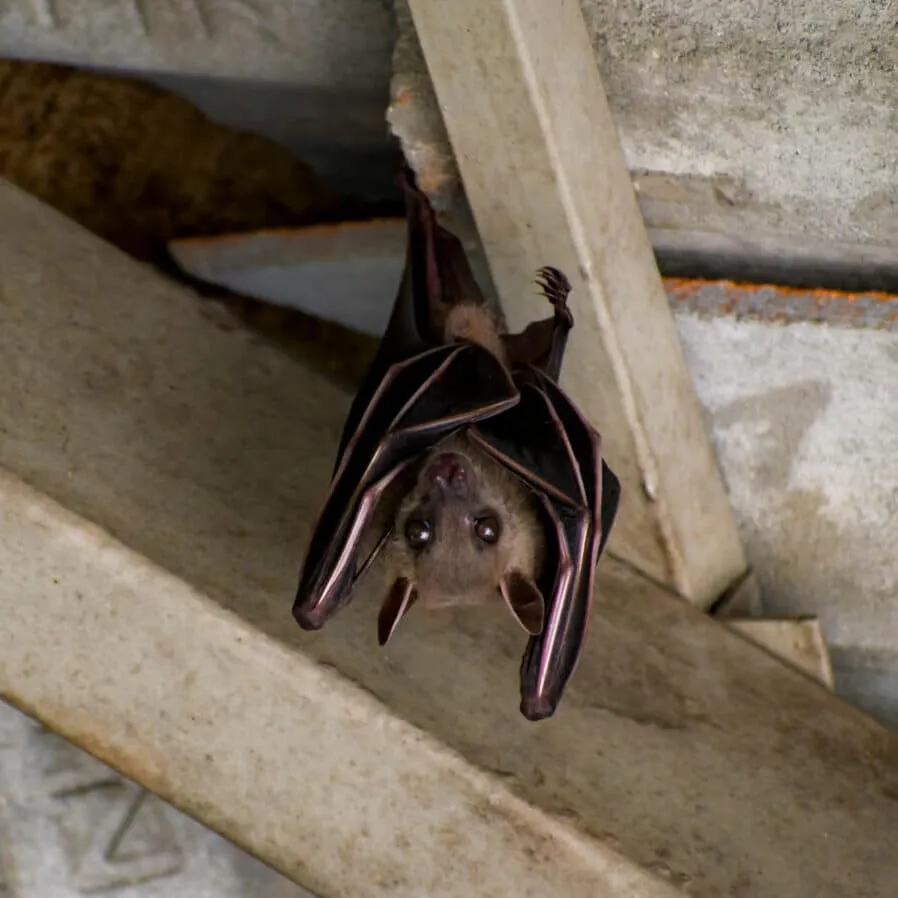
- Bat guano. Bat droppings are different from rodent droppings. They accumulate in piles under the colony's roost, they crumble into dust when disturbed, and that dust carries histoplasmosis spores. Removal of guano-affected insulation requires respirator-grade PPE, the material gets sealed in bags before it leaves the attic, and the disposal facility wants it manifested as biological waste.
- Raccoon latrines. Raccoons designate one or two corners of an attic as the bathroom. Latrines saturate insulation and decking, they carry roundworm risk, and the insulation underneath is generally a write-off. Latrine cleanup is its own labor line.
- Squirrel nesting. Squirrels chew everything and they bed down in the insulation. The contamination is usually less severe than rodent or raccoon, but the nesting destroys the fiberglass structure regardless, so the insulation comes out.
- Mold from moisture. A roof leak, a bathroom vent dumping moist air into the attic, or an ice dam that pushed water under the shingles all create wet insulation. Wet fiberglass loses R-value permanently, and once it is wet long enough to grow visible mold, it is a remediation removal, not a regular removal.
If the inspection turns up any of those, the per-square-foot impact should be spelled out in writing before any work starts. Angi reports that bat guano cleanup specifically can run several thousand dollars on top of standard removal, and HomeAdvisor lists rodent contamination cleanup in a similar range. Those published figures track with what shows up in the field.
Accessibility
Two attics with the same square footage and the same insulation can have very different prices if one of them is a stand-up attic with pull-down stairs and the other is a 36-inch crawl-through above a finished bedroom.
Full-stand attics with pull-down access let crews work upright with proper hoses and equipment staging. Crawl-through attics, especially the kind common in older Bergen County and Hudson County rowhouses, mean working on knees and elbows for hours, dragging hoses through tight rafters, and staging bags through a small hatch one at a time. The labor doubles. Sometimes more.
Cape Cods are their own category. The kneewall attic configuration in a Cape often has the insulation in three places at once: the floor of the attic, the slope of the kneewall, and behind the kneewall in the eave. Removal in a Cape is usually a longer-than-expected job because of that geometry.
Disposal and NJ Waste Rules
Plain attic insulation goes into construction debris dumpsters and ends at standard transfer stations. Contaminated insulation does not.
Rodent and bat contaminated insulation in NJ generally needs to be sealed in bags inside the attic before it leaves the structure, hauled in lined containers, and disposed at a facility that accepts biohazard or special waste. Some counties (Bergen, Essex, and Middlesex among them) have specific transfer station rules about what they will and will not accept. The disposal step alone can add a meaningful line to the proposal because the per-ton rate at a special-waste facility is higher than a regular transfer station, and the manifest has to be filed.
This is a piece of the price homeowners almost never see in cheaper quotes. If a quote on contaminated removal is dramatically lower than the rest, the disposal piece is usually the part being skipped, which means the contaminated material is going somewhere it should not be going.
Insulation Type Affects the Cost
A quick reference for what each insulation type means for removal cost:
- Blown-in fiberglass. Vacuumed out. Lower cost per square foot. Standard NJ removal.
- Blown-in cellulose. Vacuumed out, but slower than fiberglass because the material is denser and tends to clump. Slightly higher cost per square foot.
- Fiberglass batts. Hand-removed and bagged. Fast in clean attics, slow and dusty in contaminated ones because rolling up a urine-soaked batt is more careful work than rolling up a clean one.
- Mineral wool batts. Same handling as fiberglass batts, slightly heavier per square foot, similar cost.
- Open-cell spray foam. Cut out in sections with knives. Higher cost per square foot than blown-in.
- Closed-cell spray foam. Cut out in sections with saws. Highest cost per square foot of any insulation type. Sometimes adjacent decking also needs work because of how the foam adhered.
- Vermiculite. Referred out to a licensed asbestos abatement contractor. Not a standard insulation removal job.
The mix matters too. A lot of older NJ homes have layers. The original 1960s fiberglass batts are still in the bays, then somebody added blown-in cellulose on top in the 1990s, and a homeowner laid a few rolls of new fiberglass over that in the 2010s to "fix" the cold rooms. Removing a layered attic takes longer than removing a single-type attic of the same square footage, because the equipment changes between layers.
Contamination Type Affects the Cost
The cleanest version is age-related removal. The insulation is old, performance is shot, no animals were ever up there, no leaks happened. Vacuum it out, bag it, haul it. That is the version where the published $1 to $2 per square foot range actually applies.
Add wildlife and the math moves. The published $3 to $5 per square foot range for contaminated removal accounts for several things at once:
- More careful handling so contaminated material does not aerosolize into the rest of the house.
- PPE for the crew, including respirators rated for biological hazards.
- A disinfection pass on the attic deck and rafters after the insulation is out, because the contamination has soaked into the substrate.
- Bagged staging instead of loose collection.
- Manifested disposal at a facility that accepts the waste class.
Bat guano specifically is on the higher end of contaminated removal because of histoplasmosis. The spores are airborne when dried guano is disturbed. The respirators are not optional, the negative-pressure setup at the access point is not optional, and the bagging cannot be skipped. Angi's published research on bat-related cleanup reflects this. So does HomeGuide.
If the contamination is from a raccoon latrine, the localized cost can be high even on a small attic, because raccoon roundworm eggs are persistent and the affected area needs more aggressive treatment than the rest of the deck.
If the contamination is just light rodent droppings across an otherwise clean attic, that is the gentler version of contaminated removal, and the per-square-foot impact is smaller. The inspection is what determines which version it is.
What Should Be Included in a Professional Removal
A real attic insulation removal in NJ is not just "vacuum the attic." The job should include all of the following, in writing, before any work starts:
- Pre-removal inspection. Type of insulation confirmed, depth measured, contamination type and extent documented with photos, attic geometry walked. Vermiculite check before anything starts, every time.
- Living space protection. Plastic sheeting at the access point, drop cloths through the path the crew will walk, and dust containment so insulation particulate does not end up in the bedroom below the hatch.
- Negative-pressure setup on contaminated jobs. The vacuum and the staging area are configured so air flows out of the attic, not into the rest of the house, while the insulation is being disturbed.
- Full removal of the specified material. Floor of the attic. Bays between joists. Behind kneewalls if it is a Cape. Around recessed lights and HVAC chases. The job is not done because the obvious areas are clear. The whole specified job comes out.
- Deck cleanup and disinfection. On contaminated removals, the rafters, the joist tops, and the deck get cleaned and treated. Light vacuuming, wipe-down where the contamination was concentrated, and an antimicrobial pass.
- Bagged biohazard disposal where applicable. Sealed bags, labeled, hauled in lined containers, disposed at an accepting facility, manifested if the type calls for it.
- A walk-through with photos at the end so you see the cleared deck, any flagged structural issues, and the condition the attic is in before any replacement insulation goes back. Wildlife entry points, water damage, or compromised decking should appear in photos before you decide what to do next.
- Written next-step recommendation. Clear deck plus open recommendation. Re-insulate, address an entry point, install a vapor barrier, fix soffit ventilation. Whatever the attic actually needs, written down, not buried in conversation.
If the quote skips the inspection, skips the protection, skips the disinfection, or skips the disposal manifest on contaminated material, that is the wrong shape regardless of the dollar amount.
DIY vs Professional Removal
When DIY Might Work
If the attic is small, the insulation is uncontaminated fiberglass batts, and you have full-stand access through pull-down stairs, you can roll them up, bag them, and haul them out in a weekend. Some homeowners do this. It is hot, dusty, exhausting work, but it is achievable.
The narrow case where DIY genuinely makes sense is: clean batts, accessible attic, no rodents ever, no bats ever, no moisture damage, no spray foam, no vermiculite suspected. If your attic checks all of those boxes, you can probably handle it.
When DIY Will Not Work
For everything else, DIY removal usually goes wrong in predictable ways.
- Blown-in insulation is not a DIY job without rented equipment. A high-CFM insulation vacuum is not a shop vac. Renting one for a day, getting it up your driveway, running the hoses, and managing the bagging at the curb is more logistics than most homeowners want to take on. And shop vacs clog and burn out fast on insulation.
- Contamination is not a DIY job. Mouse droppings carry hantavirus risk in NJ. Bat guano carries histoplasmosis risk. Raccoon latrines carry roundworm risk. Removing contaminated insulation without a respirator, without containment, and without disposal protocol is creating a worse health situation than the one you started with.
- Spray foam is not coming out with a utility knife. Closed-cell foam in particular is a job for crews with the right blades, fall protection on steep rafters, and disposal capacity for bulk foam.
- Disposal is the part DIY almost always gets wrong. A standard residential dumpster will not take contaminated insulation. The transfer station will turn you away if they spot it. Homeowners routinely end up with bagged contaminated insulation in their garage for weeks because they did not know where it was supposed to go.
- Vermiculite cannot be DIY at all. If the attic has vermiculite and you start vacuuming it, you have just released asbestos fibers into your house. Stop. Get an asbestos test, then get an abatement contractor.
The most common DIY outcome in NJ is a homeowner who pulls half the attic, realizes how big the contamination is, and calls a contractor in, who now has to assess a job that is partially disturbed (and therefore harder to contain) instead of intact. Calling first is cheaper than calling halfway through.
Red Flags in Insulation Removal Pricing
A few warning signs that a removal quote is the wrong shape, regardless of the dollar amount:
- No in-attic inspection. Anyone giving a removal quote without going up the ladder is guessing at the type, the depth, the contamination, and the accessibility. Square footage from the property card is not enough information.
- The quote is dramatically lower than the rest on a contaminated job. The piece getting skipped is almost always the disposal manifest, the disinfection pass, or both. That insulation is going somewhere it should not, or the deck is not actually getting cleaned.
- No mention of insulation type. The proposal should say what is being removed: "blown-in fiberglass" or "fiberglass batts plus blown-in cellulose layer" or "closed-cell spray foam." A quote that just says "remove existing insulation" is leaving itself room to surprise you with a price change once they get up there.
- No mention of disposal. Where is the material going. How many bags. Whose facility. Contaminated jobs should have disposal called out specifically.
- Vermiculite gets vacuumed in the proposal. This is the biggest red flag. Walk away. Call an asbestos abatement contractor. Anyone proposing to vacuum vermiculite as part of a regular insulation job is either uninformed or willing to do something genuinely dangerous in your house.
- Removal alone with no replacement plan. This is not always a red flag, but it is usually a sign that the conversation is incomplete. NJ Climate Zone 4 code wants R-49 in the attic. A bare deck does not pass an inspection on resale. If a contractor is proposing removal with no follow-up, ask why.
- Pressure to sign on the spot. Wildlife and contamination problems are real, but they are not so urgent that you cannot sleep on a quote. A real proposal holds for several days.
When Removal Plus Replacement Makes More Sense Than Just Removal
For a lot of homeowners the right answer is not "how much does removal cost." It is "removal plus replacement, treated as one project."
Here is why.
NJ is in Climate Zone 4 (with the northern counties touching Zone 5 in elevation). Current code targets R-49 in the attic for new and renovated construction. Insurance, resale inspections, energy audits, and utility rebate programs all reference that target. An attic that has been cleared and left bare is technically uninsulated. That is a fail on a home inspection, a problem on a refinance, and a comfort disaster in January when the temperature drops to 18 degrees and the ceiling becomes a heat sink.
If the reason for removal was wildlife contamination, the rest of the case for replacement is even stronger. The crew is already in the attic. The deck is already clean. The access is already staged. Doing the replacement at the same time means one mobilization instead of two, and the attic is sealed back up at code with material that is not contaminated. Most wildlife-recovery jobs end up priced this way for that reason.
There are scenarios where removal alone is the right call. A homeowner who is about to do a major roof replacement and wants the attic clear for the roofers. A homeowner who is replacing the HVAC system and needs the attic accessible for ductwork. A homeowner whose energy auditor flagged something specific that has to happen before new insulation goes in. In those cases, removal-only is the job.
But for most of the calls that start with "I just had rodents removed, what does it cost to take out the insulation," the real answer involves insulation removal on one side and insulation replacement on the other, and the proposal covers both. When the work covers removal, decontamination, and replacement together, that is a full attic restoration.
The Real Cost of Leaving Contaminated Insulation
There is a version of this conversation where a homeowner says, "I'll just leave the contaminated insulation up there. The animals are gone now. What's the harm." Here is the harm.
Air moves constantly between the living space and the attic through ceiling penetrations, ductwork, and the stack effect. Contaminated insulation is sitting in that air path. Rodent droppings dry out, crumble, and aerosolize when the attic gets hot. Bat guano spores activate when disturbed by wind, by HVAC airflow, or by foot traffic. Raccoon roundworm eggs persist in latrine areas for years. None of that stays politely contained because the wildlife has left.
Then there is the R-value problem. Contaminated and compressed insulation loses much of its rated R-value. In active nesting zones it can drop to effectively zero. Your heating bill is paying for the loss every month, in addition to whatever else is going on. There are attics where the homeowner was paying to heat 8,000 cubic feet of attic for three years before the insulation was finally pulled. NJ utility rates being what they are, that adds up fast.
Then there is the resale problem. NJ home inspectors increasingly include attic inspections in standard inspection reports. Visible droppings, urine staining, or guano accumulation on insulation gets flagged in writing. That flag becomes a credit-back negotiation at closing or a "fix this before we'll sign" condition. A removal that was going to happen anyway becomes a panicked removal during the closing window, which is the worst possible time to do it.
Catching contaminated insulation early and pulling it as part of the wildlife job (or as a planned project the year after) is the cheaper version of this problem, every time. Waiting until the buyer's inspector catches it is the more expensive version, every time.
Frequently Asked Questions
What does HomeGuide say attic insulation removal costs in NJ?
HomeGuide reports basic attic insulation removal at roughly $1 to $2 per square foot for clean, uncontaminated material. Contaminated removals (rodent, bat, raccoon, mold) run higher, in the $3 to $5 per square foot range, because of biohazard handling, sealed-bag disposal, and the deep clean that has to come with it. Those published ranges are national averages. NJ specifically tends to land in the upper half of those ranges because of higher labor rates and stricter waste-disposal rules in some counties.
Is rodent contaminated insulation removal more expensive than regular removal?
Yes. The disposal alone is more expensive because contaminated material has to go to a facility that accepts biohazard or special waste, not a standard transfer station. The labor is more expensive because crews need PPE, containment, and a slower pace to keep particulate from spreading. The follow-up disinfection of the deck is its own line. HomeAdvisor and Angi both report contaminated removals running roughly two to three times the cost of clean removals, which matches what shows up in NJ attics.
How long does attic insulation removal take?
A clean blown-in removal in a 1,200 square foot full-stand attic typically takes a single day. A contaminated removal in the same attic with disinfection and bagged disposal usually takes one to two days. A closed-cell spray foam removal can take two to three days because of the cutting work. Cape Cod attics with kneewalls and crawl-through spaces add time regardless of the insulation type.
Do I need to remove old insulation before adding new insulation?
Sometimes. If the existing insulation is clean, dry, and not severely compressed, new insulation can go on top. That is the additive approach. If the existing insulation is contaminated, water-damaged, severely compressed, or just very old (1970s and 1980s fiberglass batts often qualify), it should come out first. Adding new material over contaminated material is a waste of money. The new insulation cannot perform in a degraded environment, and the contamination keeps off-gassing into the house.
Will my homeowners insurance cover insulation removal after wildlife damage?
Sometimes, depending on the carrier and the species. Bat-related damage is more frequently covered than rodent-related damage because most policies treat rodents as a maintenance issue rather than a sudden event. Angi's published research on insurance coverage tracks with what NJ homeowners report. Squirrel and raccoon damage falls in the middle, sometimes covered if there is documented sudden entry through storm damage, often denied if it is treated as a long-running issue. Always file the claim and let the carrier decide. Document everything with photos before, during, and after.
Does NJ require specific disposal for contaminated insulation?
Yes. Rodent and bat contaminated insulation in NJ generally has to be sealed at the attic, hauled in lined containers, and disposed at a facility that accepts biohazard or special waste. Some county transfer stations will refuse it without a manifest. A real proposal calls out the disposal step explicitly. Bergen, Essex, and Middlesex counties have particularly defined rules. Ocean and Monmouth counties have their own facility lists. The contractor should know which facility is taking your material before the job starts.
Is vermiculite insulation in my NJ attic dangerous?
Potentially yes. A large share of the vermiculite installed in NJ homes between roughly the 1920s and the 1990s came from the Libby, Montana mine, which was contaminated with asbestos. Disturbing vermiculite (which is what removal does) can release asbestos fibers. Vermiculite removal is not a standard insulation job. If an inspection shows vermiculite, the right move is a referral to a licensed asbestos abatement contractor. Do not vacuum it yourself. Do not let a regular insulation contractor remove it. The remediation cost for asbestos vermiculite is meaningfully higher than regular insulation removal, but doing it correctly is the only path that does not contaminate the rest of the house.
Can I just leave contaminated insulation in the attic if the animals are gone?
Not advisable. Contaminated insulation continues to off-gas droppings particulate, urine, and (with bats) histoplasmosis spores into the air the rest of the house breathes. R-value is significantly degraded, so heating and cooling bills run higher. Resale inspections will flag it. The cheapest version of this problem is removal as a planned project. The most expensive version is removal during a closing window when the buyer's inspector caught it.
Is attic insulation removal available across all NJ counties?
Insulation removal work covers 20 of New Jersey's 21 counties, everything within about 1 hour 50 minutes of our Jackson office: Bergen, Essex, Hudson, Morris, Passaic, Somerset, Middlesex, Union, Monmouth, Ocean, Mercer, Burlington, Camden, Hunterdon, Warren, Atlantic, Cape May, Cumberland, Gloucester, and Salem counties. Sussex County is past that line except its southern edge. Service areas also extend into NY (including Staten Island and parts of Rockland and Orange) and PA (including Bucks, Montgomery, and Philadelphia counties).
Get a Straight Answer
The only honest way to arrive at a real number on attic insulation removal in NJ is to walk the attic and look. Insulation type, contamination type, square footage, accessibility, and disposal route all change the cost. An in-person inspection takes the guesswork out of it.
A full insulation removal service covers pre-removal inspection, containment, disinfection, bagged disposal where the contamination calls for it, and a written next-step recommendation.
On this page
On this page
- What Drives Attic Insulation Removal Cost
- Square Footage of the Attic Floor
- Insulation Type
- Contamination Type
- Accessibility
- Disposal and NJ Waste Rules
- Insulation Type Affects the Cost
- Contamination Type Affects the Cost
- What Should Be Included in a Professional Removal
- DIY vs Professional Removal
- When DIY Might Work
- When DIY Will Not Work
- Red Flags in Insulation Removal Pricing
- When Removal Plus Replacement Makes More Sense Than Just Removal
- The Real Cost of Leaving Contaminated Insulation
- Frequently Asked Questions
- What does HomeGuide say attic insulation removal costs in NJ?
- Is rodent contaminated insulation removal more expensive than regular removal?
- How long does attic insulation removal take?
- Do I need to remove old insulation before adding new insulation?
- Will my homeowners insurance cover insulation removal after wildlife damage?
- Does NJ require specific disposal for contaminated insulation?
- Is vermiculite insulation in my NJ attic dangerous?
- Can I just leave contaminated insulation in the attic if the animals are gone?
- Is attic insulation removal available across all NJ counties?
- Get a Straight Answer
