On this page
On this page
- What Drives Attic Restoration Cost
- Contamination Type
- Attic Square Footage
- Insulation Type Being Installed
- NJ Climate Zone and R-Value Targets
- Sanitization Step
- Sealing Every Entry Point
- What a Real Attic Restoration Includes
- When Restoration Is Worth It (And When It's Not)
- Worth It
- Not Worth It
- Insurance and Attic Restoration
- Red Flags in Attic Restoration Pricing
- How long does attic restoration take?
- Do I need to leave the house during restoration?
- Can I do attic restoration myself?
- Will new insulation lower my energy bills?
- What's the difference between attic cleanout and attic restoration?
- Is rodent contamination really a health issue?
- The Real Cost of Waiting
- Get a Straight Answer
The short answer
Attic restoration cost in New Jersey runs roughly $5,400 to $9,000 total for a typical 1,000-square-foot attic with moderate rodent contamination, that's the four-phase job: cleanup of contaminated insulation, sanitization of the deck, exclusion sealing of the entry, and new R-38 cellulose insulation. Heavy contamination (raccoon latrine, bat guano, dead-animal residue) or larger attics push higher. The most common mistake is new insulation installed on top of contaminated old, the smell comes back, the bacteria stays, and the homeowner pays again in 6 months. The fix sequence is fixed: contamination out, sanitize, seal the entry, then new insulation. Skipping any phase shortens the life of the next.
What matters most
- Real attic restoration is four phases in order: cleanup, sanitization, exclusion sealing, new insulation
- New insulation on contaminated old is the most common bad pattern, smell returns in months
- AF default insulation recommendation in NJ retrofits is R-38, not R-49 (diminishing returns above R-38 in existing homes)
- The entry-point sealing is what keeps the next animal out, without it, the cycle restarts
- Vermiculite in older NJ stock stops the job, licensed asbestos abatement work, not regular restoration
What a real job includes
- Inspection findings with photos of contamination and roofline entries
- Cleanup of contaminated insulation with HEPA equipment, PPE, sealed biohazard disposal
- Sanitization of the attic deck (enzyme- or peroxide-based treatment)
- Drywall replacement on ceilings affected by latrine soak-through
- Permanent exclusion sealing with quarter-inch galvanized steel hardware cloth at the entry plus all other vulnerable points
- New insulation installation to a real R-value target (R-38 default for retrofits)
- Air sealing of penetrations before new insulation
- Attic baffle replacement at the eaves where needed
- Written warranty
What not to do
- Don't accept "blow in new insulation on top" if contamination is present
- Don't skip the sanitization line item
- Don't skip the exclusion-sealing line item
- Don't accept R-49 on an existing-home retrofit by default, diminishing returns above R-38
- Don't accept vermiculite removal as part of a regular restoration, that's asbestos abatement
If you've already had an animal removed and the company mentioned "restoration," or you're hearing scratching and you've started Googling what comes after the removal, this is the article you want. Restoration is the part most homeowners didn't know existed. It's also the part that decides whether the problem is genuinely behind you or just paused.
The honest answer on attic restoration cost is that it varies more than almost any home service in this category. An inspection is what reveals what's in your attic, what condition the insulation is in, and what the seal-out is going to take, before anyone quotes a number. Here's what drives the price and what a real attic restoration should include.
What Drives Attic Restoration Cost
Every attic is different. A bungalow in Ocean County with light mouse activity is a very different job than a four-bedroom Colonial in Bergen County with a long-term squirrel colony and twenty years of compressed insulation under the contamination. Here are the factors that determine the price.
Contamination Type
What was living up there decides a lot about the cleanup.
Rodents (mice and rats) leave urine and droppings throughout the entire attic surface. Nesting tunnels run through the insulation, and urine soaks down to the decking (the plywood your shingles are nailed to). Rodent restoration almost always means full removal of the contaminated insulation, not spot treatment.
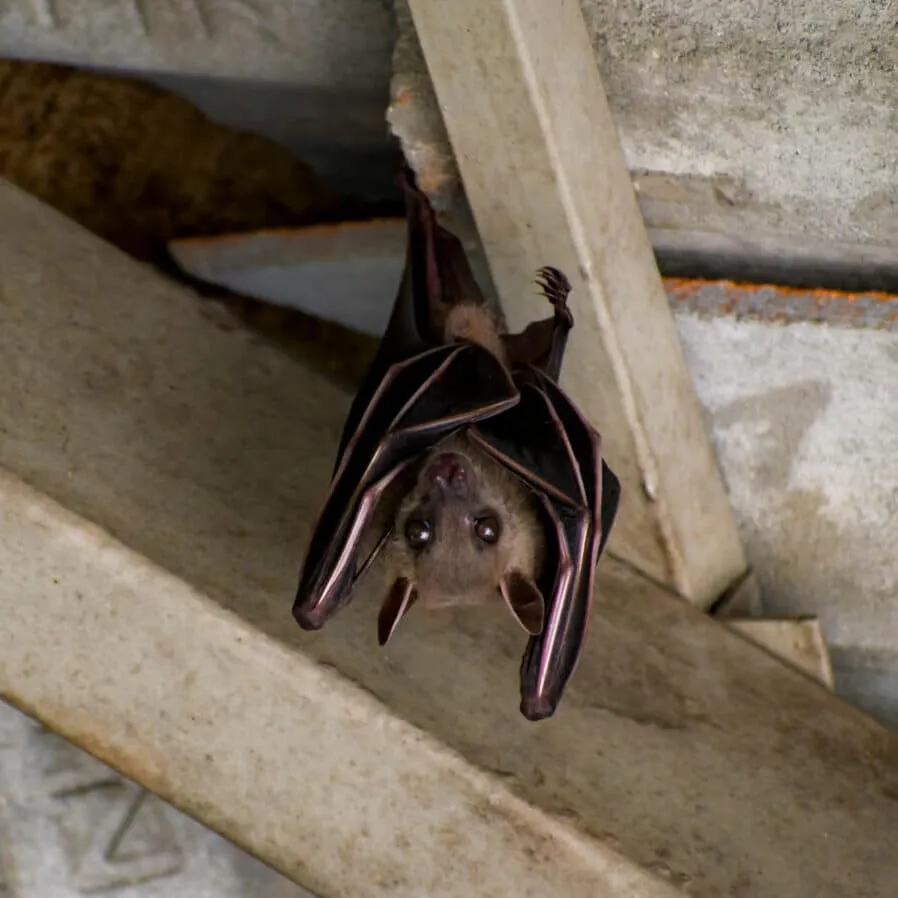
Bats concentrate under their roost, so contamination is usually a defined zone. The challenge is histoplasmosis: dried guano releases spores when disturbed, which means cleanup needs proper PPE, HEPA-filtered vacuums, and antimicrobial treatment, not a shop-vac and a face mask.
Raccoons are the heaviest hitters. A latrine is a concentrated deposit area they return to repeatedly. Roundworm (Baylisascaris) is a real concern. Raccoons also crush and trample insulation across a much wider area than just the latrine.
Squirrels chew constantly. Their contamination is usually lighter than rodents, but the chewing damage to wires, framing, and HVAC ductwork frequently turns up during restoration once the deck is visible.
Birds (often pigeons) leave dense droppings under nesting sites. Like bat guano, dried bird droppings carry histoplasmosis risk and need PPE and antimicrobial treatment.
Attic Square Footage
This one is mechanical. A 600-square-foot attic over a small ranch costs less than an 1,800-square-foot attic over a large Colonial. Cleanout time, hauled-away volume, and new insulation all scale directly with square footage. Larger homes in Bergen, Somerset, and Mercer Counties tend to be on the higher end. Smaller Capes and ranches common across Ocean, Monmouth, and Middlesex tend to be on the lower end.
Insulation Type Being Installed
What you put back is a big driver. The four common options in NJ:
Cellulose (blown-in) is the workhorse. Recycled paper, treated for fire and pest resistance, blown to depth. Good R-value per inch, fills cavities well, pairs well with retrofitting older homes. Most NJ attic restorations use it.
Fiberglass batts come pre-cut between joists. Lower material cost, but they leave gaps wherever the cavity is irregular and don't perform well in wind-washed soffits.
Blown fiberglass is similar to cellulose mechanically. Doesn't settle as much, slightly higher long-term R-value retention, and slightly more expensive.
Closed-cell spray foam is the premium option. Highest R-value per inch, acts as an air seal, fills every irregularity. Significantly more expensive. Generally reserved for cathedral ceilings or conditioned attics.
According to HomeGuide and Angi market data, attic insulation alone in NJ typically falls in the $1,500 to $4,000 range for blown options on a standard attic, with closed-cell foam climbing higher. Restoration cost layers cleanout and sealing on top of that.
NJ Climate Zone and R-Value Targets
Most of New Jersey sits in IECC Climate Zone 4. A sliver of the northwest (parts of Sussex and Warren) reaches into Zone 5. Code targets R-49 for new construction in both zones, which translates to roughly 14 to 18 inches of cellulose or blown fiberglass at settled depth.
For existing-home retrofits, R-38 (about 11 to 14 inches) tends to be the practical sweet spot. Performance gains past R-38 in older homes are modest because air sealing, baffle installation, and entry-point closure are doing most of the work. R-38 is a sensible default, stepping up to R-49 when the home, energy goals, or a utility rebate program calls for it.
If your attic currently has 6 to 8 inches of old insulation (common in pre-1990s homes), you're sitting around R-19 to R-25. That's well under either target and well under what your HVAC was sized to expect. Restoration is the rare moment when bringing the attic up to current performance levels is built into the same job as the cleanout, because the old insulation is leaving anyway.
Sanitization Step
Cleanout and sanitization are not the same step. Cleanout removes the contaminated insulation and droppings. Sanitization treats the deck, framing, and remaining surfaces with antimicrobial solution to neutralize pathogens before new insulation goes in.
Light contamination needs basic antimicrobial treatment. Heavy contamination, latrine zones, or histoplasmosis-risk attics (bats, birds) need a more thorough HEPA pass plus enzymatic treatment. The sanitization step can swing several hundred dollars depending on what's up there.
Sealing Every Entry Point
This is the part homeowners forget exists. New insulation in a sealed attic lasts decades. New insulation in an attic with the same open soffit gap (the underside of your roof overhang) or chewed fascia hole (the trim board along the roof edge) gets re-contaminated within a season.
A real restoration seals every entry point with proper materials: galvanized hardware cloth for vents, metal flashing (the sealing strips between roof sections) for soffit and ridge gaps, screwed-and-sealed mesh for chimney chases. Chewed openings get closed with materials animals cannot reopen, not covered over. Seal-out decides whether the restoration is an investment or a redo.
What a Real Attic Restoration Includes
A complete attic restoration in NJ has four phases, and they happen in order:
Phase 1: Cleanout. Contaminated insulation comes out. HEPA-filtered vacuums for loose material, contractor bags for bulk, full PPE. Photos as the deck becomes visible.
Phase 2: Sanitization. Antimicrobial treatment on every affected surface (decking, joists, framing). For heavy contamination zones, enzymatic cleaners and additional HEPA passes get added.
Phase 3: Seal-out. Every entry point gets sealed permanently. Quarter-inch galvanized hardware cloth for vents, metal flashing for soffit and roofline gaps, replacement of chewed wood, screwed-and-sealed closures throughout. This is where most restorations fail when the wrong company does them. They re-insulate over the same holes the animals used last time.
Phase 4: New insulation. R-38 to R-49 blown across the entire attic (R-38 by default, R-49 when the home calls for it), baffles (the small channels that keep your roof vents from getting blocked) installed at the eaves (the lower edge of the roof where it overhangs the wall) to keep soffit vents clear, wiring and HVAC penetrations air-sealed before new insulation goes in.
Photo documentation runs through all four phases. You see the contamination before, the bare deck after cleanout, the sealed entry points, and the finished insulation depth. If you can't see those photos at the end of the job, the job wasn't documented.
When Restoration Is Worth It (And When It's Not)
Not every attic with animal evidence needs a full restoration. Here's the honest version of when it makes sense and when it doesn't.
Worth It
- Long-term colony. Bats, raccoons, or rodents in the attic more than a season. Contamination is too widespread to spot-clean.
- Heavy contamination. Droppings across most of the insulation, urine staining on the decking, latrine zones, or persistent odor after removal.
- Old insulation under it all. If existing insulation is below R-19 (common in pre-1990s homes), upgrading to current performance levels during restoration is essentially free relative to the cleanout that's already happening. Energy savings start paying back immediately.
- Bats or birds, regardless of severity. Histoplasmosis risk makes even moderate contamination worth a full restoration.
- Health-sensitive household. Asthma, immunocompromised family members, infants. The threshold drops when someone in the house is more vulnerable.
Not Worth It
- Light, recent contamination. A single mouse for two weeks. Seal the entry, clear the droppings, treat the area. Done.
- Minor entry, no nesting. A squirrel that came in through one chewed gap and left after a few days. Spot cleanup is fine.
- Recent insulation install. If the insulation is under five years old and contamination is light, removing perfectly good code-level insulation is overkill. Targeted removal of just the affected zone makes more sense.
- The attic is going to be redone anyway. If you're planning to convert the attic to living space within a year, a full restoration now means doing the work twice.
An inspection tells you which side of this line you're on. Some homeowners end up doing a targeted attic cleanout instead, and it's the right call. Others come in expecting a small cleanout and find out the contamination is worse than they thought.
Insurance and Attic Restoration
The answer most homeowners don't want to hear: most NJ policies explicitly exclude rodent damage. Angi's research on homeowner policies indicates the majority exclude damage from rodents, insects, and most wildlife as standard policy language, treating it as a maintenance issue rather than a covered peril.
Bats are the partial exception. Some policies cover bat-related damage when it ties to a specific covered event (a storm-damaged ridge cap that let the bats in). Raccoon damage is sometimes covered if it traces back to a covered event like a tree falling on the roof. The pattern across most carriers: wildlife damage is typically excluded, but the structural event that let the wildlife in might be covered.
Read your policy's exclusions section, call your agent before assuming anything, and ask specifically about "vermin" and "wildlife" exclusions. The language varies. Homeowners have assumed coverage and discovered the exclusion at claim time, and the reverse. There's no shortcut to reading the actual document.
Red Flags in Attic Restoration Pricing
A few warning signs that a quote is the wrong shape:
- No attic inspection. Anyone quoting a restoration without going up into the attic is guessing. Contamination, existing insulation depth, entry points, and deck condition can only be assessed in person.
- Insulation install without cleanout. Blowing new insulation over contaminated old insulation traps the smell. The new insulation absorbs urine and droppings within months.
- Cleanout without seal-out. Removing old insulation without sealing entry points is temporary. The animals come back, the new insulation gets contaminated, you pay twice.
- No photo documentation. Restoration happens in a place you'll never see again. Photos at every phase are how you verify what got done.
- Insurance billing as the lead. Companies that lead with "we'll bill your insurance" before inspecting your attic are usually counting on you not reading the exclusions. NJ rodent restorations actually covered by homeowner policies are rare.
- No written estimate before work starts. Phases, materials, R-value, and seal-out should all appear in writing before anyone pulls insulation.
How long does attic restoration take?
A standard restoration on an average NJ attic (1,000 to 1,400 square feet, moderate contamination, full insulation install, full seal-out) is typically a one-day job for a crew of three to four. Heavy contamination or larger attics can run two days.
Do I need to leave the house during restoration?
Usually no. The attic access gets sealed off with plastic during cleanup to keep dust out of the living space. Homeowners with severe respiratory conditions sometimes step out during cleanout, but it's a courtesy, not a requirement.
Can I do attic restoration myself?
The cleanout is technically possible with rented HEPA vacuum, PPE, and a dumpster. Sanitization is harder to source. Seal-out is where most DIY attempts fall apart: entry points need ladders, fall protection, and the right materials. The insulation install requires a blower truck most NJ rental yards don't carry residential. The savings versus hiring a crew that does this weekly aren't what you'd expect.
Will new insulation lower my energy bills?
If you're going from below R-19 up to R-38 or R-49, yes, measurably. NJ homeowners replacing old fiberglass batts with fresh blown cellulose at code-level depth typically see 10 to 25 percent reductions in heating and cooling costs the first full year. PSE&G and JCP&L rebate programs sometimes offset part of the upgrade cost for qualifying installs.
What's the difference between attic cleanout and attic restoration?
Attic cleanout removes the contaminated material and treats surfaces. Restoration is cleanout plus seal-out plus new insulation. Cleanout makes sense when the existing insulation is recent and in good shape. Restoration makes sense when it's old, damaged, or below code.
Is rodent contamination really a health issue?
Yes. Mouse and rat droppings carry hantavirus (rare but serious), salmonella, and LCMV. The bigger ongoing issue is allergens: dried urine and dander go airborne when disturbed by HVAC, foot traffic, or settling, and they're a known asthma trigger. CDC guidance specifically warns against sweeping or vacuuming dry droppings without HEPA filtration, which is why DIY cleanup tends to make air quality worse before it gets better.
The Real Cost of Waiting
Attic restoration is one of those jobs where every year of delay quietly raises the eventual price.
The colony grows. Whatever's up there gets larger. More animals means more contamination and more square footage affected when you finally do the cleanout.
R-value drops. Compressed, soiled, trampled insulation loses effective R-value year over year. An attic that started at R-30 in 2010 with rodents in it is probably performing at R-15 to R-20 by now. Your HVAC is making up the difference on every bill.
Structural damage compounds. Urine saturation works into roof decking. Squirrel chewing damages wires and framing. Raccoon traffic crushes ductwork. None of that reverses on its own.
Insurance windows close. The few scenarios that do cover wildlife damage usually require prompt reporting after the entry event. Letting a storm-damaged ridge cap go for two seasons is how homeowners lose coverage they actually had.
The most common pattern: a homeowner heard noises in 2022, hoped it would resolve, and called in 2026. The 2022 version of that job would have been a moderate cleanout with targeted insulation replacement. The 2026 version is a full restoration with carpentry on top.
Get a Straight Answer
The only honest way to arrive at a real number on attic restoration in NJ is to look at the attic. Contamination level, existing insulation depth, entry points, and deck condition all change the price. An in-person inspection is how to find out which version of the job an attic actually needs.
Attic restoration, attic cleanout, rodent attic cleanup, and insulation work are most effective when handled by the same crew that does the rodent removal on the front end. Seal-out and cleanout get coordinated as one job, not handed off between two companies that don't talk to each other.
On this page
On this page
- What Drives Attic Restoration Cost
- Contamination Type
- Attic Square Footage
- Insulation Type Being Installed
- NJ Climate Zone and R-Value Targets
- Sanitization Step
- Sealing Every Entry Point
- What a Real Attic Restoration Includes
- When Restoration Is Worth It (And When It's Not)
- Worth It
- Not Worth It
- Insurance and Attic Restoration
- Red Flags in Attic Restoration Pricing
- How long does attic restoration take?
- Do I need to leave the house during restoration?
- Can I do attic restoration myself?
- Will new insulation lower my energy bills?
- What's the difference between attic cleanout and attic restoration?
- Is rodent contamination really a health issue?
- The Real Cost of Waiting
- Get a Straight Answer
