
On this page
On this page
- What Drives Crawl Space Encapsulation Cost
- Crawl square footage
- Vapor barrier thickness
- Moisture and drainage
- Dehumidifier sizing
- Pest exposure
- What the Numbers Look Like
- What Should Be Included in a Real Encapsulation Quote
- DIY vs Professional: An Honest Comparison
- Red Flags in Encapsulation Pricing
- The Real Cost of Waiting
- Common Questions
- Is encapsulation the same as a vapor barrier?
- Do I really need the dehumidifier?
- What if there's standing water down there?
- Can you do the rodent sealing at the same time?
- How long does encapsulation last?
- Does encapsulation help with energy bills?
- Get a Straight Answer
The short answer
Crawl space encapsulation cost in New Jersey runs roughly $3,600 to $18,000 for typical homes and $24,000 or more for full encapsulation projects on larger spaces or those with significant water and pest issues. Published 2026 ranges from Angi and HomeGuide cover that spread, with HomeGuide listing $1,500-$5,000 for vapor barrier and basic sealing and $5,000-$20,000+ for full encapsulation with insulation, drainage, and dehumidification. NJ-specific factors that push projects toward the higher end: older housing stock, higher water tables in certain regions (Shore towns, the Pinelands edge, parts of Bergen near the Hackensack River), and code requirements for moisture barriers in finished basement adjacency. Vapor barrier mil thickness, dehumidifier sizing, and pest exposure are the three main cost drivers.
What matters most
- Vapor barrier mil thickness drives material cost (10-mil is the durable spec for most NJ crawls)
- Dehumidifier sizing depends on crawl square footage and humidity baseline
- Drainage work is sometimes required before encapsulation can be effective
- Pest exposure (Norway rats in foundation gaps, mice through utility penetrations) often drives a combined exclusion + encapsulation job
- NJ Shore-area crawls and Pinelands-edge crawls typically run middle to high end of national ranges
What a real job includes
- Inspection with photos of moisture, mold, pest evidence, vapor barrier condition, rim joist insulation
- Vapor barrier installation (mil thickness specified)
- Sealing of foundation cracks and utility penetrations
- Dehumidifier installation (sizing specified)
- Insulation work where rim joists or sill plates need it
- Drainage work where moisture intrusion requires it
- Pest exclusion line items (mortar/copper mesh sealing of rodent entries)
- Written warranty on the vapor barrier and exclusion work
What not to do
- Don't accept thin (6-mil) vapor barriers as the standard, they tear and degrade fast
- Don't skip the dehumidifier on a crawl that has documented moisture issues
- Don't accept vapor barrier installation without sealing foundation cracks first
- Don't combine encapsulation with rodent exclusion as a single line item, they should be quoted separately
- Don't accept an estimate that doesn't include the crawl walk-through with photos
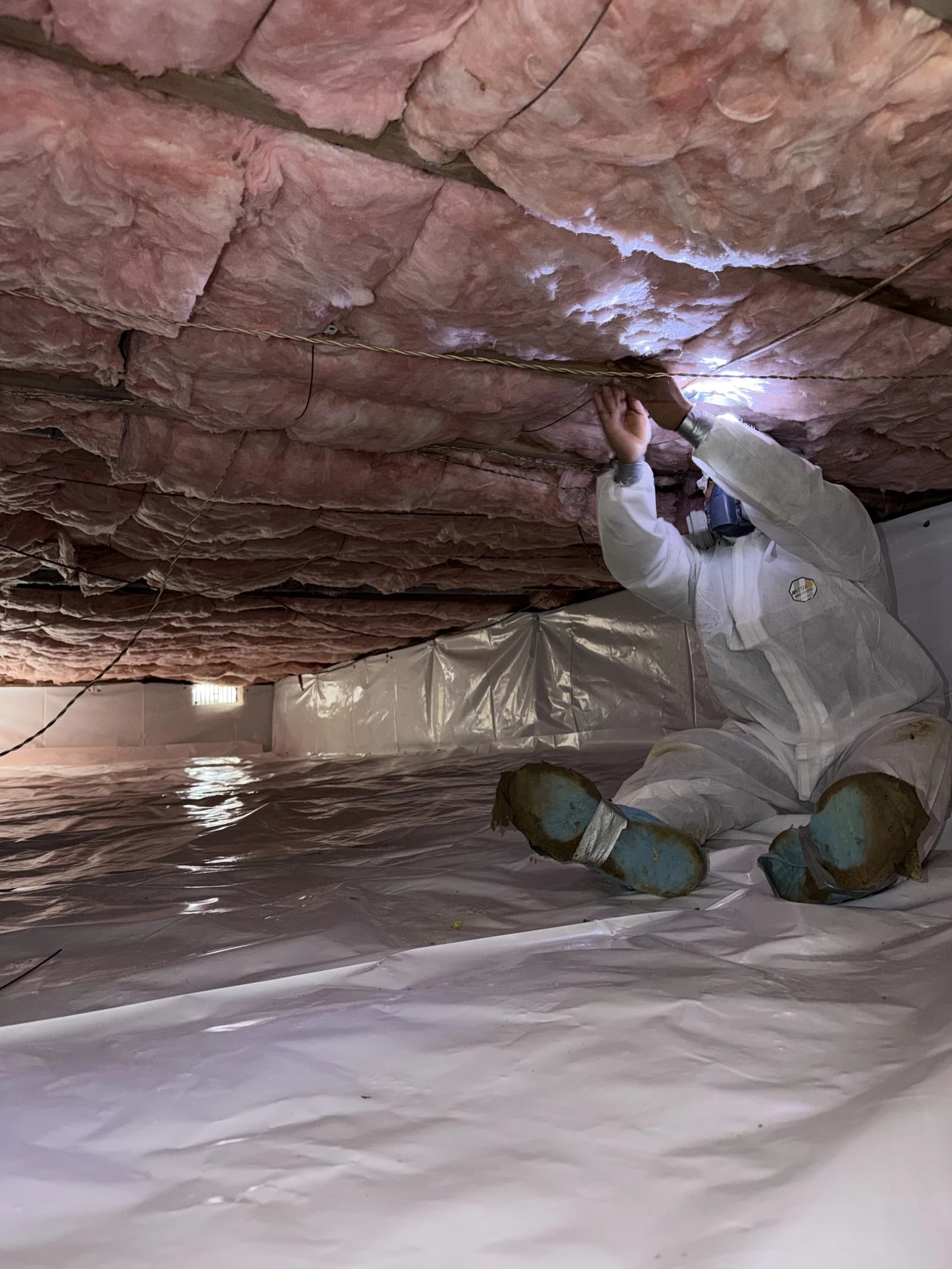
Encapsulation is one of those words contractors use as if everyone grew up with it, so first, what it actually means: sealing your crawl space off from ground moisture. Heavy plastic sheeting (the vapor barrier) across the dirt floor and up the walls, seams sealed, foundation gaps closed, and a dehumidifier sized to the space keeping the air dry. Done right, it stops the cycle where damp crawl space air rots the framing, feeds mold, and drifts up into the living space.
The price range on this work is wide, and legitimately so, because "encapsulation" spans everything from a basic vapor barrier to a full moisture-control system with drainage. Here is what moves the number in NJ.
What Drives Crawl Space Encapsulation Cost
Crawl square footage
Most of the pricing scales with floor area: more square feet means more barrier material, more seam sealing, and a larger dehumidifier.
Vapor barrier thickness
Barrier plastic is specified in mils (thousandths of an inch), and the thickness drives material cost. Thin 6-mil plastic tears during installation and degrades fast in service. The durable spec for most NJ crawls is 10-mil. When two quotes look far apart, the mil spec is one of the first places to check.
Moisture and drainage
Some crawls are damp from humid air; a barrier and dehumidifier solve that. Others take on actual water, and no amount of plastic fixes a drainage problem. Where water intrusion shows up in the inspection, drainage work has to come before encapsulation can be effective, and that is its own line item.
Dehumidifier sizing
The unit is sized to the crawl's square footage and its humidity baseline, not picked off a shelf. Undersized units run constantly and lose; the sizing should be stated in the quote.
Pest exposure
Crawl spaces are also an entry path: Norway rats through foundation gaps, mice through utility penetrations. Where rodents are active, the job often becomes a combined exclusion-plus-encapsulation project, with the rodent sealing (mortar, copper mesh) quoted separately from the encapsulation so you can see what each part costs.
What the Numbers Look Like
Crawl space encapsulation in New Jersey runs roughly $3,600 to $18,000 for typical homes, and $24,000 or more for full encapsulation projects on larger spaces or those with significant water and pest issues. Published 2026 ranges from Angi and HomeGuide cover that spread, with HomeGuide listing $1,500 to $5,000 for vapor barrier and basic sealing and $5,000 to $20,000 and up for full encapsulation with insulation, drainage, and dehumidification.
NJ-specific factors push projects toward the higher end: older housing stock, higher water tables in certain regions (the Shore towns, the Pinelands edge, parts of Bergen near the Hackensack River), and moisture-barrier requirements where the crawl adjoins finished basement space.
What Should Be Included in a Real Encapsulation Quote
- An inspection with photos of moisture, mold, pest evidence, existing vapor barrier condition, and rim joist insulation
- Vapor barrier installation with the mil thickness specified
- Sealing of foundation cracks and utility penetrations
- Dehumidifier installation with the sizing specified
- Insulation work where rim joists (the wood band capping the foundation) or sill plates need it
- Drainage work where moisture intrusion requires it
- Pest exclusion line items, mortar and copper mesh sealing of rodent entries, quoted separately
- A written warranty on the vapor barrier and the exclusion work
DIY vs Professional: An Honest Comparison
Laying plastic in a crawl space sounds like a weekend job, and a rough moisture reduction is achievable that way. What separates a taped-down tarp from an encapsulation is the system: sealed seams, mechanical fastening up the walls, closed foundation gaps, a properly sized dehumidifier, and drainage handled first where there is standing water. Skipping any one of those tends to void the point; moisture finds the unsealed seam, and a still-humid crawl with a nice new floor is still feeding mold into the joists above it.
Red Flags in Encapsulation Pricing
- 6-mil plastic presented as the standard; it tears and degrades fast
- No dehumidifier on a crawl with documented moisture issues
- Vapor barrier going in without foundation cracks sealed first
- Encapsulation and rodent exclusion bundled as one line item; they should be quoted separately so each is visible
- An estimate produced without a crawl walk-through with photos
The Real Cost of Waiting
Crawl moisture works on your house from below, quietly. Framing wicks it up, mold feeds on it, insulation sags with it, and rodents follow the shelter. None of that reverses on its own, and each season adds to what the encapsulation eventually has to remediate rather than just prevent. The barrier and dehumidifier work is the same whenever it goes in. The mold treatment, joist work, and insulation replacement are what accumulate.
Common Questions
Is encapsulation the same as a vapor barrier?
The vapor barrier is one component. Encapsulation is the system: barrier, sealed seams and gaps, dehumidification, and drainage where needed. A barrier alone addresses ground moisture; it does nothing about humid air or standing water.
Do I really need the dehumidifier?
If the crawl has documented moisture issues, yes. The barrier stops ground moisture, but NJ summers deliver humid air, and without dehumidification the crawl stays damp above the plastic.
What if there's standing water down there?
Then drainage comes first. Encapsulating over water intrusion seals the problem in rather than out. The inspection determines whether you need drainage work before any plastic goes down.
Can you do the rodent sealing at the same time?
Yes, and where rodents are active it is the natural pairing, since the same foundation gaps and utility penetrations are involved. It should still be quoted separately so the encapsulation price and the exclusion price are each visible.
How long does encapsulation last?
A 10-mil barrier, properly fastened and sealed, is a long-term installation and should carry a written warranty. The 6-mil bargain version is the one that tears and degrades fast.
Does encapsulation help with energy bills?
A dry, sealed crawl with insulated rim joists is meaningfully less of a drain than a damp, vented one under your floor. The moisture control is the primary purpose; the comfort and efficiency gains come with it.
Get a Straight Answer
An honest encapsulation number comes out of the crawl, not the phone: square footage, moisture level, barrier spec, dehumidifier sizing, and pest exposure all set the price. Compare pricing across services on the NJ attic costs page, or start with an inspection and see the photos yourself.
On this page
On this page
- What Drives Crawl Space Encapsulation Cost
- Crawl square footage
- Vapor barrier thickness
- Moisture and drainage
- Dehumidifier sizing
- Pest exposure
- What the Numbers Look Like
- What Should Be Included in a Real Encapsulation Quote
- DIY vs Professional: An Honest Comparison
- Red Flags in Encapsulation Pricing
- The Real Cost of Waiting
- Common Questions
- Is encapsulation the same as a vapor barrier?
- Do I really need the dehumidifier?
- What if there's standing water down there?
- Can you do the rodent sealing at the same time?
- How long does encapsulation last?
- Does encapsulation help with energy bills?
- Get a Straight Answer
