On this page
On this page
- What Drives Squirrel Removal Cost
- How many entry points your roofline has
- Whether there are babies up there
- Wire damage
- Insulation contamination and chewed entry points
- What the Numbers Look Like
- What Should Be Included in a Real Squirrel Job
- DIY vs Professional: An Honest Comparison
- Red Flags in Squirrel Removal Pricing
- The Real Cost of Waiting
- Common Questions
- Can I just trap the one squirrel and be done?
- What happens if there are babies in the attic?
- Why not just foam the holes shut?
- Do squirrels really cause house fires?
- Which kind of squirrel is in my attic?
- Is it cheaper to wait until they leave on their own?
- Get a Straight Answer
The short answer
Squirrel removal cost in New Jersey starts around $3,000 for a complete job and runs to $5,400 and up on multi-entry jobs with wire damage and insulation work. The job is remediation with a written warranty, not just trapping: the squirrels physically removed right away, every entry sealed with steel mesh, and contamination handled. Published 2026 ranges from Angi list $250-$450 for removal-only service with $150-$1,000+ added for prevention and repairs; HomeGuide lists $200-$600 for basic removal, the trapping piece alone without the sealing that keeps squirrels out. NJ squirrels have two litter seasons (mid-February through April; mid-August through September), and sealing during either window kills the kits inside. The wire-chew fire risk is real and shows up in NJ home insurance claims every year, so an electrician is often involved.
What matters most
- NJ has two squirrel litter seasons; missing the kit question is the most common mistake
- Squirrels chew electrical wires; the fire risk grows the longer they're in
- Older NJ rooflines (pre-1960 stock) typically have 5+ vulnerable points, not 1
- Foam-only sealing fails in days against squirrel chewing, steel mesh holds
- Eastern gray, red, and flying squirrels need different protocols; the inspection identifies which
What a real job includes
- Roofline walk with photos of every potential entry: soffits, roof returns, fascia, gable vents, ridge gaps
- Kit check during NJ baby-season windows
- Immediate physical removal of the squirrels (a one-way device only where hand removal is not possible)
- Permanent sealing with quarter-inch galvanized steel hardware cloth, screwed and sealed
- Wire damage assessment with electrician referral if needed
- Insulation removal where contamination is heavy
- Entry-point sealing at fascia, soffit, and roof returns, including where squirrels chewed through
- Written warranty
What not to do
- Don't seal the entry hole during NJ baby season without checking for kits
- Don't accept foam-only or caulk-only sealing, squirrels chew through it in days
- Don't accept "trap-and-go" without permanent exclusion
- Don't ignore signs of wire damage (flickering lights, breakers tripping on attic circuits)
- Don't try to relocate squirrels yourself, relocated squirrels rarely survive and the hole in your roofline is still open
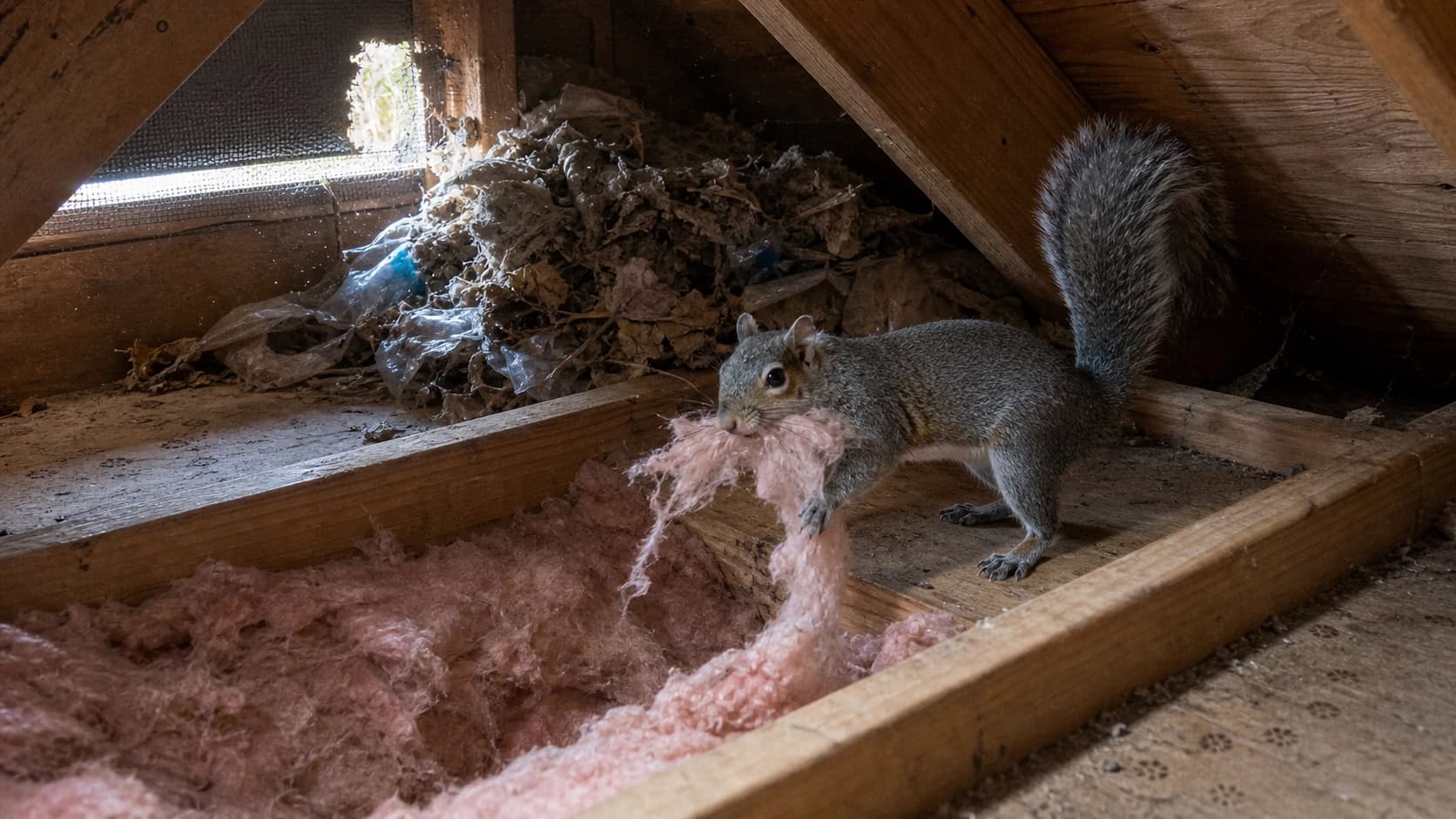
If the scratching over your ceiling happens in daylight, fast and skittery, you almost certainly have squirrels. The next question is what it costs to get them out and keep them out, and the honest answer starts with what "squirrel removal" actually means: it is not one squirrel in one trap. It is finding every way into your roofline, getting the animals out alive, and sealing the structure so the next squirrel cannot follow.
That is why quotes vary so much. Here is what drives the price, what a real job includes, and how to tell a complete quote from a cheap one.
What Drives Squirrel Removal Cost
How many entry points your roofline has
The single squirrel you hear is using one hole, but older NJ rooflines (pre-1960 stock especially) typically have 5 or more vulnerable points: soffit gaps, roof returns, chewed fascia, gable vents, ridge gaps. Sealing one hole on a roofline with five moves the traffic, it does not stop it. Multi-entry jobs are more work, and the price follows the number of openings, not the number of squirrels.
Whether there are babies up there
NJ squirrels have two litter seasons: roughly mid-February through April, and again mid-August through September. During either window, the kit question decides the whole job. If a mother is nursing kits and the entry gets sealed, the kits die inside and the mother tears through soffits and fascia trying to reach them. A proper crew checks for kits, hand-removes them where present, and reunites them with the mother outside before any sealing happens. That is added work, and it is the part a cheap quote usually skips.
Wire damage
Squirrels chew electrical wiring, and the fire risk grows the longer they are in the attic. Chewed attic wiring shows up in NJ home insurance claims every year. When the inspection finds bite-stripped wires, an electrician gets involved, and that evaluation and repair adds to the bill. It is not an upsell. It is the difference between a sealed attic and a sealed attic with a slow-burning hazard in it.
Insulation contamination and chewed entry points
A short visit leaves droppings and disturbed insulation. A long occupancy leaves contaminated insulation that needs removal, and chewed fascia or roof returns that need closing with steel before the seal holds. Cleanup and sealing are the difference between the low end and the high end of the range.
What the Numbers Look Like
A complete squirrel job in New Jersey starts around $3,000, and multi-entry jobs with wire damage and insulation work run to $5,400 and up. The reason the number starts there: the job is remediation with a written warranty, not just trapping. The squirrels come out immediately, every entry gets sealed in steel, and what they left behind gets handled.
Published 2026 ranges from Angi list $250 to $450 for removal-only service with $150 to $1,000 or more added for prevention and repairs; HomeGuide lists $200 to $600 for basic removal. Those national figures describe the trapping piece alone. A trapped squirrel with an open roofline is a vacancy, not a fix, and the exclusion, sealing, and cleanup are where a real NJ job lands above those listings.
What Should Be Included in a Real Squirrel Job
A complete squirrel removal quote in NJ covers:
- A roofline walk with photos of every potential entry: soffits, roof returns, fascia, gable vents, ridge gaps
- A kit check during the NJ baby-season windows
- Immediate physical removal of the squirrels, with a one-way device (a door over the active hole that lets a squirrel out but not back in) only where hand removal is not possible
- Permanent sealing with quarter-inch galvanized steel hardware cloth, screwed and sealed, at every vulnerable point
- Wire damage assessment, with an electrician referral if chewing is found
- Insulation removal where contamination is heavy
- Entry-point sealing at fascia, soffit, and roof returns, including where squirrels chewed through
- A written warranty
If a quote is missing the roofline walk or the permanent sealing, it is not a smaller version of this job. It is a different, temporary job.
DIY vs Professional: An Honest Comparison
Some of this work is genuinely doable by a handy homeowner. You can buy a one-way door at a hardware store, and you can seal gaps you can safely reach. Where DIY runs into trouble is everything that makes the job stick: spotting every entry instead of the obvious one, working at roofline height on a steep pitch, telling a used hole from an active one, and the kit check. Sealing a mother out while her kits are inside turns a routine eviction into dead animals in your ceiling and a desperate squirrel chewing a new hole through your fascia.
Trapping and driving the squirrel elsewhere is not a shortcut either. Relocated squirrels rarely survive, and the hole in your roofline is still open for the next one.
Red Flags in Squirrel Removal Pricing
- A price quoted over the phone without anyone walking the roofline
- Trap-and-go service with no permanent exclusion; new squirrels rotate through the same hole
- Foam-only or caulk-only sealing; squirrels chew through it in days, quarter-inch steel mesh holds
- No mention of a kit check during a litter-season month
- No written warranty on the exclusion work
The Real Cost of Waiting
Two things get worse on their own. The first is wiring: the longer squirrels are in the attic, the more chewing, and the fire risk compounds quietly. Flickering lights or breakers tripping on attic circuits are the visible symptoms. The second is the calendar: with two litter seasons a year, this spring's single squirrel is next fall's family, with more droppings in the insulation and more chewing at the entries. The work approach stays the same. The size of the job grows.
Common Questions
Can I just trap the one squirrel and be done?
Usually not. The entry that let this squirrel in is a known, scent-marked doorway, and new squirrels rotate through the same hole. Removal without permanent exclusion is a repeat appointment waiting to happen.
What happens if there are babies in the attic?
During the NJ litter windows (roughly mid-February through April and mid-August through September), the crew checks for kits before anything is sealed. Kits that are found get hand-removed and reunited with the mother outside. Sealing first and checking later is how kits end up dead inside walls and mothers end up chewing new holes.
Why not just foam the holes shut?
Foam fails against squirrel teeth in days. The material that holds is quarter-inch galvanized steel hardware cloth, screwed and sealed over the opening. If a quote's sealing line item does not name the material, ask.
Do squirrels really cause house fires?
Chewed attic wiring is a documented cause in NJ insurance claims. Warning signs worth taking seriously: flickering lights, breakers tripping on attic circuits, or bite-stripped wires found during the inspection. That is when an electrician joins the job.
Which kind of squirrel is in my attic?
Eastern gray squirrels are the most common in NJ. Red squirrels appear in the northern counties, and flying squirrels, which are nocturnal, are sometimes mistaken for mice. The protocols differ, which is one of the reasons the inspection comes before the price.
Is it cheaper to wait until they leave on their own?
They do not leave. An attic is a warm, dry den with two breeding seasons a year. Waiting adds wire damage, contaminated insulation, and more entry points, and every one of those grows the eventual job.
Get a Straight Answer
The only honest way to price a squirrel job in NJ is to walk the roofline and count the openings. Entry count, kit status, wire condition, and insulation contamination all change the number. See what our squirrel removal service includes or compare pricing across services on the NJ attic costs page.
On this page
On this page
- What Drives Squirrel Removal Cost
- How many entry points your roofline has
- Whether there are babies up there
- Wire damage
- Insulation contamination and chewed entry points
- What the Numbers Look Like
- What Should Be Included in a Real Squirrel Job
- DIY vs Professional: An Honest Comparison
- Red Flags in Squirrel Removal Pricing
- The Real Cost of Waiting
- Common Questions
- Can I just trap the one squirrel and be done?
- What happens if there are babies in the attic?
- Why not just foam the holes shut?
- Do squirrels really cause house fires?
- Which kind of squirrel is in my attic?
- Is it cheaper to wait until they leave on their own?
- Get a Straight Answer
