
On this page
On this page
- What Drives Mice Removal Cost
- How many entry points your building has
- How far the contamination has spread
- Building size and complexity
- What the Numbers Look Like
- Why Not Poison?
- What Should Be Included in a Real Mice Job
- DIY vs Professional: An Honest Comparison
- Red Flags in Mice Removal Pricing
- The Real Cost of Waiting
- Common Questions
- How do I know how many entry points my house has?
- Why snap traps instead of poison or glue?
- Can mice really get through a quarter-inch gap?
- Do I need attic cleanup too?
- What about the mice I hear in the walls?
- Get a Straight Answer
The short answer
Mice removal cost in New Jersey starts around $3,000 for the complete job: every envelope opening sealed, mechanical traps inside, and a written warranty. Jobs run $3,000 to $4,800 once attic cleanup and insulation work are included on a heavier infestation. Published 2026 ranges from HomeGuide and Angi list a few hundred dollars for trapping-only service, the piece that fails on its own because the envelope stays open. Mice fit through gaps the size of a dime (about a quarter inch), and older NJ housing typically has 12 to 20 entry points along the building envelope that need to be sealed. Poison is the wrong approach: poisoned mice die in walls and insulation, the smell lasts weeks, and the underlying entries still let new mice in. The right work is mechanical traps inside plus permanent envelope sealing.
What matters most
- Mice fit through quarter-inch gaps; sealing only what you've seen leaves the rest of the envelope open
- Poison is the wrong tool, dead mice in walls is worse than the original problem
- Older NJ housing typically needs 12-20 entry points sealed, not 1-2
- Newer construction has fewer total points but more concentrated around utility penetrations
What a real job includes
- Building-envelope inspection with photos of every gap
- Identification of every entry, utility lines, garage door corners, exterior doors, foundation cracks, rim joist, crawl space vents, roofline gaps, attic vents, addition junctions
- Sealing materials specified (quarter-inch galvanized steel hardware cloth, copper mesh stuffed with sealant, mortar, replacement screens)
- Mechanical trap placement plan (snap traps, no glue traps, no poison)
- Cleanup of droppings and contaminated insulation where heavy
- Written warranty
What not to do
- Don't use poison, dead mice in walls
- Don't seal only where you've seen mice, the rest of the envelope is still open
- Don't accept glue traps (inhumane, doesn't address the structure)
- Don't sweep dry droppings, aerosolizes hantavirus risk
- Don't accept "monthly maintenance contract" as the primary fix, selling a service, not a solution
Most people searching for mice removal pricing are really pricing two different jobs without knowing it. The first is getting the current mice out. The second, the one that decides whether you ever deal with this again, is sealing the building so new mice cannot follow. "Mice removal" done right is both, which is why quotes that sound similar on the phone can be describing very different amounts of work.
Here is what drives the price in NJ, what a complete job includes, and why the cheapest approach on the market, poison, is the one to avoid.
What Drives Mice Removal Cost
How many entry points your building has
A mouse fits through a gap the size of a dime, about a quarter inch. Older NJ housing typically has 12 to 20 openings that size along the building envelope (the outer shell of the house): utility line penetrations, garage door corners, exterior door gaps, foundation cracks, the rim joist (the wood band capping the foundation), crawl space vents, roofline gaps, attic vents, and the junctions where additions meet the original structure. Newer construction has fewer total points, but they concentrate around utility penetrations. The count of openings, not the count of mice, is the biggest driver of the price.
How far the contamination has spread
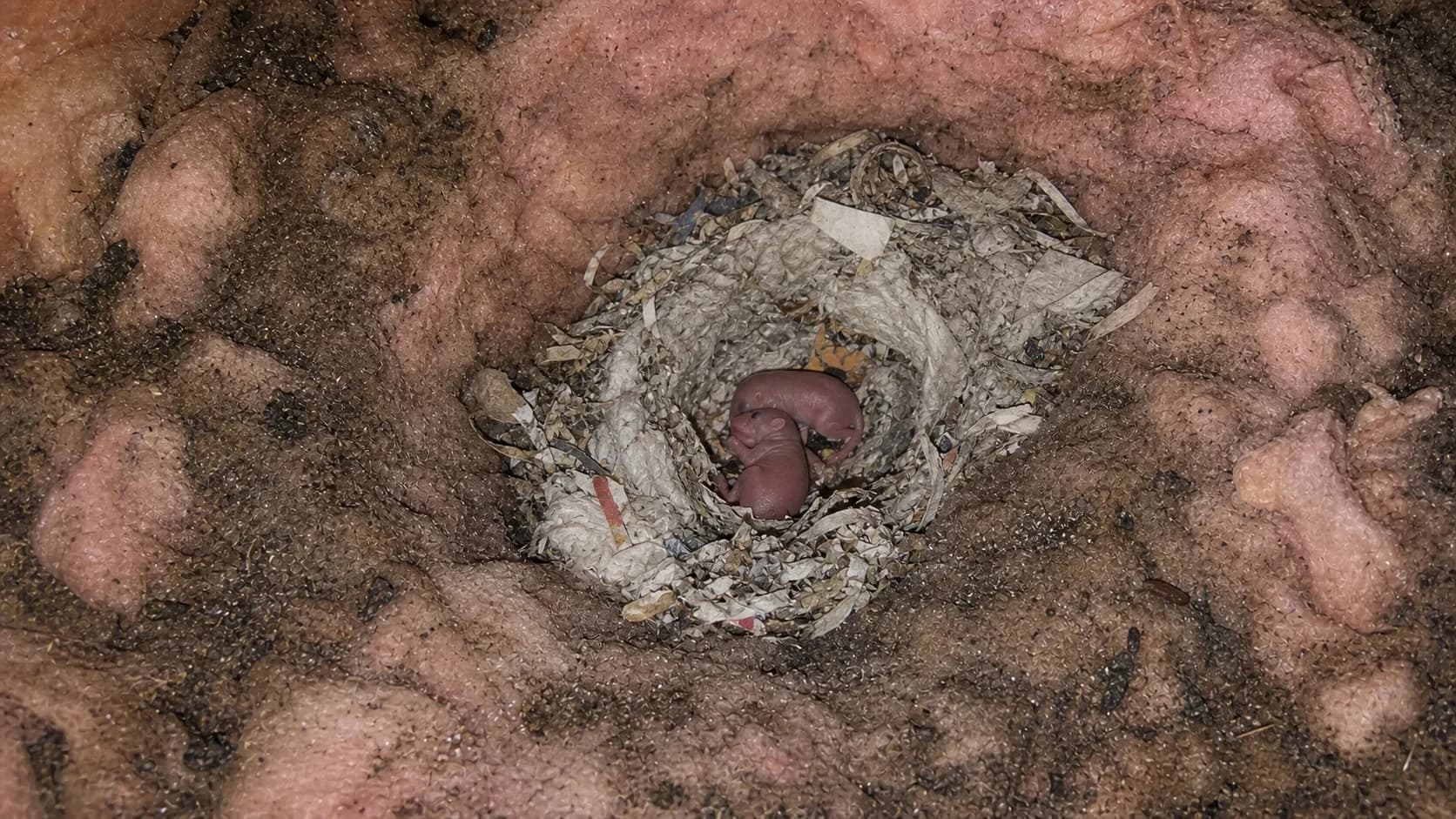
A short occupancy leaves scattered droppings. A long one leaves droppings and urine through the insulation, and heavily contaminated insulation does not get cleaned, it gets removed. Whether the job stops at sealing and trapping or extends into attic cleanup and insulation work is the difference between the low end and the high end.
Building size and complexity
A single-story ranch is a shorter envelope walk than a multi-level home with an attached garage. More wall, more penetrations, more sealing.
What the Numbers Look Like
A complete mice job in New Jersey starts around $3,000, and runs to $4,800 once attic cleanup and insulation work are included on a heavier infestation. The number starts there because the job is remediation with a written warranty: every envelope opening sealed, traps worked, and the contamination handled.
Published 2026 ranges from HomeGuide and Angi list a few hundred dollars for trapping-only service. That price buys fewer mice this month, not an end to mice, because the openings are still there. What moves the number inside the range is almost always contamination: how long the mice have been in and how much of the insulation they have reached.
Why Not Poison?
Poison is the approach most people have already tried or been sold, and it is the wrong tool for a house. Poisoned mice die inside walls and insulation, and the smell lasts weeks. Meanwhile the entries that let them in are still open, so new mice replace the dead ones and the cycle continues, now with carcasses in the structure. The work that actually ends the problem is mechanical: snap traps inside and permanent sealing on the outside.
What Should Be Included in a Real Mice Job
- A building-envelope inspection with photos of every gap
- Identification of every entry: utility lines, garage door corners, exterior doors, foundation cracks, rim joist, crawl space vents, roofline gaps, attic vents, addition junctions
- Sealing materials named in the quote: quarter-inch galvanized steel hardware cloth, copper mesh stuffed with sealant, mortar for masonry cracks, replacement screens for vents
- A mechanical trap placement plan: snap traps, no glue traps, no poison
- Cleanup of droppings and contaminated insulation where the contamination is heavy
- A written warranty
DIY vs Professional: An Honest Comparison
A homeowner with a caulk gun and steel wool can meaningfully reduce entry points, and snap traps from the hardware store are the same tool the professionals use. The gap is coverage: finding all 12 to 20 openings instead of the obvious ones, getting the rim joist and roofline gaps you cannot comfortably reach, and knowing which materials hold (mortar and steel mesh) versus which get chewed through or pushed aside. Partial sealing produces the classic DIY outcome: fewer mice at first, then back to normal, because the envelope is still open somewhere you did not look.
Red Flags in Mice Removal Pricing
- Poison as the primary plan, in any form
- Glue traps; inhumane, and they do nothing about the structure
- A quote that seals "where the mice are getting in" instead of the whole envelope; sealing only where you have seen mice leaves the rest open
- A monthly maintenance contract offered as the fix; recurring service treats the symptom, sealing ends the problem
- No named sealing materials in the quote
The Real Cost of Waiting
Mouse contamination is cumulative. Droppings and urine build up in the insulation season over season, and insulation that starts as lightly soiled ends as a removal-and-replacement line item. Waiting also compounds the entry problem: gnawed openings get bigger, and a bigger opening admits more than mice. The trapping-and-sealing approach is identical whenever you do it. The cleanup bill is what grows.
Common Questions
How do I know how many entry points my house has?
You will not know from the inside, and neither will anyone quoting over the phone. The envelope inspection with photos is what produces the count, and the count is what produces an honest price.
Why snap traps instead of poison or glue?
A snap trap leaves the carcass where it can be found and removed. Poison kills inside your walls where nothing can be removed, and glue traps are inhumane while doing nothing about the openings. The traps are for the mice already inside; the sealing is the actual fix.
Can mice really get through a quarter-inch gap?
Yes, a gap the size of a dime is enough. That is why "we looked around and did not see any holes" misses the point; the openings that matter are dime-sized, high, low, and behind things.
Do I need attic cleanup too?
Only if the contamination is heavy, and the inspection photos will show you either way. Light scattered droppings get cleaned as part of the job. Urine-saturated insulation has lost R-value and holds odor and pathogens, and that material comes out rather than getting cleaned.
What about the mice I hear in the walls?
Wall activity usually means the mice are traveling between floors along utility runs. The fix is the same: seal the envelope and trap the interior population. For what that job looks like from the inside, see the mice in the attic page.
Get a Straight Answer
An honest mice removal number in NJ comes from walking the building envelope and counting the openings, not from the phone. Entry count, contamination level, and building size set the price. See what our mice removal service includes or compare pricing across services on the NJ attic costs page.
On this page
On this page
- What Drives Mice Removal Cost
- How many entry points your building has
- How far the contamination has spread
- Building size and complexity
- What the Numbers Look Like
- Why Not Poison?
- What Should Be Included in a Real Mice Job
- DIY vs Professional: An Honest Comparison
- Red Flags in Mice Removal Pricing
- The Real Cost of Waiting
- Common Questions
- How do I know how many entry points my house has?
- Why snap traps instead of poison or glue?
- Can mice really get through a quarter-inch gap?
- Do I need attic cleanup too?
- What about the mice I hear in the walls?
- Get a Straight Answer
