
Rodent removal · East Orange, NJ
Rodent Removal
East Orange, NJ
Where Grand Victorians Became Rodent Highways Between Subdivided Apartments
East Orange's roughly 69,000 residents live in a city whose housing stock tells two stories: the grand Victorian and Edwardian homes built in the late 1800s when wealthy New Yorkers established estates here, and the multi-family conversions those homes became as the city urbanized. Today, many of these architecturally significant structures have been subdivided into three, four, or more apartment units, creating interconnected interior spaces with complex wall cavities, abandoned utility chases, and sealed-off rooms that rodents exploit with ease.
- Licensed & Insured
- No Poison. Ever.
- Whole-House Plan
- Exclusion-First Approach
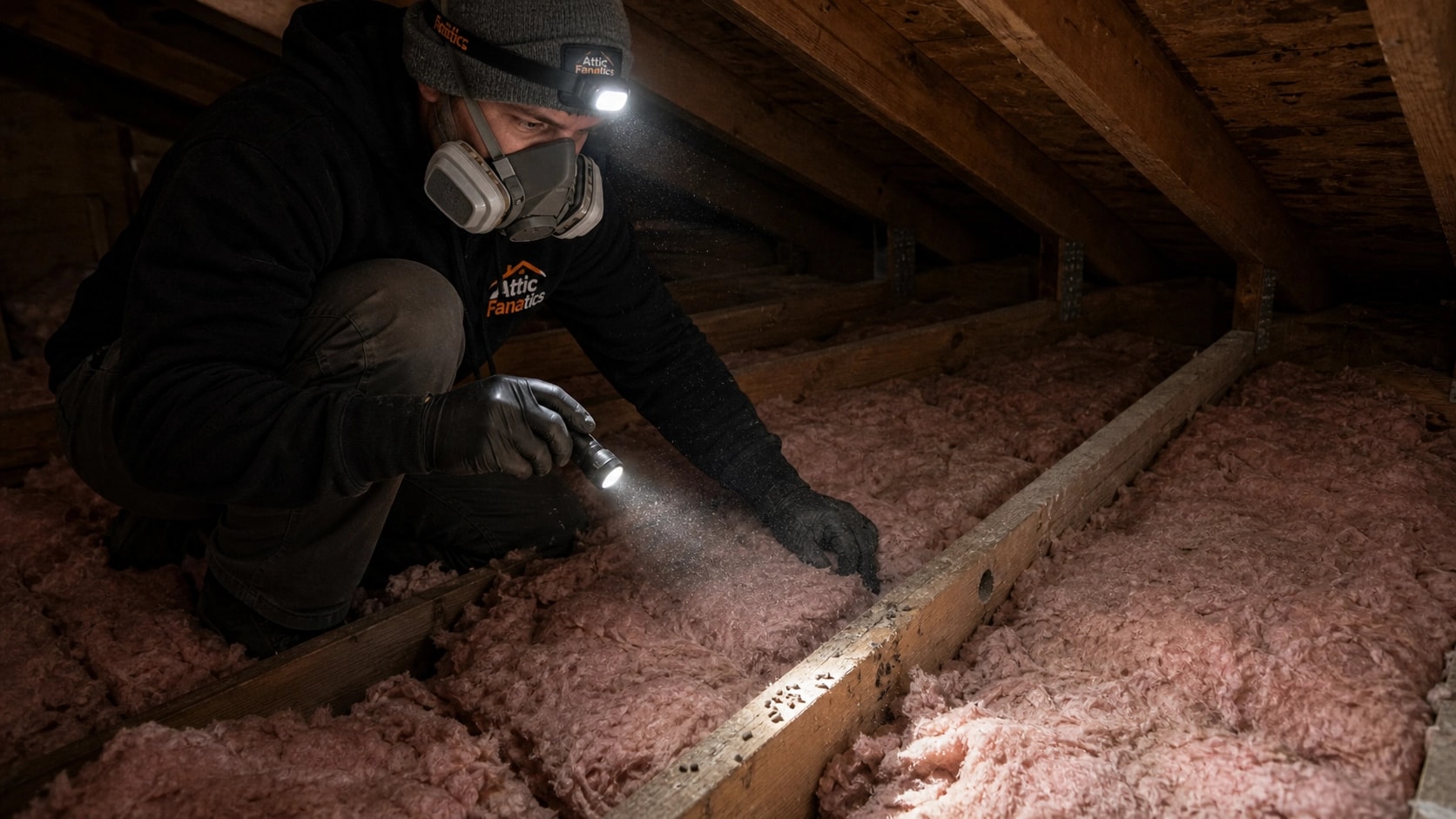
Subdivided Victorians and Hidden Voids: East Orange's Built-In Rodent Problem
East Orange faces a rodent challenge rooted in the city's architectural DNA. The large Victorian, Queen Anne, and Colonial Revival homes that once housed single wealthy families have been progressively subdivided into multi-family apartments over the past century. Each conversion introduced new partition walls, rerouted plumbing, and sealed off former rooms, creating a maze of hollow spaces, abandoned chases, and double-wall voids that are invisible to residents but perfectly suited for mice and other rodents. House mice are the primary concern in upper-floor apartments, traveling through the complex internal structure of these converted homes with ease. Rats dominate at the ground level and in basements, where original stone and brick foundations, many over 120 years old, have developed cracks and gaps that worsen with each freeze-thaw cycle. The city's proximity to Branch Brook Park and its associated green corridors also provides rodent populations with habitat and travel routes into adjacent residential blocks, particularly in the neighborhoods bordering Newark. The sheer number of rental units concentrated in buildings never designed for multi-family use creates a maintenance challenge. Many subdivided Victorians have areas between apartments that no single tenant or landlord can easily access, old servant stairways, sealed closets, and utility spaces that become undisturbed nesting sites for rodent colonies that persist for years.
Why East Orange?
Subdivided Victorian homes create ideal conditions for both species, house mice thrive in the complex wall cavities and sealed-off spaces of upper floors, while rats colonize the aging stone foundations and basements of these 100-plus year-old structures.
Rodent Species in East Orange
Most common rodent pest in East Orange
- roofline rodents (occasional, in taller Victorian structures with accessible attic spaces near Branch Brook Park)
How to Know You Have Rodents in East Orange
Spot these warning signs before the problem gets worse
- 01
Mouse droppings appearing simultaneously on multiple floors of a subdivided Victorian, a hallmark sign that rodents are using the original balloon-frame wall cavities to move vertically through the building
- 02
Scratching or scurrying sounds coming from inside walls, especially near areas where apartment partitions meet the original exterior walls of the home
- 03
Musty or ammonia-like odors from wall cavities or sealed-off spaces, indicating an established mouse colony nesting in a hidden void within the building's structure
- 04
Gnaw marks on baseboards and door frames at the points where new partition walls were added during the home's conversion to apartments, these junctions often have small gaps that rodents exploit
Noticed any of these signs?
Rodents reproduce fast. A small problem today becomes a full infestation within weeks.
100-Year-Old Mansions Were Not Built to Be Apartment Buildings
East Orange's signature housing vulnerability is the subdivided Victorian. These homes were built with balloon-frame construction, meaning wall cavities run continuously from the basement to the attic with no fire stops, and no rodent stops either. When these large homes were divided into apartments, contractors added partition walls but rarely sealed the original framing cavities. The result is buildings where mice and other rodents can travel vertically from basement to third floor entirely within the walls, accessing every apartment unit along the way. In neighborhoods like Presidential Estates and Doddtown, these once-grand homes now contain three to six apartment units each, with decades of patchwork plumbing and electrical work creating additional penetrations at every floor level.
Common Entry Points
- Original stone and brick foundations with 100-plus years of mortar deterioration, freeze-thaw cracking, and settling gaps
- Balloon-frame wall cavities that run uninterrupted from basement to attic in pre-1920 Victorian construction
- Abandoned utility chases, sealed-off rooms, and partition wall voids created during multi-family conversion that provide hidden nesting sites
- Gaps around rerouted plumbing and electrical work where successive apartment conversions punched through original framing without proper sealing
How Rodents Get Established
- Mice traveling from basement to third-floor apartments through continuous balloon-frame wall cavities in subdivided Victorian homes, making it impossible to solve the problem in one unit alone
- rats nesting in inaccessible spaces between apartment units like former closets, servant passages, and sealed stairwells that were closed off during subdivision but never rodent-proofed
- Rodents entering through crumbling original stone foundations that have deteriorated over 100-plus years, particularly during winter freeze-thaw cycles that widen existing cracks
- Multi-unit buildings where each apartment conversion added new plumbing and electrical penetrations through floors and walls, creating dozens of unmonitored entry points between units
East Orange Rodent Case Study
Victorian-to-Fourplex Conversion with Mice on Every Floor
01 The Problem
A four-unit apartment building, originally a single-family Victorian home built in the early 1900s, had been battling a persistent mouse problem for over two years. Tenants on all four floors reported mice in kitchen cabinets, droppings in closets, and scratching sounds in walls at night. Each unit had been individually treated by different pest control providers multiple times, but the mice always returned within a month.
Location: Doddtown
02 What We Discovered
Inspection revealed the root cause: the original balloon-frame construction allowed mice to travel freely through continuous wall cavities from the basement to the attic. The home's conversion to four apartments had added partition walls and rerouted plumbing, but none of these modifications sealed the original framing cavities. We identified 14 separate utility penetrations between floors that were unsealed, a former dumbwaiter shaft that had been walled over but not capped at the basement level, and extensive nesting material in the void between the second and third floor where a servant stairway had been removed during conversion.
03 The Solution
We performed a full-building exclusion, sealing all 14 inter-floor utility penetrations with steel wool and fire-rated sealant, capping the abandoned dumbwaiter shaft with steel plate at both the basement and attic levels, and installing rodent-proof barriers at key points in the balloon-frame wall cavities. The former servant stairway void was cleaned, sanitized, and sealed. We placed monitoring stations on each floor and snap traps in the basement and attic access points.
The Result
Mouse activity dropped by over 90 percent within the first week as the building's internal highway system was shut down. Complete elimination was confirmed at the 30-day follow-up. The building owner reported it was the first time in years that all four tenants were simultaneously rodent-free.
Rodent Challenges Specific to East Orange
- 01
Subdivided Victorian homes contain hidden voids like sealed rooms, abandoned chases, and former servant passages that provide undisturbed rodent nesting sites inaccessible to residents or standard pest control
- 02
Balloon-frame construction in pre-1920 homes allows rodents to travel vertically through continuous wall cavities from basement to attic, affecting every apartment in the building
- 03
Successive apartment conversions over decades created dozens of unsealed utility penetrations between floors and units that function as permanent rodent pathways
- 04
Proximity to Branch Brook Park and associated green corridors provides habitat and migration routes for rodent populations into adjacent East Orange neighborhoods
- 05
Mixed ownership of subdivided buildings, where individual units may have different landlords, complicates coordinated rodent treatment across an entire structure
- 06
Original stone and brick foundations from the 1880s through 1910s have over a century of mortar deterioration that worsens annually through freeze-thaw cycles
Rodent Removal Service Areas in East Orange
We serve all East Orange neighborhoods and surrounding areas
East Orange Neighborhoods We Serve
- Ampere
- Doddtown
- Elmwood
- Greenwood
- Presidential Estates
- Brick Church
- Evergreen
- Central Avenue Corridor
- Upsala
- Munn Avenue
ZIP Codes Served
- 07017
- 07018
- 07019
Rodent Removal in Nearby Cities
We Don't Use Poison
Most pest control companies will lay bait and leave. The rodents eat the poison, crawl into your walls, and die. Then you get the smell. That rotting-animal stench that seeps through drywall and can last for weeks.
Worse, poison doesn't fix the entry points. New rodents follow the same scent trails right back in. You end up on an endless cycle of baiting, dying, and stinking.
No Dead Rodents in Walls
Poison means carcasses you can't reach. We remove them alive.
No Recurring Bait Contracts
We seal entry points permanently. One visit, lasting results.
Exclusion-First Method
Find the gaps, seal the gaps, and document what was closed.
Google reviews
What homeowners say on Google.
The 6 most recent reviews from our Google listing, newest first, shown as written. Lower ratings are not filtered out.
4.9out of 5
291 reviews on Google
Rating checked October 9, 2026
Jamey L.
5 out of 5 stars
We had a great experience with Attic Fanatics! Reuben came out the next day after we called and we explained what we wanted done. We have a large, old attic, and he crawled around and looked and measured and gave us a quote while he was…
Ripal
5 out of 5 stars
I recently had my attic insulation replaced, and Attic Fanatics provided truly exceptional service. The entire process, from the initial estimate to project completion, was highly professional. Bryan conducted a thorough inspection,…
Antonio T.
5 out of 5 stars
Great Job nice cleanup we can already feel the difference totally recommend them.
David M.
5 out of 5 stars
Very happy with Attic Fanatics! Marlon was very thorough in terms of evaluating my attic for clean up after raccoon infestation and renewing it with all new insulation and sealing it and protecting it in the future. The team performing the…
Thomas M.
3 out of 5 stars
The attic work itself was done well. The crew worked hard, cleaned the space thoroughly, sealed and insulated properly, and the pricing was fair for the scope of work. From an attic/insulation standpoint, the end result looks very…
Harold W.
5 out of 5 stars
Had very good experience with attic fanatics. David in office, Marlon, field man and the installers who provided before and after job photos of my attic. All courteous and on time.
Reviews shown as pulled from Google on April 17, 2026. Newer reviews are on the Google listing.
Ready to talk about your home?
Get My Free InspectionTell us what's going on.
Free inspection. No obligation.