
Rodent removal · Jersey City, NJ
Rodent Removal
Jersey City, NJ
19,000 People Per Square Mile, 30 Miles of Waterfront, and 21 Sewer Overflows, Jersey City's Rodents Are Thriving
Jersey City packs over 302,000 residents into just 14.7 square miles of land, producing a staggering density of nearly 20,000 people per square mile. The city's 30.7 miles of waterfront along the Hudson River and Hackensack River, combined with a massive construction boom that has disrupted underground habitats, has created ideal conditions for both rats displaced from construction sites and house mice colonizing the gaps between old and new buildings.
- Licensed & Insured
- No Poison. Ever.
- Whole-House Plan
- Exclusion-First Approach
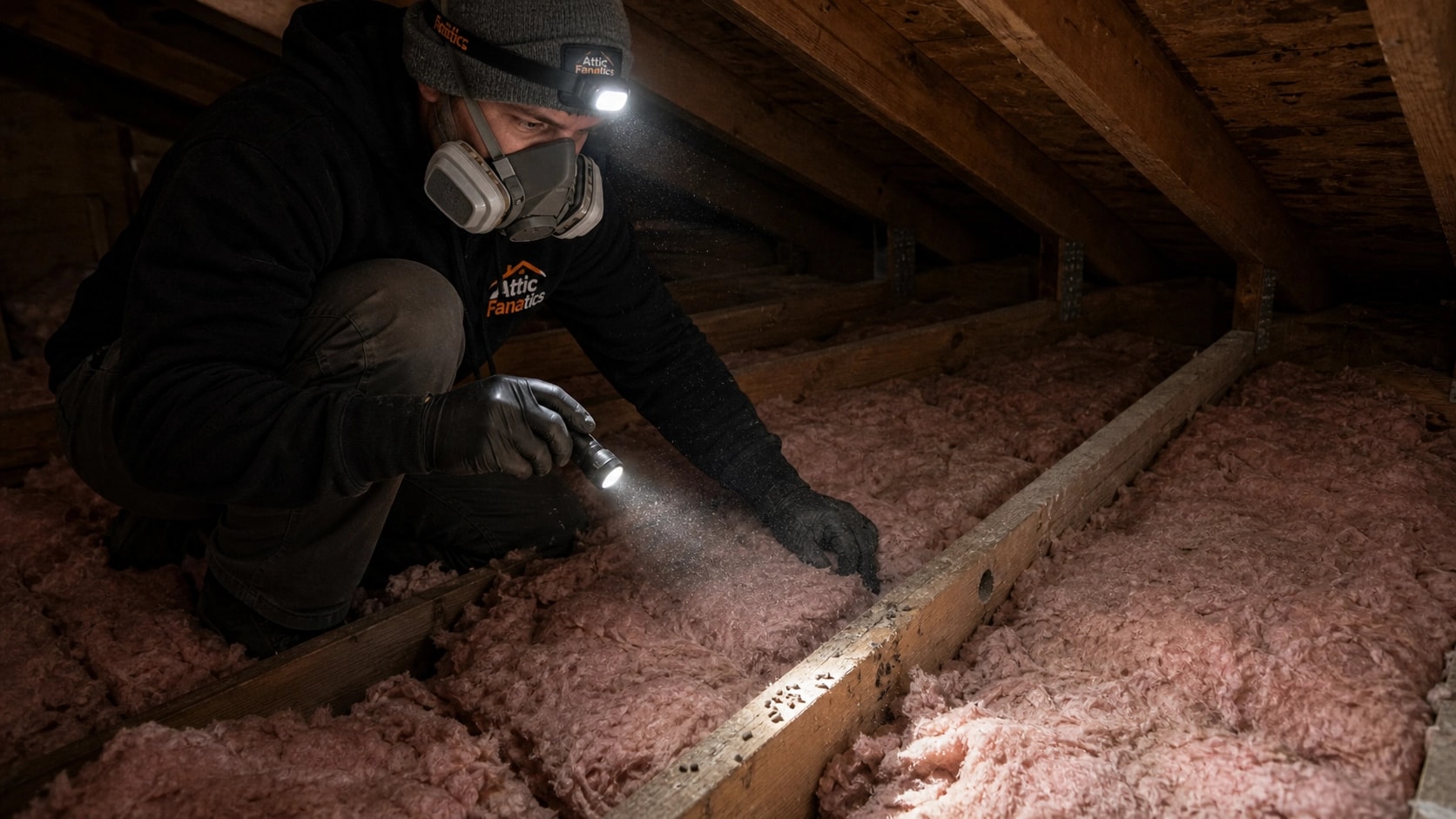
Construction Boom Meets Century-Old Infrastructure
Jersey City's rodent problem is a story of two cities colliding. On one side, you have the legacy infrastructure: a combined sewer system with 21 CSO outfalls discharging into the Hackensack and Hudson Rivers, pre-war brownstones with fieldstone foundations, and century-old PATH train tunnels dating to 1908. On the other, you have one of the most aggressive construction booms on the East Coast, with high-rise towers going up across Downtown, Newport, and Journal Square. Every new foundation excavation displaces established rat colonies, scattering them into neighboring brownstones, row houses, and older apartment buildings. The waterfront is the defining factor. Rats in Jersey City follow the water: the Hudson River shoreline, the Hackensack River wetlands, and the network of combined sewers that connect them. The PATH tunnels, originally built in 1908-1909 as the Hudson and Manhattan Railroad tubes under the Hudson River, provide additional underground corridors. Meanwhile, the rapid transition from low-rise neighborhoods to high-density towers in areas like Journal Square and Bergen-Lafayette creates a patchwork where rodents displaced from demolition sites find easy refuge in adjacent older buildings with deteriorated foundations. House mice are the other half of the equation. The Heights, perched on the Palisades above downtown, features blocks of Victorian homes and brownstones where mice exploit the gaps in balloon-frame construction. Journal Square's older multi-family walk-ups provide similar harborage. The sheer density of restaurants per square mile, one of the highest concentrations in the state, ensures that neither rodents nor mice ever lack for a food source.
Why Jersey City?
Two rivers, 21 combined sewer overflow outfalls, and century-old PATH tunnels give rats abundant water access and underground travel routes throughout the city
Rodent Species in Jersey City
Most common rodent pest in Jersey City
- house mice
- roofline rodents
How to Know You Have Rodents in Jersey City
Spot these warning signs before the problem gets worse
- 01
Fresh burrow activity along property lines adjacent to active construction or demolition sites, indicating displaced rodent colonies seeking new harborage
- 02
Rub marks and droppings along basement walls of brownstones, concentrated near utility penetrations where gas, water, or sewer lines enter through rubble stone foundations
- 03
Mouse droppings in upper-floor closets and attic spaces of Heights Victorians, indicating mice traveling through continuous balloon-frame wall cavities
- 04
Gnawed food packaging and droppings in parlor-floor and garden-level kitchens of brownstones, especially in units with below-grade access near street level
Noticed any of these signs?
Rodents reproduce fast. A small problem today becomes a full infestation within weeks.
Victorian Brownstones Next Door to Glass Towers: Jersey City's Rodent Entry Gap
Jersey City's housing stock spans 150 years, from mid-1800s brownstones in Van Vorst Park and Hamilton Park to brand-new luxury high-rises along the waterfront. The rodent vulnerability lies in the transitions: where new construction meets old, where demolition has left vacant lots adjacent to occupied brownstones, and where gut renovations have been done without proper rodent exclusion. The Heights neighborhood features Victorian-era homes with balloon-frame construction, wall cavities that run continuously from the foundation to the attic, giving mice an unobstructed vertical highway once they breach the exterior. In Bergen-Lafayette and Greenville, older rowhouses and multi-family buildings with rubble stone foundations sit alongside industrial parcels, creating ideal rodent habitat at the residential-commercial boundary.
Common Entry Points
- Continuous balloon-frame wall cavities in Heights Victorian homes that allow mice to travel from foundation to attic without obstruction
- Foundation gaps exposed by adjacent demolition and new construction in Journal Square and Downtown where excavation disturbs neighboring building foundations
- Deteriorated brownstone stoops and below-grade entryways in Van Vorst Park and Paulus Hook where the stoop-to-foundation joint has separated
- Utility conduit penetrations in Bergen-Lafayette rowhouses where cable, gas, and water lines enter buildings through unsealed foundation openings
How Rodents Get Established
- New high-rise construction in Downtown or Journal Square excavates foundations, displacing rat colonies that relocate into basements of adjacent pre-war brownstones
- Victorian homes in The Heights with balloon-frame walls develop mouse infestations that spread from basement to attic through continuous wall cavities
- Heavy rainstorms trigger combined sewer overflows, pushing rodents from the sewer system into Greenville and Bergen-Lafayette basements through floor drains
- Restaurant and bar waste in the dense dining corridors around Newark Avenue and Grove Street sustain rodent colonies that burrow under nearby residential foundations
Jersey City Rodent Case Study
The Brownstone and the Tower Crane
01 The Problem
The owners of a three-story brownstone on a Journal Square side street began hearing scratching in the walls and finding droppings in their parlor-floor kitchen. The problem started shortly after a vacant lot next door was cleared for a new seven-story residential building. Within weeks, the homeowners were seeing rodent activity in the backyard and basement nightly.
Location: Journal Square
02 What We Discovered
Inspection confirmed that the adjacent construction had displaced an established rat colony. Active burrows were found along the shared property line where the lot had been excavated. Inside the brownstone, rodents had entered through a gap where the original gas service line penetrated the rubble stone foundation, a one-inch opening that had existed for decades without issue until construction drove rodents to seek new shelter. Approximately 60 droppings were found in the basement, with gnaw marks on stored cardboard boxes and a compromised bag of dog food. Rub marks along the basement walls indicated an established travel pattern from the gas line entry to the kitchen riser.
03 The Solution
Exterior bait stations were placed along the property line and rear foundation wall. Interior snap traps were set along identified travel routes in the basement and behind the kitchen cabinets. The gas line foundation penetration was sealed with steel wool packed tightly around the pipe and covered with fire-rated sealant. Two additional gaps in the rubble stone foundation were identified and sealed with hydraulic cement reinforced with hardware cloth. A one-way exclusion valve was installed on the floor drain to prevent sewer access.
The Result
Eleven rats were removed over three weeks. The adjacent construction crew was notified about the colony displacement, and the general contractor agreed to maintain perimeter bait stations on the construction site. Post-exclusion monitoring confirmed no new interior activity after 45 days, and the one-way floor drain valve prevented any sewer-based re-entry.
Rodent Challenges Specific to Jersey City
- 01
Aggressive waterfront construction boom continuously displaces established rodent colonies from demolition and excavation sites into adjacent older residential buildings
- 02
Combined sewer system with 21 CSO outfalls along the Hudson and Hackensack Rivers provides rats with extensive underground water access and travel corridors
- 03
PATH train tunnels dating to 1908-1909 create additional underground infrastructure that rodents use to move between neighborhoods
- 04
Extreme population density of nearly 20,000 per square mile generates massive food waste volume from one of the highest restaurant concentrations in New Jersey
- 05
Housing stock spans 150 years, with Victorian balloon-frame brownstones sitting adjacent to modern high-rises, creating persistent gaps at the old-new construction interface
- 06
Waterfront parks and esplanades along the Hudson River provide surface-level harborage and travel corridors for rodents moving between the waterfront and residential neighborhoods
Rodent Removal Service Areas in Jersey City
We serve all Jersey City neighborhoods and surrounding areas
Jersey City Neighborhoods We Serve
- Downtown
- The Heights
- Journal Square
- Bergen-Lafayette
- Greenville
- Newport
- Paulus Hook
- Van Vorst Park
- Hamilton Park
- McGinley Square
ZIP Codes Served
- 07302
- 07304
- 07305
- 07306
- 07307
- 07310
Rodent Removal in Nearby Cities
We Don't Use Poison
Most pest control companies will lay bait and leave. The rodents eat the poison, crawl into your walls, and die. Then you get the smell. That rotting-animal stench that seeps through drywall and can last for weeks.
Worse, poison doesn't fix the entry points. New rodents follow the same scent trails right back in. You end up on an endless cycle of baiting, dying, and stinking.
No Dead Rodents in Walls
Poison means carcasses you can't reach. We remove them alive.
No Recurring Bait Contracts
We seal entry points permanently. One visit, lasting results.
Exclusion-First Method
Find the gaps, seal the gaps, and document what was closed.
Google reviews
What homeowners say on Google.
The 6 most recent reviews from our Google listing, newest first, shown as written. Lower ratings are not filtered out.
4.9out of 5
291 reviews on Google
Rating checked October 9, 2026
Jamey L.
5 out of 5 stars
We had a great experience with Attic Fanatics! Reuben came out the next day after we called and we explained what we wanted done. We have a large, old attic, and he crawled around and looked and measured and gave us a quote while he was…
Ripal
5 out of 5 stars
I recently had my attic insulation replaced, and Attic Fanatics provided truly exceptional service. The entire process, from the initial estimate to project completion, was highly professional. Bryan conducted a thorough inspection,…
Antonio T.
5 out of 5 stars
Great Job nice cleanup we can already feel the difference totally recommend them.
David M.
5 out of 5 stars
Very happy with Attic Fanatics! Marlon was very thorough in terms of evaluating my attic for clean up after raccoon infestation and renewing it with all new insulation and sealing it and protecting it in the future. The team performing the…
Thomas M.
3 out of 5 stars
The attic work itself was done well. The crew worked hard, cleaned the space thoroughly, sealed and insulated properly, and the pricing was fair for the scope of work. From an attic/insulation standpoint, the end result looks very…
Harold W.
5 out of 5 stars
Had very good experience with attic fanatics. David in office, Marlon, field man and the installers who provided before and after job photos of my attic. All courteous and on time.
Reviews shown as pulled from Google on April 17, 2026. Newer reviews are on the Google listing.
Ready to talk about your home?
Get My Free InspectionTell us what's going on.
Free inspection. No obligation.