
Rodent removal · New Brunswick, NJ
Rodent Removal
New Brunswick, NJ
College Town Density, Victorian-Era Buildings, and the Raritan River, A Rat's Dream Resume
New Brunswick packs 55,000 permanent residents and roughly 50,000 Rutgers University students into just 5.75 square miles, creating a population density of nearly 10,000 people per square mile, the kind of density that generates enough food waste and aging infrastructure to support serious rodent populations year-round.
- Licensed & Insured
- No Poison. Ever.
- Whole-House Plan
- Exclusion-First Approach
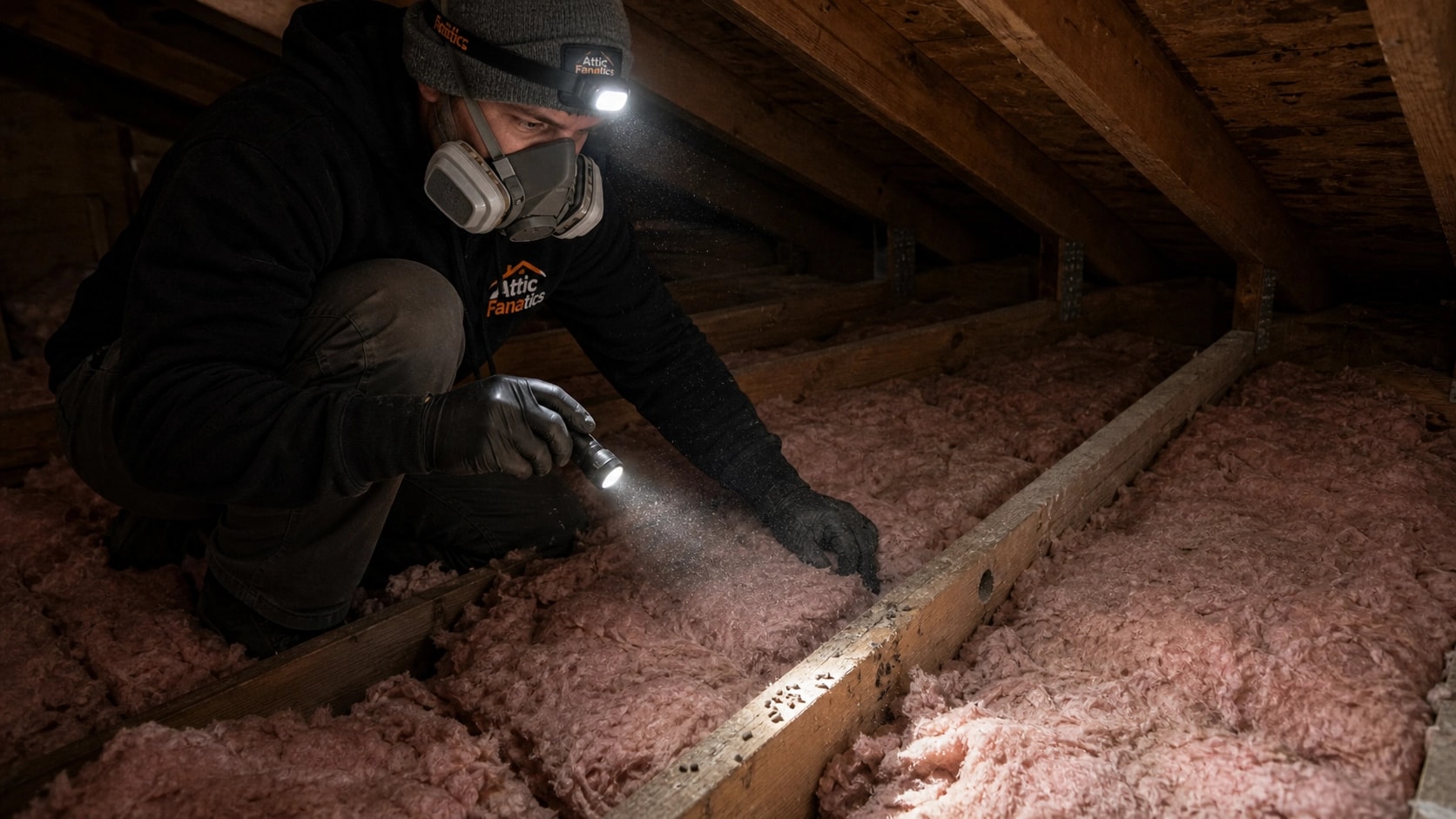
The Hub City Has a Rodent Problem to Match Its Restaurant Scene
New Brunswick is a fundamentally different rodent environment than the surrounding suburbs. This is a dense urban core, the county seat of Middlesex County, home to Rutgers University, and a restaurant and nightlife destination along George Street and Easton Avenue. That density means commercial dumpsters behind every block, student housing with inconsistent waste management, and a 24-hour food supply chain that rats have thoroughly mapped. The Raritan River forms the city's northern and western border, and it has flooded catastrophically, most recently during Tropical Storm Ida in 2021, when over 1,000 residents were evacuated. These flood events flush rodents from riverside burrows and storm drains directly into residential and commercial buildings. The city's older sewer infrastructure, much of it dating to the early 20th century, provides a below-ground transit network that rodents exploit extensively. Over 45 percent of New Brunswick's housing stock was built before 1960. The downtown is lined with 19th-century rowhomes and Victorian-era multi-family conversions with fieldstone foundations, original wooden sill plates, and utility penetrations that have been modified repeatedly over a century or more. Student rental housing in neighborhoods along Somerset Street and French Street is notoriously poorly maintained, with deferred repairs creating exactly the kind of gaps and deterioration that rodents require. House mice are common in residential areas further from the commercial core, but rats are the defining rodent challenge in New Brunswick.
Why New Brunswick?
The combination of extreme population density, a massive restaurant and bar district, the Raritan River floodplain, aging sewer infrastructure, and 19th-century building stock creates ideal rat habitat throughout the city core.
Rodent Species in New Brunswick
Most common rodent pest in New Brunswick
- House mice in residential neighborhoods away from the commercial core
- White-footed mice in the wooded areas of Buccleuch Park and along the Raritan River greenway
How to Know You Have Rodents in New Brunswick
Spot these warning signs before the problem gets worse
- 01
Rodent burrow openings along the Raritan River embankment and in the soil beneath sidewalks in the downtown commercial district, particularly near restaurant dumpster locations
- 02
Mouse droppings along baseboard heating units in converted Victorian apartments, mice travel behind the baseboard covers as protected runways between rooms
- 03
Gnaw damage to the rubber gaskets on commercial dumpster lids behind George Street restaurants, with grease trails on the exterior walls marking rodent climbing routes
- 04
Urine staining visible under blacklight along basement perimeter walls in pre-war multi-family buildings, indicating established rodent pathways from sewer access points to upper floors
Noticed any of these signs?
Rodents reproduce fast. A small problem today becomes a full infestation within weeks.
Victorian Rowhomes and Student Rentals: A Century of Deferred Maintenance
New Brunswick's housing stock spans from the 1800s to modern high-rise apartments, but the rodent problems concentrate in the older inventory. The city's pre-war rowhomes and multi-family conversions have fieldstone and brick foundations that were never designed to be rodent-proof, the mortar has been crumbling for generations. Multi-family student rental properties along Somerset Street and the neighborhoods surrounding College Avenue campus are particularly vulnerable: absentee landlord maintenance, high tenant turnover, and inconsistent waste disposal create a perfect storm for rodent establishment. Even newer construction faces challenges in New Brunswick because the underlying sewer and utility infrastructure it connects to is often a century old.
Common Entry Points
- Deteriorated mortar joints in fieldstone and brick foundations on pre-1920 rowhomes and multi-family buildings
- Shared wall penetrations in attached rowhome construction where utility lines pass between units through unsealed chases
- Damaged or missing basement window grates on converted Victorian homes now used as multi-unit student housing
- Sewer line connections from old clay laterals to even older municipal mains, with root intrusion and joint separation creating underground rodent access
How Rodents Get Established
- rats entering a French Street multi-family building through a collapsed section of the century-old clay sewer lateral, with the colony nesting in the dirt-floor basement behind the boiler, a common configuration in pre-war New Brunswick buildings
- Mouse infestation cycling through a College Avenue student rental every September as new tenants inherit a building with unsealed utility penetrations and food waste habits that sustain resident mouse populations year after year
- Rodent activity in a George Street restaurant's basement traced to a shared wall chase with the adjacent building, where decades of plumbing modifications left an unsealed vertical shaft between the structures
- Post-flood rodent displacement into a Raritan River-adjacent apartment complex after heavy rains overwhelm the storm drain system and flood riverside burrow networks
New Brunswick Rodent Case Study
Somerset Street Student Housing: The Annual September Mouse Migration
01 The Problem
The property manager of a six-unit converted Victorian on Somerset Street reported that every September, when new Rutgers students moved in, mouse complaints surged within two weeks. Previous pest control efforts focused on interior trapping each fall, but the problem returned every year without fail. Three consecutive years of complaints from every ground-floor and second-floor unit made it clear that reactive trapping was not solving the underlying issue.
Location: College Avenue area
02 What We Discovered
Full exterior inspection revealed that the 1890s brick foundation had over a dozen points where deteriorated mortar joints created gaps exceeding a quarter inch. The basement had a dirt floor with no vapor barrier, providing ideal burrowing substrate. Every utility penetration, whether gas, water, electric, or cable, had been modified multiple times over the building's 130-year life without any rodent-proofing at any stage. The September timing correlated with both cooling weather and the sudden appearance of food waste from new tenants who left doors propped open and trash bags in hallways.
03 The Solution
Complete exterior exclusion including repointing of all accessible foundation mortar joints with rodent-resistant mix, installation of steel mesh over all utility penetrations, replacement of three deteriorated basement window frames with sealed units, and installation of commercial-grade door sweeps on all ground-floor entries. The dirt basement floor was treated with a rodent deterrent and covered with hardware cloth. A waste management protocol was established with the property manager.
The Result
The following September was the first in four years with zero mouse complaints from tenants. Follow-up inspection confirmed all exclusion points held. The property manager reported that the one-time exclusion investment replaced the annual cycle of reactive trapping that had never solved the problem.
Rodent Challenges Specific to New Brunswick
- 01
Population density approaching 10,000 per square mile generates food waste volumes that sustain rodent populations at urban rather than suburban levels
- 02
The Raritan River floodplain displaces rodent colonies into buildings during major rain events, a pattern that repeated during Tropical Storm Ida when over 1,000 residents were evacuated
- 03
Rutgers University's 50,000 students create annual population turnover that disrupts consistent waste management and building maintenance in off-campus rental housing
- 04
Pre-1900 building stock with fieldstone foundations, dirt basements, and shared-wall rowhome construction was never designed to exclude modern rodent pressures
- 05
The George Street and Easton Avenue restaurant district generates commercial food waste on a scale that supports rodent populations across multiple adjacent residential blocks
- 06
Aging municipal sewer infrastructure with combined storm and sanitary lines creates a below-ground rodent transit network connecting the Raritan River corridor to the downtown commercial core
Rodent Removal Service Areas in New Brunswick
We serve all New Brunswick neighborhoods and surrounding areas
New Brunswick Neighborhoods We Serve
- Downtown
- George Street
- French Street
- Easton Park
- College Avenue
- Rutgers Village
- Lincoln Park
- Somerset
- Feaster Park
- Raritan Gardens
ZIP Codes Served
- 08901
- 08903
Rodent Removal in Nearby Cities
We Don't Use Poison
Most pest control companies will lay bait and leave. The rodents eat the poison, crawl into your walls, and die. Then you get the smell. That rotting-animal stench that seeps through drywall and can last for weeks.
Worse, poison doesn't fix the entry points. New rodents follow the same scent trails right back in. You end up on an endless cycle of baiting, dying, and stinking.
No Dead Rodents in Walls
Poison means carcasses you can't reach. We remove them alive.
No Recurring Bait Contracts
We seal entry points permanently. One visit, lasting results.
Exclusion-First Method
Find the gaps, seal the gaps, and document what was closed.
Google reviews
What homeowners say on Google.
The 6 most recent reviews from our Google listing, newest first, shown as written. Lower ratings are not filtered out.
4.9out of 5
291 reviews on Google
Rating checked October 9, 2026
Jamey L.
5 out of 5 stars
We had a great experience with Attic Fanatics! Reuben came out the next day after we called and we explained what we wanted done. We have a large, old attic, and he crawled around and looked and measured and gave us a quote while he was…
Ripal
5 out of 5 stars
I recently had my attic insulation replaced, and Attic Fanatics provided truly exceptional service. The entire process, from the initial estimate to project completion, was highly professional. Bryan conducted a thorough inspection,…
Antonio T.
5 out of 5 stars
Great Job nice cleanup we can already feel the difference totally recommend them.
David M.
5 out of 5 stars
Very happy with Attic Fanatics! Marlon was very thorough in terms of evaluating my attic for clean up after raccoon infestation and renewing it with all new insulation and sealing it and protecting it in the future. The team performing the…
Thomas M.
3 out of 5 stars
The attic work itself was done well. The crew worked hard, cleaned the space thoroughly, sealed and insulated properly, and the pricing was fair for the scope of work. From an attic/insulation standpoint, the end result looks very…
Harold W.
5 out of 5 stars
Had very good experience with attic fanatics. David in office, Marlon, field man and the installers who provided before and after job photos of my attic. All courteous and on time.
Reviews shown as pulled from Google on April 17, 2026. Newer reviews are on the Google listing.
Ready to talk about your home?
Get My Free InspectionTell us what's going on.
Free inspection. No obligation.