Rodent removal · Elizabeth, NJ
Rodent Removal
Elizabeth, NJ
Port Traffic, Refinery Corridors, and the Arthur Kill, Elizabeth's Rodents Arrive by Land and by Sea
Elizabeth's 136,000 residents make it the fourth-largest city in New Jersey, but it's the city's industrial geography that defines its rodent profile. Situated between the Port Newark-Elizabeth Marine Terminal, one of the largest container ports on the East Coast, the Bayway Refinery corridor along the Arthur Kill, and the runways of Newark Liberty International Airport, Elizabeth is surrounded by the kind of large-scale commercial activity that sustains rodent populations at an industrial scale. At 11,489 people per square mile, the residential core is packed tightly enough to ensure those rodents never have far to travel for their next meal.
- Licensed & Insured
- No Poison. Ever.
- Whole-House Plan
- Exclusion-First Approach
Where the Chemical Coast Meets Your Kitchen
Elizabeth's rodent profile is shaped by its position at the nexus of three massive infrastructure systems: the Port Newark-Elizabeth Marine Terminal, the Arthur Kill industrial corridor, and the Elizabeth River watershed. The port handles millions of shipping containers annually, and the warehouses, distribution centers, and food storage facilities that support port operations generate consistent rodent habitat along the city's eastern edge. Rats follow the Elizabeth River and its tributaries from the industrial waterfront into residential neighborhoods like Peterstown, Elizabeth Port, and Bayway. The Arthur Kill, the tidal strait separating New Jersey from Staten Island, and its industrial shoreline have earned the nickname Chemical Coast due to decades of refinery and manufacturing activity. The Bayway Refinery sits on Elizabeth's southern border with Linden, and the industrial parcels along Routes 1 and 9 create a corridor of warehouses, truck depots, and food distribution facilities that sustain large rodent populations. These populations don't stay in the industrial zone. They migrate along storm drains, railroad rights-of-way, and the Elizabeth River into the residential neighborhoods of Bayway, Peterstown, and the Midtown area. House mice are ubiquitous in Elizabeth's residential core. With a median construction year of 1955, over 56 percent of housing built before 1960, and nearly 75 percent of units renter-occupied, the city's housing stock features the aging foundations, deferred maintenance, and high turnover that mice exploit. The Elmora neighborhood's mid-century homes and the older rowhouses of Peterstown are particularly vulnerable.
Why Elizabeth?
The Port Newark-Elizabeth Marine Terminal, Arthur Kill industrial waterfront, and Elizabeth River provide rats with unmatched access to food sources, water, and travel corridors connecting industrial zones to residential neighborhoods
Rodent Species in Elizabeth
Most common rodent pest in Elizabeth
- house mice
- roofline rodents
How to Know You Have Rodents in Elizabeth
Spot these warning signs before the problem gets worse
- 01
Rodent burrows along rear fence lines of properties backing up to commercial parcels on Routes 1 and 9, with fresh soil displacement and worn travel paths
- 02
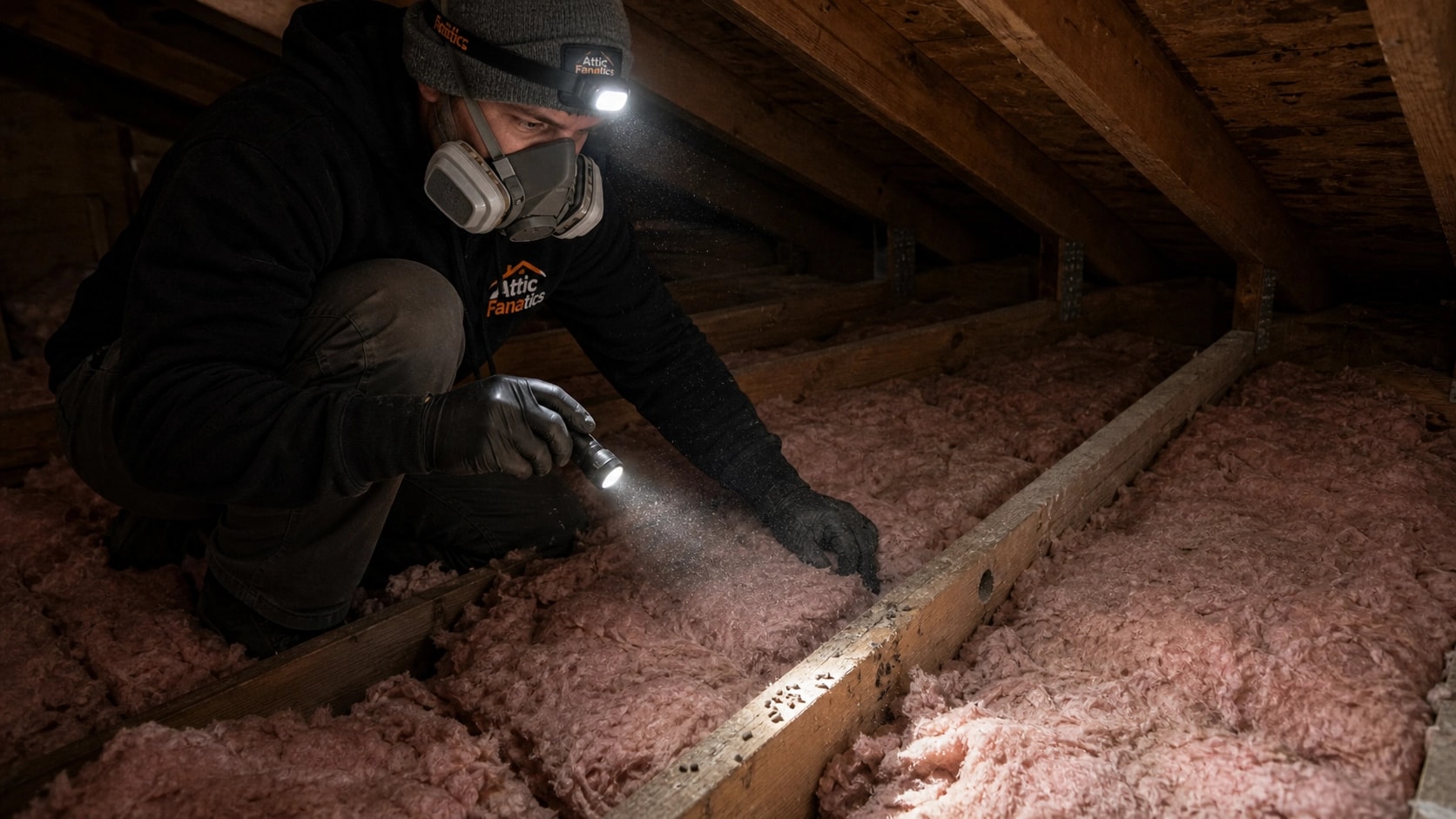
Droppings and grease marks along basement perimeter walls in Peterstown and Bayway homes, concentrated on the side facing commercial or industrial properties
- 03
Mouse droppings in attached garage cabinets and along the garage-to-house wall junction in Elmora mid-century homes
- 04
Gnaw marks on basement-level window frames and sill plates in Elizabeth Port multi-family buildings, especially on ground floors near alley access
Noticed any of these signs?
Rodents reproduce fast. A small problem today becomes a full infestation within weeks.
1950s Construction, 75% Renters, and an Industrial Backyard
Elizabeth's housing vulnerability is a function of age, occupancy type, and proximity to industrial activity. Over half the housing stock was built before 1960, with construction centered around the post-war boom of the late 1940s and 1950s. These buildings, predominantly two-unit structures and small multi-family apartment buildings, were built with concrete block and cinder block foundations that develop cracks and mortar failures over decades. With nearly 75 percent of units renter-occupied, maintenance responsibility often falls between landlords and tenants, and rodent entry points go unreported or unaddressed. The western neighborhood of Elmora features mid-century single-family homes with attached garages where gaps at the garage-to-house junction are a classic mouse entry point. In Peterstown and Bayway, the proximity of residential buildings to the industrial corridor along Routes 1 and 9 means that rodents established in commercial properties need only cross a few blocks to reach residential foundations.
Common Entry Points
- Cracked concrete block and cinder block foundations in 1950s-era multi-family buildings throughout the residential core
- Garage-to-house junction gaps in Elmora mid-century homes where the attached garage meets the main structure
- Deteriorated dryer vent and exhaust covers on the exterior of aging apartment buildings in Peterstown and Elizabeth Port
- Storm drain connections and utility conduit entries along properties bordering the Elizabeth River and industrial parcels on Routes 1 and 9
How Rodents Get Established
- rats established in warehouse and distribution facilities along Routes 1 and 9 migrate along storm drains into Bayway and Peterstown residential basements
- Mice enter Elmora homes through unsealed gaps at the attached garage-to-house junction, nesting in the garage wall cavity before spreading to the kitchen and living areas
- Renter-occupied multi-family buildings in Elizabeth Port go months with unreported entry points as tenants assume pest control is someone else's responsibility
- Elizabeth River flooding during nor'easters pushes rodents from riverbank harborage into the basements of Westminster and Midtown properties through foundation cracks and window wells
Elizabeth Rodent Case Study
The Route 1 Migration
01 The Problem
A homeowner in Peterstown's residential core, three blocks from the Route 1 commercial corridor, reported finding heavy rodent droppings in the basement and a foul odor coming from behind the basement wall. Neighbors on the same block had also noticed rodents in their backyards at dusk, moving along the rear fence line toward the commercial properties.
Location: Peterstown
02 What We Discovered
Inspection revealed a well-established rat travel route. The rear properties on the block backed up to a commercial parking lot serving a food distribution warehouse on Route 1. Rodent burrows were found along the chain-link fence line separating residential yards from the commercial lot. The homeowner's basement had a cracked cinder block foundation wall on the rear-facing side, with a gap large enough for adult rodents to enter. Inside, approximately 50 droppings were found along the basement perimeter, and the foul odor was traced to a deceased rodent in the wall cavity behind the hot water heater. Grease marks on the basement floor indicated a regular travel path from the foundation crack to stored food items on a shelf.
03 The Solution
The deceased rodent was removed and the wall cavity sanitized. Snap traps and tamper-resistant bait stations were deployed along the basement perimeter and exterior foundation. The cracked cinder block was repaired with hydraulic cement, and a section of damaged foundation was reinforced with galvanized hardware cloth embedded in cement. All basement-level utility penetrations were sealed with steel wool and caulk. The property owner coordinated with neighbors to address the fence-line burrows collectively, and the commercial property was notified about harborage conditions in their parking lot.
The Result
Five adult rodents were removed from the property over 10 days. The coordinated neighborhood approach addressed the fence-line burrow system, and the commercial property owner engaged a pest management company to treat their lot. Follow-up inspection at 60 days showed no new activity at the treated property, and neighbors reported significantly reduced backyard sightings.
Rodent Challenges Specific to Elizabeth
- 01
Port Newark-Elizabeth Marine Terminal generates constant rodent pressure from shipping containers, warehouses, and food storage facilities along the city's eastern boundary
- 02
The Arthur Kill industrial corridor and Bayway Refinery area create a band of commercial and industrial rodent habitat along the city's southern edge that feeds into residential neighborhoods
- 03
The Elizabeth River and its tributaries provide rats with water access and travel corridors connecting industrial waterfront areas to the residential interior
- 04
Renter-occupied rate of nearly 75 percent creates a maintenance gap where rodent entry points go unreported between lease turnovers
- 05
Routes 1 and 9 commercial corridor with warehouses, truck depots, and food distribution facilities sustains large rodent populations just blocks from residential streets
- 06
Median construction year of 1955 means the majority of housing has aging cinder block foundations prone to cracking and mortar failure
Rodent Removal Service Areas in Elizabeth
We serve all Elizabeth neighborhoods and surrounding areas
Elizabeth Neighborhoods We Serve
- Elmora
- Peterstown
- Bayway
- Westminster
- Elizabeth Port
- North Elizabeth
- Midtown
- Keighry Head
- Elizabethport
- Elmora Hills
ZIP Codes Served
- 07201
- 07202
- 07206
- 07208
Rodent Removal in Nearby Cities
We Don't Use Poison
Most pest control companies will lay bait and leave. The rodents eat the poison, crawl into your walls, and die. Then you get the smell. That rotting-animal stench that seeps through drywall and can last for weeks.
Worse, poison doesn't fix the entry points. New rodents follow the same scent trails right back in. You end up on an endless cycle of baiting, dying, and stinking.
No Dead Rodents in Walls
Poison means carcasses you can't reach. We remove them alive.
No Recurring Bait Contracts
We seal entry points permanently. One visit, lasting results.
Exclusion-First Method
Find the gaps, seal the gaps, and document what was closed.
Google reviews
What homeowners say on Google.
The 6 most recent reviews from our Google listing, newest first, shown as written. Lower ratings are not filtered out.
4.9out of 5
291 reviews on Google
Rating checked October 9, 2026
Jamey L.
5 out of 5 stars
We had a great experience with Attic Fanatics! Reuben came out the next day after we called and we explained what we wanted done. We have a large, old attic, and he crawled around and looked and measured and gave us a quote while he was…
Ripal
5 out of 5 stars
I recently had my attic insulation replaced, and Attic Fanatics provided truly exceptional service. The entire process, from the initial estimate to project completion, was highly professional. Bryan conducted a thorough inspection,…
Antonio T.
5 out of 5 stars
Great Job nice cleanup we can already feel the difference totally recommend them.
David M.
5 out of 5 stars
Very happy with Attic Fanatics! Marlon was very thorough in terms of evaluating my attic for clean up after raccoon infestation and renewing it with all new insulation and sealing it and protecting it in the future. The team performing the…
Thomas M.
3 out of 5 stars
The attic work itself was done well. The crew worked hard, cleaned the space thoroughly, sealed and insulated properly, and the pricing was fair for the scope of work. From an attic/insulation standpoint, the end result looks very…
Harold W.
5 out of 5 stars
Had very good experience with attic fanatics. David in office, Marlon, field man and the installers who provided before and after job photos of my attic. All courteous and on time.
Reviews shown as pulled from Google on April 17, 2026. Newer reviews are on the Google listing.
Ready to talk about your home?
Get My Free InspectionTell us what's going on.
Free inspection. No obligation.