
Rodent removal · Paterson, NJ
Rodent Removal
Paterson, NJ
America's First Industrial City Still Has an Industrial-Strength Rodent Problem
Paterson crams 160,000 residents into just 8.4 square miles, producing a population density of over 19,000 per square mile, rivaling Jersey City as one of the most densely packed cities in the entire state. With 83 percent of its housing stock being multi-family, 46 percent of its buildings dating to before 1950, and the flood-prone Passaic River winding through the center of it all, Paterson offers rodents something they rarely get: density, old construction, and regular water events, all in one compact package.
- Licensed & Insured
- No Poison. Ever.
- Whole-House Plan
- Exclusion-First Approach
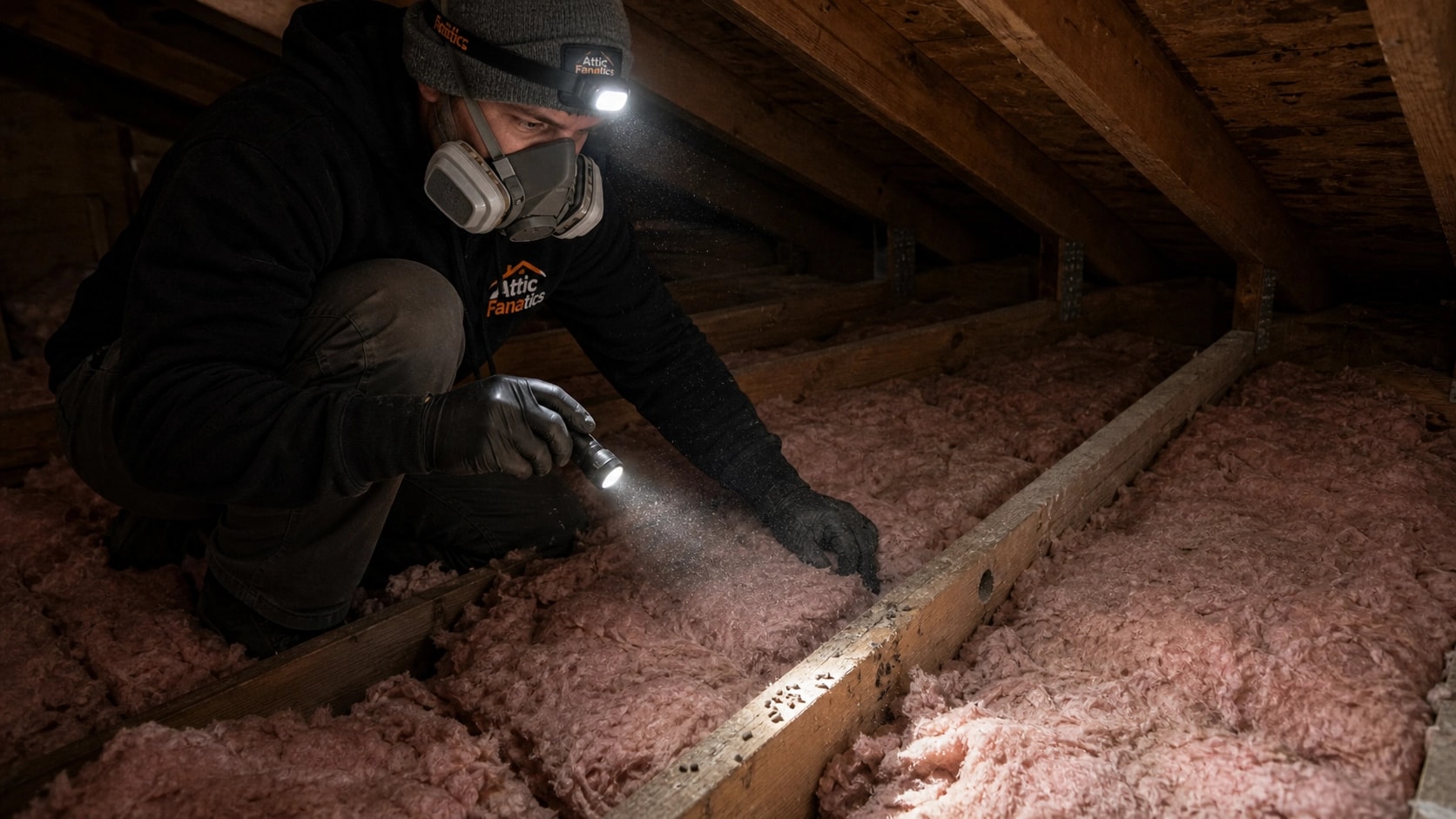
Silk City's Unwanted Tenants: Where Mill History Meets Modern Infestation
Paterson's rodent problem is inseparable from its industrial heritage. Founded as the nation's first planned industrial city, Paterson was built around the Great Falls of the Passaic River, which powered dozens of textile and locomotive mills through a system of water raceways. Those raceways, many still partially intact beneath streets and buildings, are now underground corridors for rats. The old mill district around the Great Falls National Historical Park contains brick and stone buildings with foundations dating to the 1800s, structures that were built for machinery, not rodent exclusion. The Passaic River is the other defining factor. Paterson has received 14 federal disaster declarations for flooding since 1968, and roughly 26 percent of properties face significant flood risk. When the Passaic rises, it doesn't just damage homes, it drives rodent colonies out of riverbank burrows and storm drains into residential areas. Neighborhoods like Riverside, People's Park, and the areas along the river near the Great Falls experience predictable spikes in rodent activity after every significant rain event. House mice are the constant indoor companion across Paterson's dense multi-family housing. With 83 percent of units in multi-family structures and a median construction year of 1953, the city is defined by aging duplexes and small apartment buildings with shared basements, common utility chases, and decades of accumulated gaps around pipes, wires, and ductwork. On blocks in the Eastside and South Paterson, a single mouse colony can span three or four connected buildings through shared wall penetrations.
Why Paterson?
Paterson's combination of the flood-prone Passaic River, historic industrial raceways, and extraordinarily dense pre-1950 multi-family housing creates equally severe problems with rats outdoors and house mice indoors
Rodent Species in Paterson
Most common rodent pest in Paterson
- rats
- house mice
- deer mice
How to Know You Have Rodents in Paterson
Spot these warning signs before the problem gets worse
- 01
Mouse droppings along hot water pipes in shared basements of connected duplexes, indicating colony travel routes between buildings
- 02
rat burrows along the Passaic River bank and in yards of properties within the flood zone, with activity spikes after rain events
- 03
Gnaw marks on basement window frames and hopper windows in pre-war apartment buildings, especially at ground level facing alleys or vacant lots
- 04
Droppings and nesting material in wall cavities accessed through gaps around plumbing risers, visible when outlet covers or access panels are removed
Noticed any of these signs?
Rodents reproduce fast. A small problem today becomes a full infestation within weeks.
1950s Duplexes, Shared Basements, and the Passaic River Next Door
Paterson's housing vulnerability comes down to three factors: age, density, and flooding. Nearly half the buildings were constructed before 1950, predominantly as duplexes and small multi-family apartment buildings. These structures share basements, utility connections, and party walls, meaning a rodent breach in one unit quickly becomes a problem for the entire building and often the buildings on either side. Only 17 percent of Paterson's housing is single-family detached; the rest is a connected web of aging multi-family structures where mice and other rodents exploit common infrastructure. Add chronic Passaic River flooding that drives rodents from their outdoor harborage into these already-vulnerable buildings, and the result is a city where rodent exclusion requires treating entire building clusters, not individual units.
Common Entry Points
- Shared basement utility penetrations in pre-1950 duplexes where water, gas, and electrical lines pass between connected buildings without sealing
- Foundation cracks and deteriorated mortar in rubble stone and concrete block foundations common in Paterson's pre-war housing stock
- Damaged or missing dryer vent covers and exhaust fan openings on the exterior of tightly packed multi-family buildings
- Ground-level basement window wells and hopper windows with rusted or broken frames in older apartment buildings throughout the Eastside and South Paterson
How Rodents Get Established
- Passaic River flooding drives rats from riverbank burrows into basements of Riverside and People's Park homes through foundation cracks and floor drains
- Mice colonize an entire row of connected duplexes on the Eastside by traveling through shared plumbing chases in common basements
- Vacant or poorly maintained properties in the Northside create rodent reservoirs that seed infestations into neighboring occupied buildings
- Food waste from the dense commercial corridor along Main Street and Broadway sustains rodent colonies that burrow along adjacent residential foundations
Paterson Rodent Case Study
The Three-Building Mouse Highway
01 The Problem
A tenant in a second-floor unit of a 1940s duplex reported finding mouse droppings in kitchen drawers and hearing scratching in the walls at night. When the property owner investigated, the tenants in the adjacent duplex and the building next door reported similar problems. Three connected buildings appeared to have a shared infestation.
Location: Eastside
02 What We Discovered
Inspection revealed that all three buildings shared a common basement that had been subdivided with drywall partitions rather than proper fire-rated walls. Utility pipes ran continuously through the basement ceiling without firestops or rodent-proofing at the partition penetrations. House mouse droppings were found throughout all three basement sections, concentrated along the hot water pipes where warmth attracted nesting activity. In the wall cavities above, mice had been traveling between units through gaps around plumbing risers. One basement section had a stored pile of cardboard boxes that showed heavy gnawing and had been used as nesting material. Approximately 200 droppings were counted across the three connected basements.
03 The Solution
A comprehensive trapping program was deployed across all three buildings simultaneously, with snap traps placed along identified travel routes in the basements and inside wall access points on each floor. All pipe penetrations through the basement partitions were sealed with steel wool and fire-rated caulk. Exterior entry points were identified and sealed, including two foundation-level gaps where cable TV lines had been run through the wall without sealing, and a deteriorated basement window frame. The cardboard storage was removed, and the property owners were advised to use sealed plastic bins.
The Result
Over four weeks, 23 house mice were removed across the three buildings. The simultaneous treatment approach prevented mice from simply relocating to an adjacent building. Post-exclusion inspections at 30 and 60 days confirmed no new activity. The property owners agreed to maintain sealed penetrations during any future utility work.
Rodent Challenges Specific to Paterson
- 01
The Passaic River's chronic flooding history, 14 federal disaster declarations since 1968, periodically drives rat colonies from riverbank burrows into residential neighborhoods
- 02
Historic industrial raceways from the Great Falls mill district create underground corridors beneath streets and buildings that rodents use as travel routes
- 03
83 percent multi-family housing stock with shared basements and common utility chases allows mice to spread across entire building clusters through a single entry point
- 04
Median construction year of 1953 means most buildings predate modern rodent exclusion standards, with unsealed pipe penetrations and deteriorated foundations throughout
- 05
Extremely high population density of 19,000 per square mile generates enormous food waste volumes in a very compact area
- 06
High vacancy rates in some neighborhoods create unmaintained buildings that serve as rodent reservoirs seeding infestations into neighboring occupied properties
Rodent Removal Service Areas in Paterson
We serve all Paterson neighborhoods and surrounding areas
Paterson Neighborhoods We Serve
- Eastside
- Northside
- South Paterson
- Downtown
- Old Great Falls
- Lakeview
- Riverside
- Sandy Hill
- People's Park
- Bunker Hill
ZIP Codes Served
- 07501
- 07502
- 07503
- 07504
- 07505
- 07513
- 07514
- 07522
- 07524
Rodent Removal in Nearby Cities
We Don't Use Poison
Most pest control companies will lay bait and leave. The rodents eat the poison, crawl into your walls, and die. Then you get the smell. That rotting-animal stench that seeps through drywall and can last for weeks.
Worse, poison doesn't fix the entry points. New rodents follow the same scent trails right back in. You end up on an endless cycle of baiting, dying, and stinking.
No Dead Rodents in Walls
Poison means carcasses you can't reach. We remove them alive.
No Recurring Bait Contracts
We seal entry points permanently. One visit, lasting results.
Exclusion-First Method
Find the gaps, seal the gaps, and document what was closed.
Google reviews
What homeowners say on Google.
The 6 most recent reviews from our Google listing, newest first, shown as written. Lower ratings are not filtered out.
4.9out of 5
291 reviews on Google
Rating checked October 9, 2026
Jamey L.
5 out of 5 stars
We had a great experience with Attic Fanatics! Reuben came out the next day after we called and we explained what we wanted done. We have a large, old attic, and he crawled around and looked and measured and gave us a quote while he was…
Ripal
5 out of 5 stars
I recently had my attic insulation replaced, and Attic Fanatics provided truly exceptional service. The entire process, from the initial estimate to project completion, was highly professional. Bryan conducted a thorough inspection,…
Antonio T.
5 out of 5 stars
Great Job nice cleanup we can already feel the difference totally recommend them.
David M.
5 out of 5 stars
Very happy with Attic Fanatics! Marlon was very thorough in terms of evaluating my attic for clean up after raccoon infestation and renewing it with all new insulation and sealing it and protecting it in the future. The team performing the…
Thomas M.
3 out of 5 stars
The attic work itself was done well. The crew worked hard, cleaned the space thoroughly, sealed and insulated properly, and the pricing was fair for the scope of work. From an attic/insulation standpoint, the end result looks very…
Harold W.
5 out of 5 stars
Had very good experience with attic fanatics. David in office, Marlon, field man and the installers who provided before and after job photos of my attic. All courteous and on time.
Reviews shown as pulled from Google on April 17, 2026. Newer reviews are on the Google listing.
Ready to talk about your home?
Get My Free InspectionTell us what's going on.
Free inspection. No obligation.