
Rodent removal · Hamilton, NJ
Rodent Removal
Hamilton, NJ
Where Preserved Farmland Meets Suburban Sprawl, and Where Field Mice Follow the Harvest Home
Hamilton Township stretches across 40 square miles of Mercer County with 92,000 residents, making it the county's most populous municipality. With 30 percent of the township preserved as farmland, parks, and open space, including 350-acre Veterans Park and the border of 2,500-acre Mercer County Park, the interface between natural habitat and residential development creates rodent pressure that is distinctly different from the urban and inner-suburban challenges found elsewhere in central New Jersey.
- Licensed & Insured
- No Poison. Ever.
- Whole-House Plan
- Exclusion-First Approach
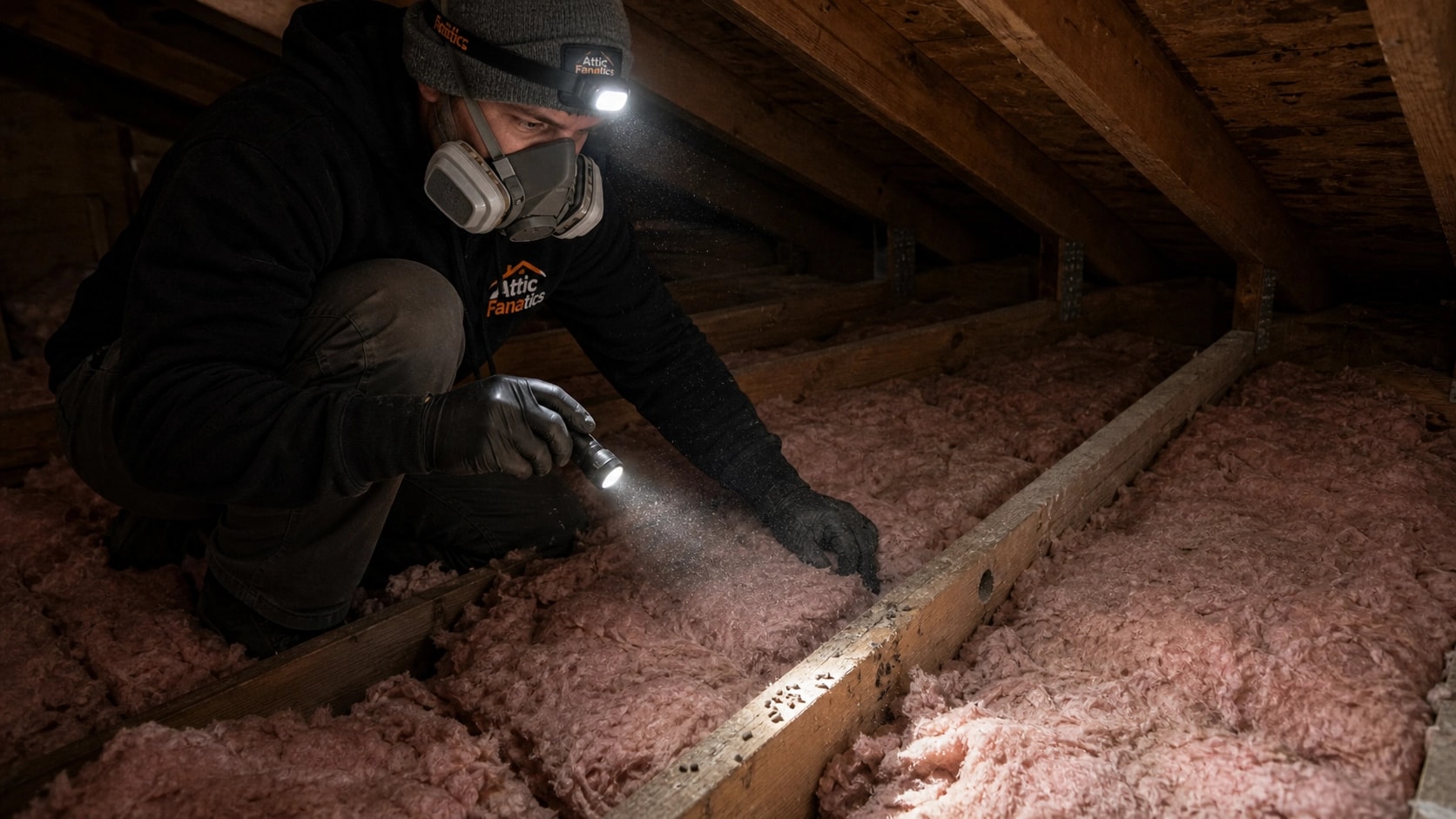
Farmland, Subdivisions, and the Mice That Commute Between Them
Hamilton Township's rodent profile is shaped by one defining characteristic: this is where central New Jersey's suburban development runs directly into preserved agricultural land, wooded parkland, and the Crosswicks Creek watershed. That interface creates rodent dynamics you will not find in Edison or Woodbridge. House mice are the primary concern across Hamilton's established residential neighborhoods, Hamilton Square, Mercerville, White Horse, and the subdivisions along the Route 33 corridor. The housing stock is a mix of post-World War II ranches, 1960s Cape Cods, and colonials built through the 1970s and 1980s, with the usual aging-infrastructure entry points. But Hamilton adds a layer that purely suburban communities lack: white-footed mice. The white-footed mouse is abundant throughout Mercer County and is the most common woodland mammal in the state. In Hamilton, with its 60-plus parks, 350-acre Veterans Park, preserved farms in the rural southeast corner, and the wooded corridors along Crosswicks Creek and its tributaries, white-footed mice are a legitimate residential pest. They enter garages, sheds, and homes, particularly in Groveville, Yardville, and the neighborhoods abutting preserved farmland, as temperatures drop in fall. Unlike house mice, white-footed mice create contamination concerns that go beyond the typical house mouse infestation and require professional cleanup. Rats appear near the Trenton border and along the Crosswicks Creek corridor but are not the dominant issue across most of the township.
Why Hamilton?
Hamilton's mix of established suburban housing and extensive farmland, parkland, and preserved open space creates dual pressure from house mice in residential areas and white-footed mice at the suburban-rural interface.
Rodent Species in Hamilton
Most common rodent pest in Hamilton
- White-footed mice from preserved farmland and wooded parkland that enter homes, garages, and outbuildings
- rats along the Crosswicks Creek corridor and near the Trenton border
How to Know You Have Rodents in Hamilton
Spot these warning signs before the problem gets worse
- 01
White-footed mouse droppings in detached garages and garden sheds, distinguishable from house mouse droppings by slightly larger size, and associated with bicolored mice that have white underbellies and large ears
- 02
Seed caches and acorn hoards in garage storage boxes and under shed workbenches, left by white-footed mice staging food supplies for winter in a way that house mice typically do not
- 03
Mouse activity that spikes dramatically in October and November in homes bordering preserved farmland or parkland, correlating with harvest and first frost dates
- 04
Gnaw marks on the rubber weatherstripping of bulkhead basement doors on older homes in Yardville and Groveville, where mice chew through the seal to access below-grade entry points
Noticed any of these signs?
Rodents reproduce fast. A small problem today becomes a full infestation within weeks.
Post-War Ranches, Detached Garages, and the Farmland Next Door
Hamilton's housing stock ranges from post-WWII ranches in the older sections near Trenton to 1980s colonials in newer subdivisions further east. What distinguishes Hamilton from other central New Jersey suburbs is the prevalence of detached garages, storage sheds, and outbuildings that serve as staging areas for rodent entry, particularly white-footed mice moving in from adjacent farmland and parkland. The township's rural southeast corner, where preserved farms border residential lots, creates a seasonal cycle: mice living in agricultural fields and hedgerows during warm months move into the nearest structures when fields are harvested and temperatures drop. Homes backing up to Veterans Park, Mercer County Park, and preserved farmland face this pressure annually.
Common Entry Points
- Gaps beneath detached garage doors and roll-up doors that lack rodent-proof threshold seals, the primary staging point for white-footed mice entering from adjacent farmland
- Unsealed utility penetrations on homes built in the 1960s-1970s where original copper or galvanized plumbing passes through foundation walls without sealant
- Deteriorated soffit and fascia joints on ranch-style homes where roof overhangs meet exterior walls, creating attic entry points for mice climbing from foundation plantings
- Bulkhead basement entries on older homes near Yardville and Groveville with deteriorated wooden frames and rubber gaskets that mice easily chew through
How Rodents Get Established
- White-footed mice discovered nesting in a detached garage in Groveville after fall harvest of the adjacent preserved farm field, mice had entered through the gap beneath the overhead door and established in stored cardboard boxes within two weeks
- House mice in a 1968 Hamilton Square ranch home entering through an original dryer vent with a broken flap damper, nesting in the wall cavity between the laundry room and attached bathroom
- Seasonal mouse activity in a Mercerville colonial backing up to Mercer County Park, with mice entering through gaps where the deck ledger board meets the house, a common entry point that homeowners rarely inspect
- rat burrows found along the bank of Crosswicks Creek behind a Yardville home, with rodents accessing the crawl space through a deteriorated foundation vent screen
Hamilton Rodent Case Study
Groveville Farmland Edge: White-Footed Mice After Harvest
01 The Problem
A homeowner on a residential street in Groveville, with their backyard bordering preserved farmland along Crosswicks Creek, reported a dramatic increase in mouse activity every October. Mice were found in the detached garage, the garden shed, and eventually inside the home. Standard house mouse trapping was only partially effective, and the homeowner noticed the mice looked slightly different from typical house mice, larger eyes, white underbellies, and a bicolored tail.
Location: Groveville
02 What We Discovered
Inspection confirmed the presence of white-footed mice, which are visually distinct from house mice and require professional cleanup protocols. The mice were entering the detached garage through a half-inch gap beneath the overhead door, then moving to the house through an unsealed conduit run that connected the garage sub-panel to the main electrical panel. The timing coincided with the annual harvest of the adjacent farm field, which removed ground cover and food sources, driving the mice toward structures. Droppings in the garage and shed were confirmed as white-footed mouse based on morphology.
03 The Solution
A rodent-proof threshold seal was installed on the garage overhead door. The electrical conduit between garage and house was sealed with fire-rated steel wool and caulk at both penetration points. All foundation vents on the house were fitted with quarter-inch steel mesh screens. The shed was elevated on concrete blocks and its base perimeter was sealed. A 3-foot gravel buffer strip was installed between the yard and the farm field edge to eliminate ground cover that mice use as travel routes. All droppings were removed using professional cleanup protocols including respiratory protection and wet-down before removal.
The Result
The following October was the first in three years without mouse activity in the garage or home. The shed remained mouse-free through winter. The homeowner was educated about proper cleanup precautions for any future encounters in outbuildings.
Rodent Challenges Specific to Hamilton
- 01
Thirty percent of the township is preserved farmland, parks, and open space, creating an extensive suburban-rural interface where white-footed mice routinely move from natural habitat into residential structures each fall
- 02
White-footed mice create contamination concerns beyond what standard house mouse infestations present in purely suburban communities, requiring professional cleanup protocols
- 03
The Crosswicks Creek watershed running through Groveville and the southern portions of the township supports rat populations that are uncommon in the rest of this predominantly suburban municipality
- 04
Hamilton's 40-square-mile footprint means rodent conditions vary enormously, from near-rat issues near the Trenton border to field mouse invasions in the rural southeast, requiring different approaches in different neighborhoods
- 05
Veterans Park (350 acres) and the border of Mercer County Park (2,500 acres) function as permanent rodent habitat reserves that continuously resupply adjacent residential neighborhoods
- 06
Detached garages and outbuildings are more common in Hamilton than in the closer-in suburbs, providing staging areas where mice establish before finding routes into the main home
Rodent Removal Service Areas in Hamilton
We serve all Hamilton neighborhoods and surrounding areas
Hamilton Neighborhoods We Serve
- Hamilton Square
- Mercerville
- White Horse
- Yardville
- Groveville
- Nottingham
- Bromley
- Kuser
- DeCou Village
- Edgebrook
ZIP Codes Served
- 08610
- 08619
- 08620
- 08690
Rodent Removal in Nearby Cities
We Don't Use Poison
Most pest control companies will lay bait and leave. The rodents eat the poison, crawl into your walls, and die. Then you get the smell. That rotting-animal stench that seeps through drywall and can last for weeks.
Worse, poison doesn't fix the entry points. New rodents follow the same scent trails right back in. You end up on an endless cycle of baiting, dying, and stinking.
No Dead Rodents in Walls
Poison means carcasses you can't reach. We remove them alive.
No Recurring Bait Contracts
We seal entry points permanently. One visit, lasting results.
Exclusion-First Method
Find the gaps, seal the gaps, and document what was closed.
Google reviews
What homeowners say on Google.
The 6 most recent reviews from our Google listing, newest first, shown as written. Lower ratings are not filtered out.
4.9out of 5
291 reviews on Google
Rating checked October 9, 2026
Jamey L.
5 out of 5 stars
We had a great experience with Attic Fanatics! Reuben came out the next day after we called and we explained what we wanted done. We have a large, old attic, and he crawled around and looked and measured and gave us a quote while he was…
Ripal
5 out of 5 stars
I recently had my attic insulation replaced, and Attic Fanatics provided truly exceptional service. The entire process, from the initial estimate to project completion, was highly professional. Bryan conducted a thorough inspection,…
Antonio T.
5 out of 5 stars
Great Job nice cleanup we can already feel the difference totally recommend them.
David M.
5 out of 5 stars
Very happy with Attic Fanatics! Marlon was very thorough in terms of evaluating my attic for clean up after raccoon infestation and renewing it with all new insulation and sealing it and protecting it in the future. The team performing the…
Thomas M.
3 out of 5 stars
The attic work itself was done well. The crew worked hard, cleaned the space thoroughly, sealed and insulated properly, and the pricing was fair for the scope of work. From an attic/insulation standpoint, the end result looks very…
Harold W.
5 out of 5 stars
Had very good experience with attic fanatics. David in office, Marlon, field man and the installers who provided before and after job photos of my attic. All courteous and on time.
Reviews shown as pulled from Google on April 17, 2026. Newer reviews are on the Google listing.
Ready to talk about your home?
Get My Free InspectionTell us what's going on.
Free inspection. No obligation.